

Antique Tall Narrow Chest
An antique tall narrow chest provides vertical storage with a compact footprint, making it a practical choice for rooms with limited wall space.
Understanding the antique tall narrow chest
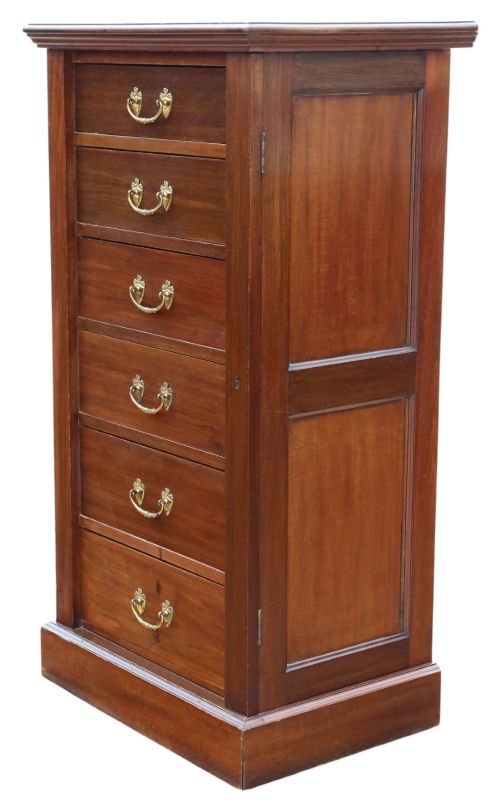
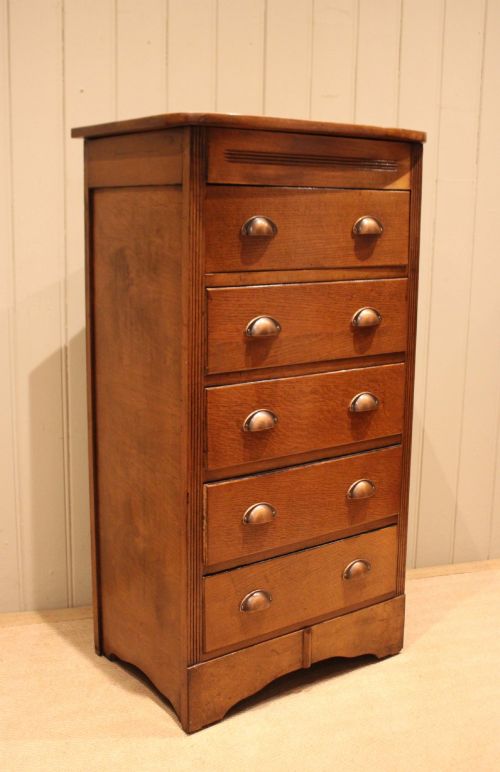
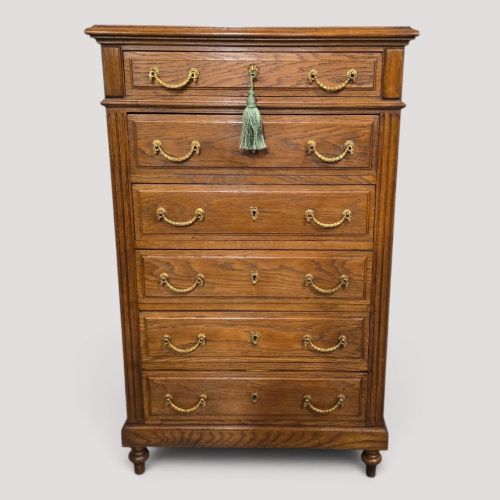
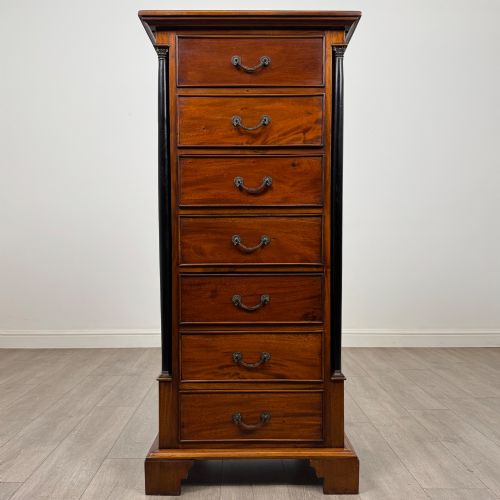
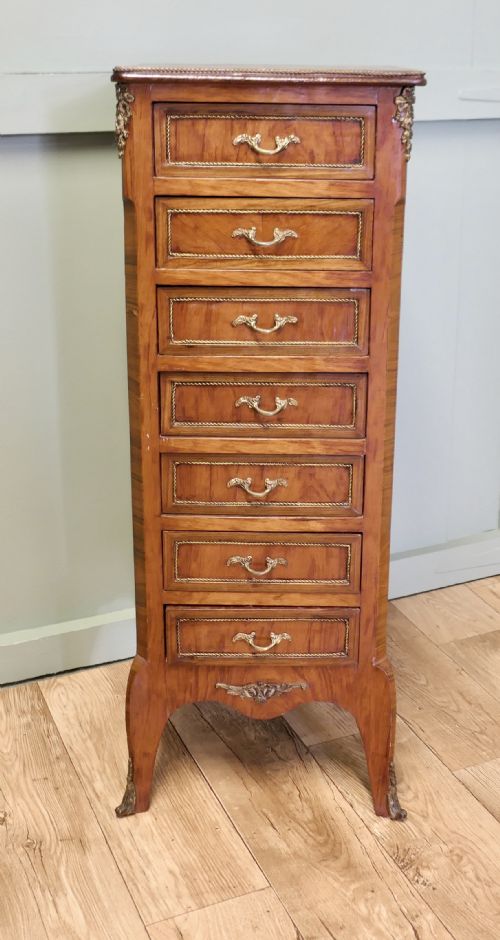
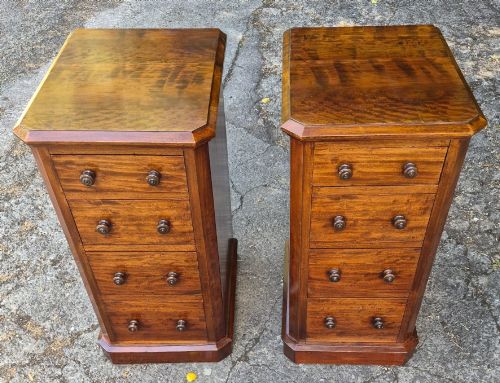
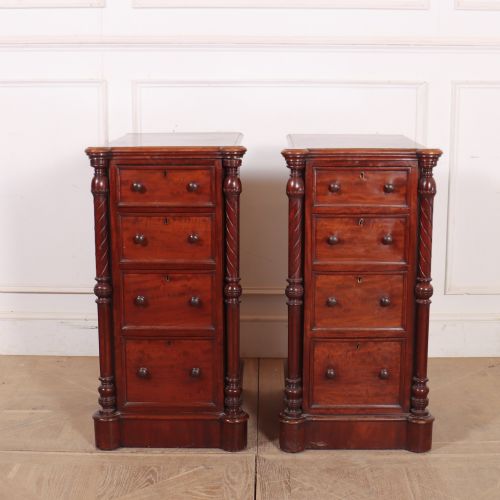
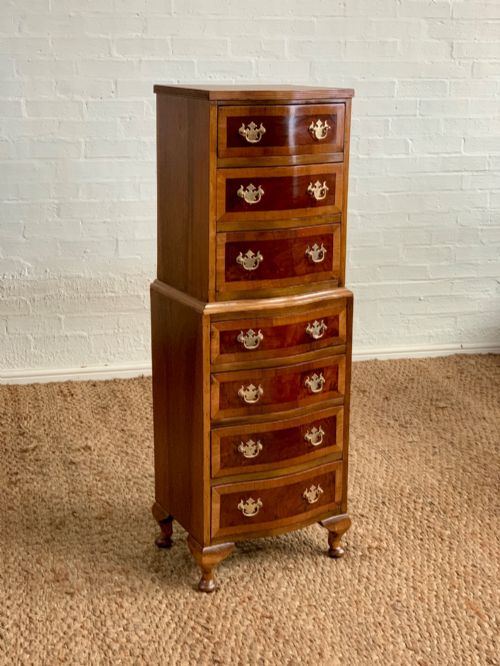
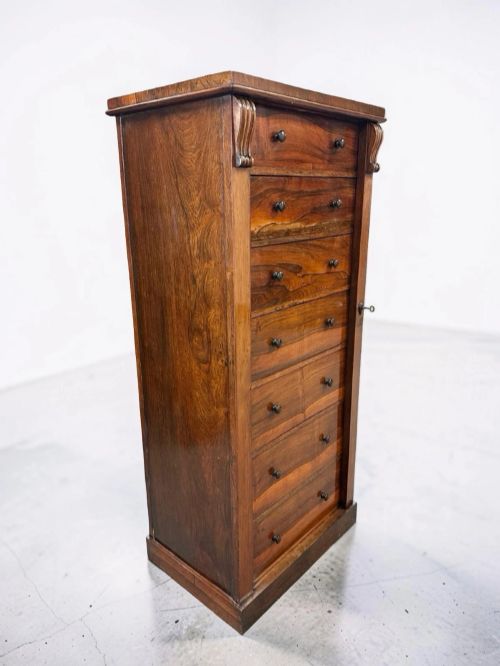
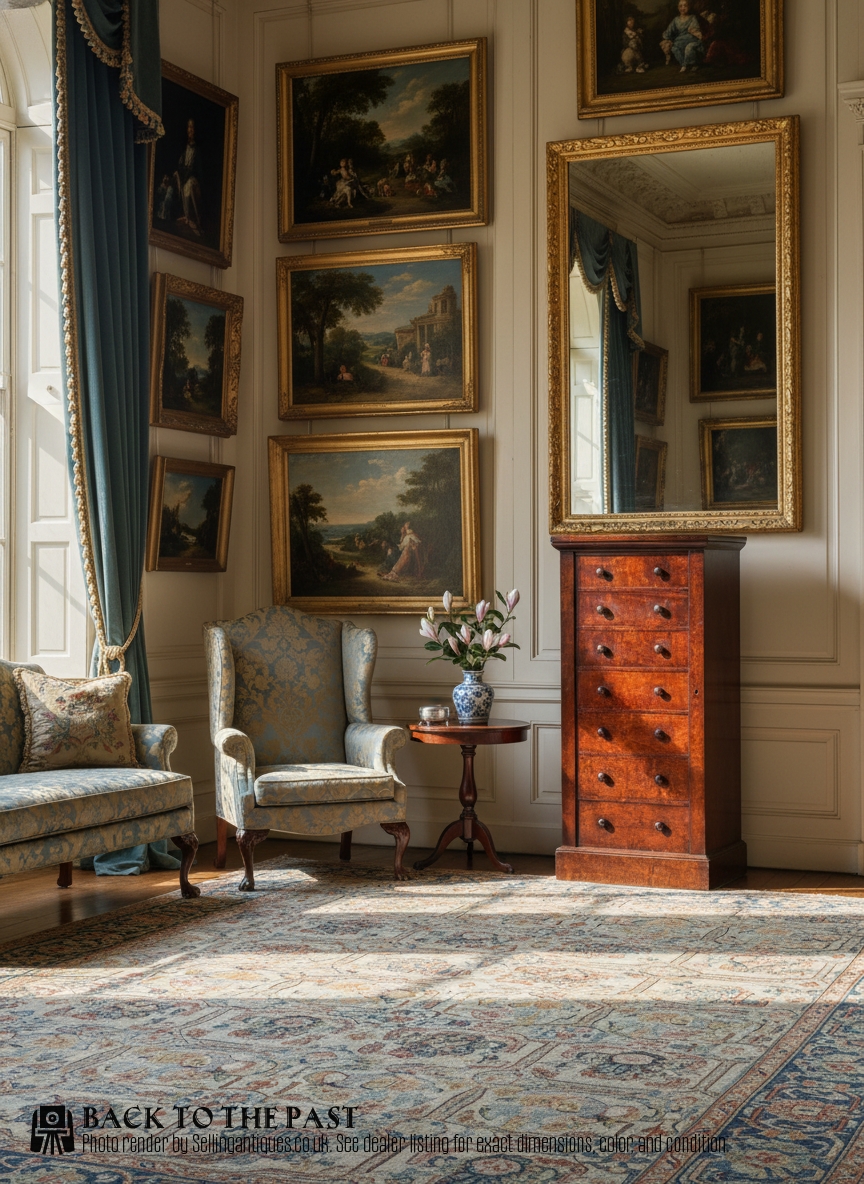
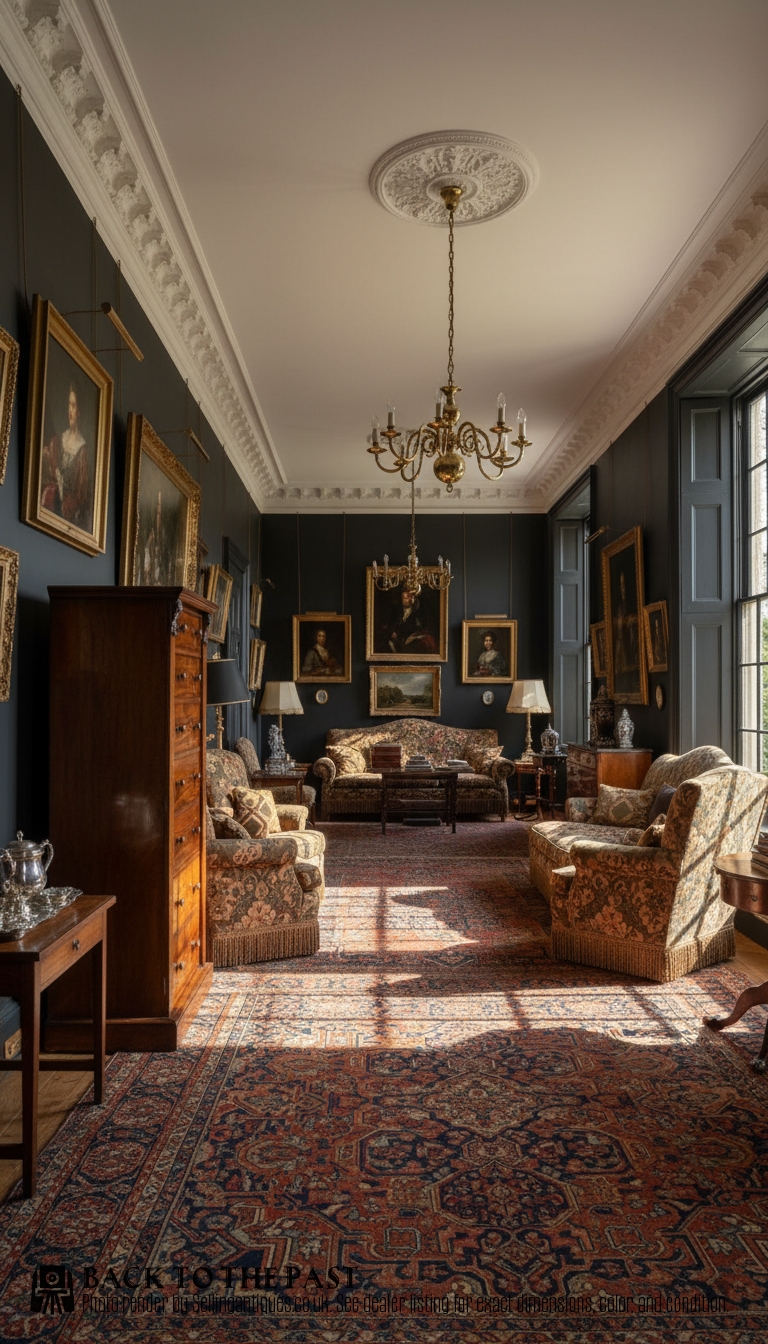
When you search for an antique tall narrow chest, you encounter a specialised form of furniture designed to maximise vertical storage without occupying excessive floor space. These pieces typically present multiple drawers stacked in a slender profile, often taking the specific form of a Wellington chest or a tallboy.
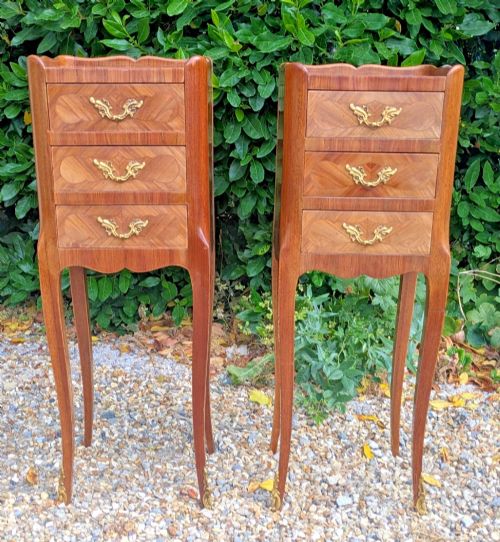
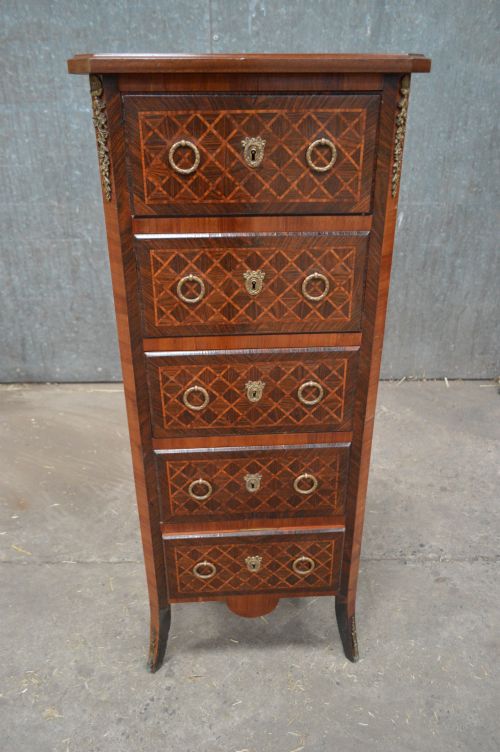
The pieces appearing in this category span the nineteenth century and the Edwardian era, featuring robust examples from the Georgian, Victorian, and Regency periods alongside continental styles like French Empire and French Transitional. Mahogany remains the dominant timber across these items, complemented by pine, oak, walnut, and exotic veneers.
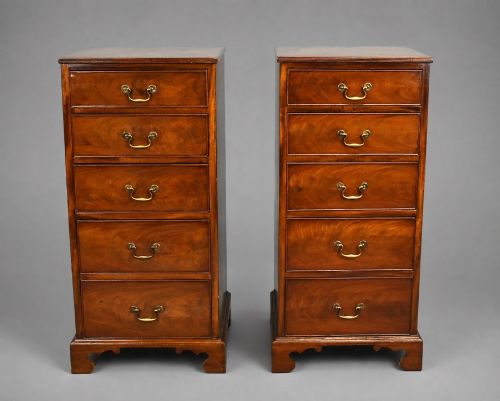
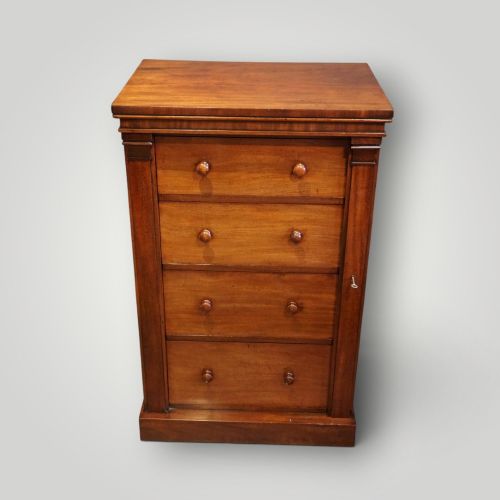
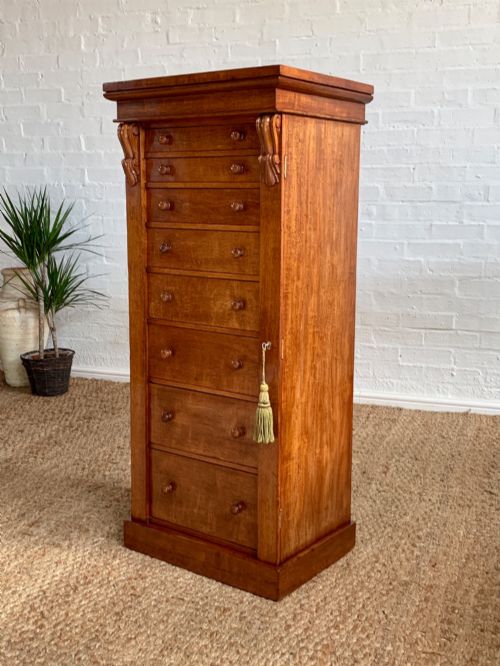
Buyers are most likely to meet mahogany variants featuring multiple graduated drawers, sometimes with bow fronts or the characteristic side-locking bar of a Wellington chest. These functional pieces suited smaller bedchambers and dressing rooms where floor area was at a premium.
Materials and construction
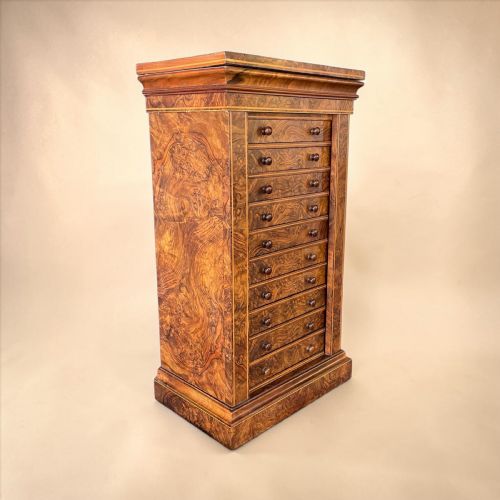
Cabinetmakers utilised solid timbers such as mahogany, oak, and pine for the primary carcases and drawer linings, ensuring structural integrity in such tall, slender proportions. Selected pieces incorporate decorative veneers including satinwood, kingwood, rosewood, and figured walnut to create striking grain patterns across the drawer fronts.
Retail Price Guide 2026
Typical UK retail prices for tall narrow chest, calculated from the Sellingantiques database of over a million retail prices indexed since 2003. This retail price guide relies exclusively on Sellingantiques data; no external sources or auction records are used, so the figures do not describe the wider market.
Some nineteenth-century tall chests include a secret locking bar disguised as a plain pilaster, keeping pilfering fingers away from private papers.
Judging quality and execution
The distinction between standard examples and superior pieces rests on the choice of timber and the precision of the cabinetwork. Finer chests display carefully matched flame mahogany or burr walnut veneers that wrap seamlessly across the drawer fronts, demonstrating the maker's skill in handling decorative hardwoods.
Structural refinement shows in the smooth operation of the drawers and the integrity of secondary timbers used for drawer linings and carcase backs. Superior items retain original brass fittings and functional locking mechanisms, particularly the characteristic side bar found on Wellington chests.
S & H Jewells of London
The Antique Tall Narrow Chest Glossary
- Wellington chest
- A tall, narrow chest of drawers featuring a hinged locking bar on one side that secures all the drawers simultaneously. This design originated in the nineteenth century and is often associated with military or gentleman's quarters.
- Tallboy
- A traditional English term for a tall chest of drawers, sometimes constructed in two sections with a smaller chest sitting atop a larger base. These pieces maximise vertical capacity while maintaining a narrow footprint.
- Bow front
- A convex curved drawer front that projects outward in an arc, popular during the Regency and later periods. This curved construction required advanced woodworking skill to ensure the drawers operated smoothly within the carcase.
- Flame mahogany
- A veneer cut from the fork of the mahogany tree where the branch meets the trunk, producing a distinctive flickering flame pattern. Cabinetmakers reserved this decorative timber for the principal visual surfaces of high-status furniture.
- Parquetry
- A geometric mosaic of wood pieces used for decorative veneering on furniture surfaces. French cabinetmakers frequently applied this technique to create intricate patterns on carcase furniture.
Frequently Asked Questions
What is a Wellington chest?
A Wellington chest is a tall, narrow set of drawers characterised by a hinged locking stile on the right side. This vertical wooden bar secures all the drawers when locked down with a key.
Cabinetmakers designed these pieces during the nineteenth century to provide secure storage for papers, linen, or valuables in rooms with limited floor space.
How do I date an antique tall narrow chest?
Dating relies on examining the secondary timbers, construction methods, and stylistic details such as bracket feet, cockbeading, and handle design. Regency and Georgian pieces often display simpler interior construction with hand-cut dovetails, while Victorian and Edwardian examples may feature machine-sawn elements.
Timber choice also guides dating, as solid mahogany and oak gave way to elaborate veneered surfaces like burr walnut and satinwood in later nineteenth-century pieces.
Where should I place a narrow chest?
These slender chests suit awkward alcoves, narrow hallways, or beside a bed where a standard dresser would protrude too far into the room. Their vertical orientation provides generous drawer storage while occupying minimal floor space.
Ensure the piece is secured to the wall if placed in a high-traffic area, given the tall and narrow proportions of these cabinets.
Are these chests suitable for modern clothes?
The internal depth and width of period drawers can accommodate folded garments, underwear, and accessories comfortably. However, buyers should check internal drawer dimensions, as nineteenth-century wardrobes and chests were built for smaller garments.
Shallow top drawers work well for smaller items, while deeper lower drawers hold heavier folded clothing.