

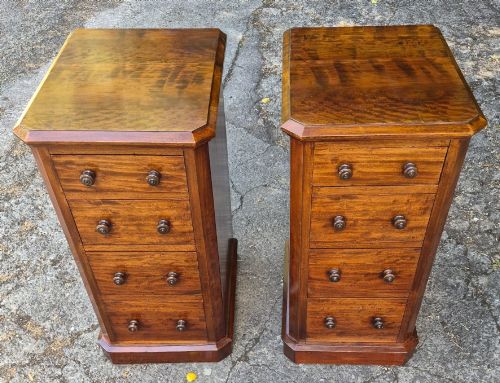
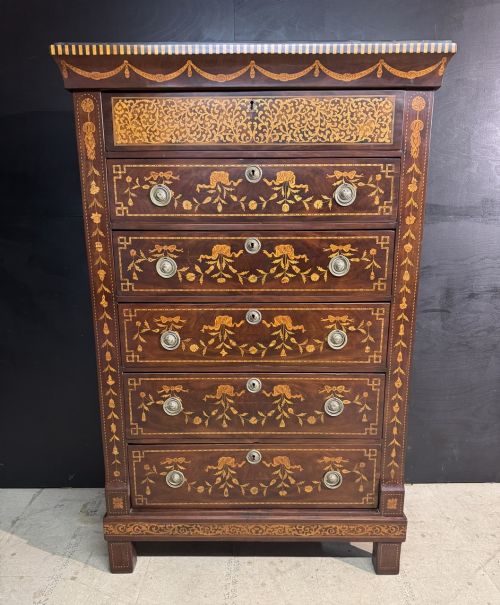
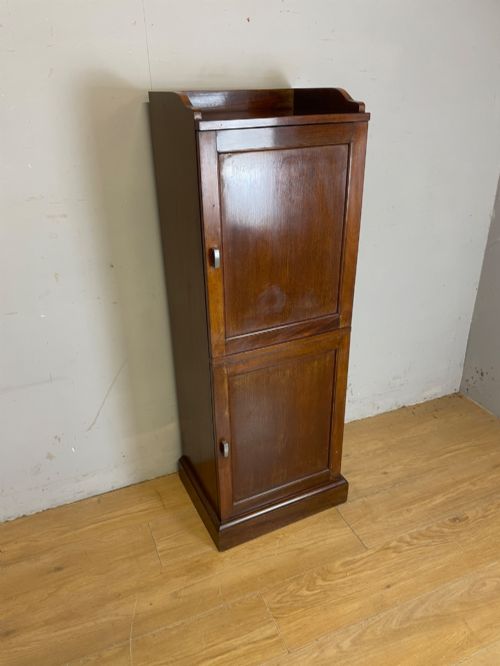
Antique Tall Cabinet Drawers
These antique tall cabinet drawers bring vertical presence and deep storage to a room, offering refined joinery and timber character.
Antique Tall Cabinet Drawers
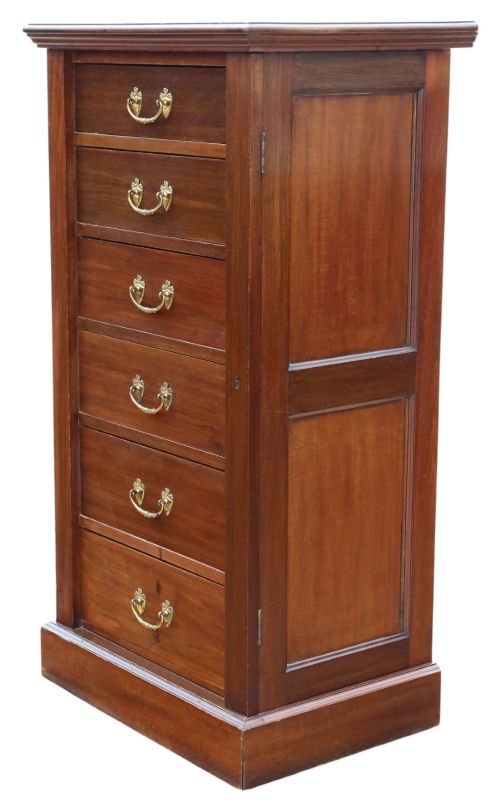
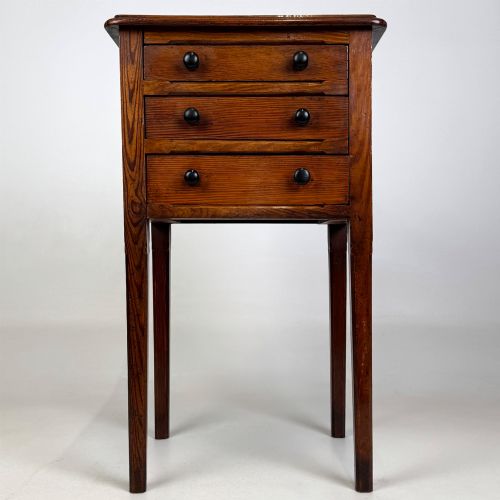
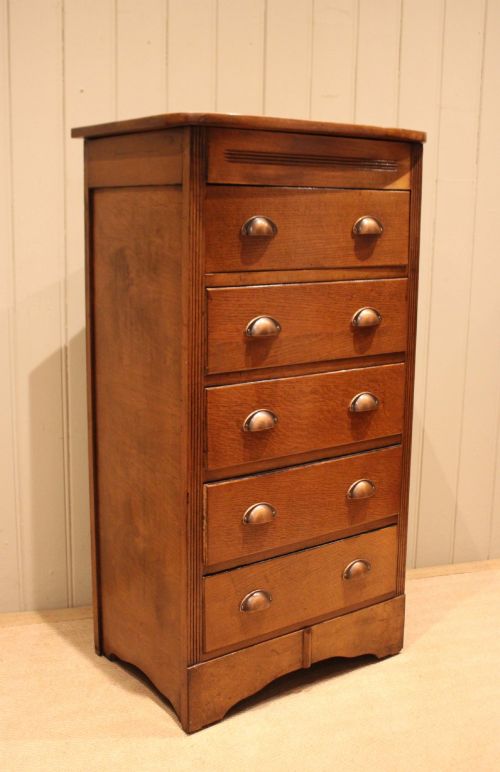
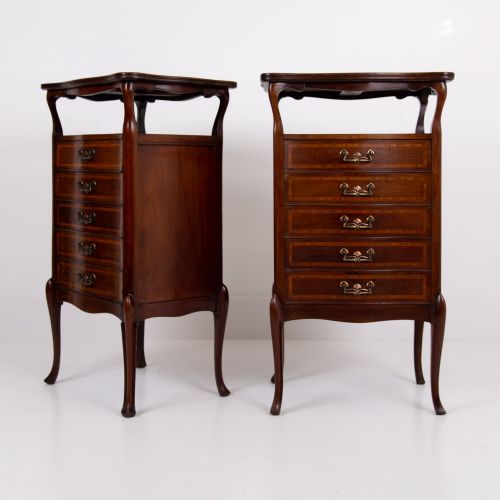
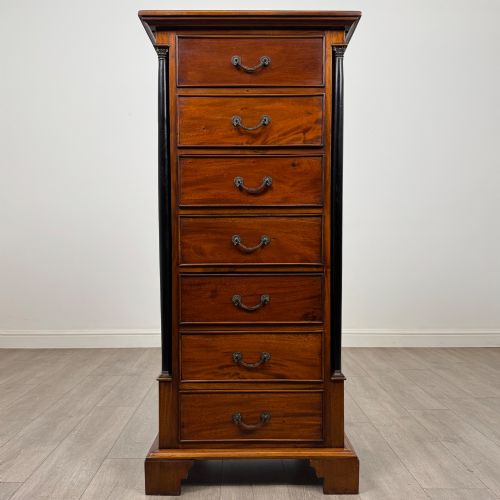
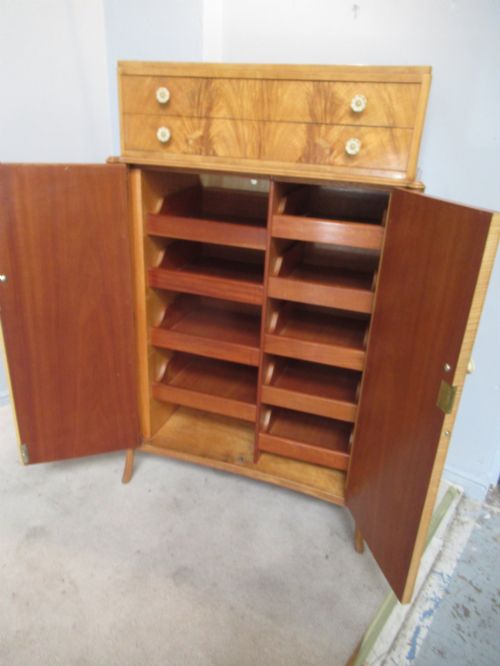
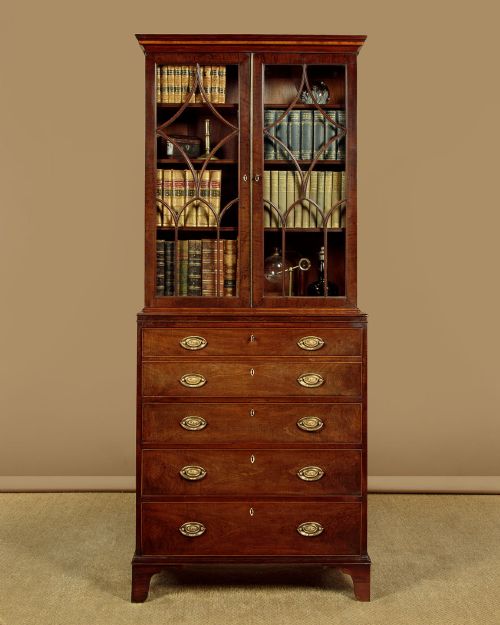
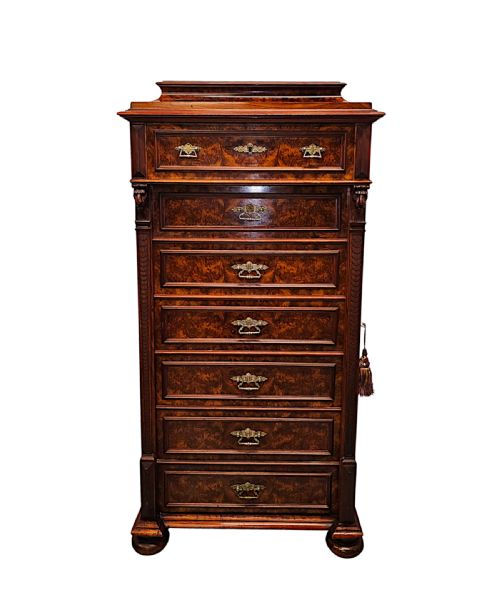
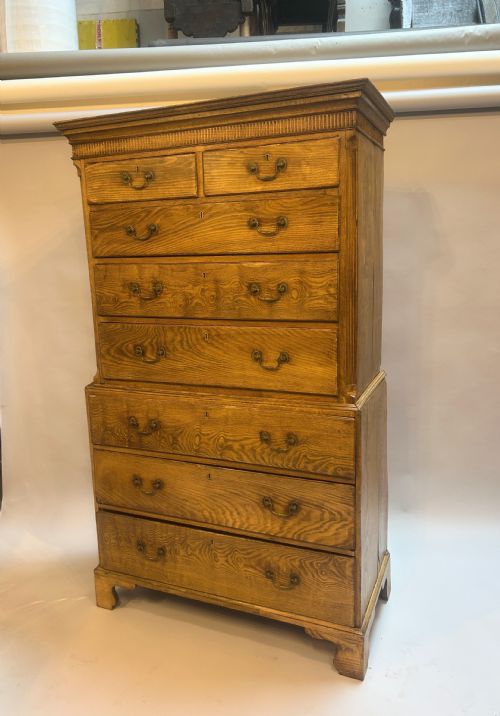
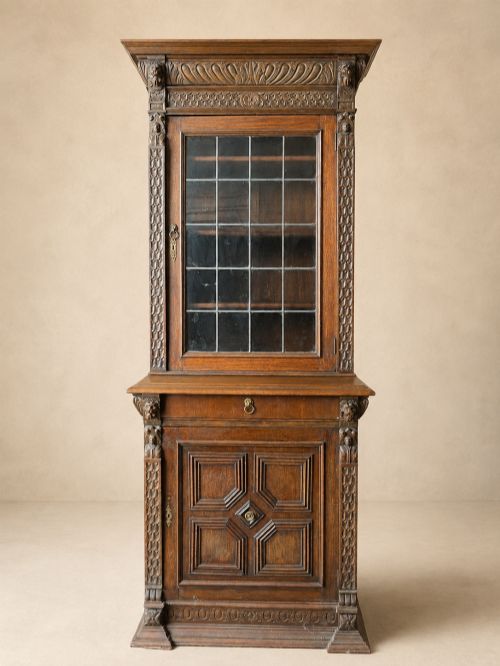
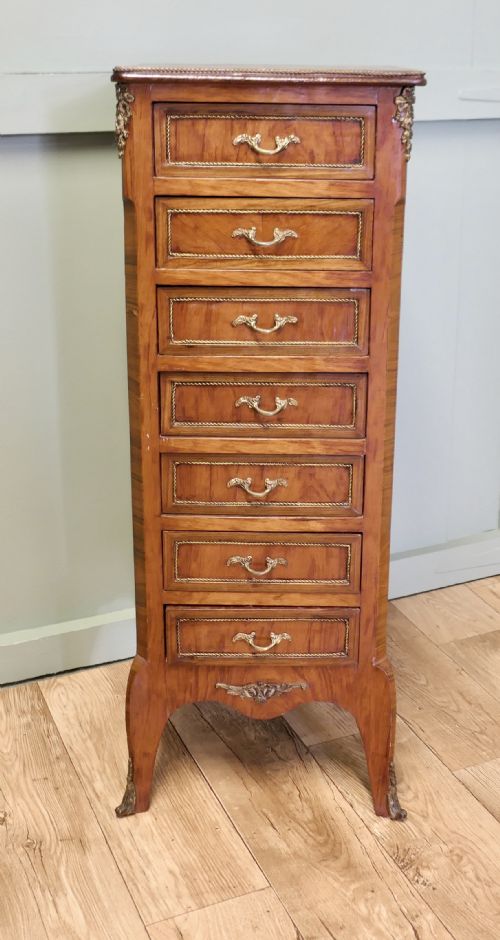
When you search for antique tall cabinet drawers, you encounter a specialised form of vertical storage designed to maximise capacity while maintaining a compact floor footprint. These pieces range from upright Wellington chests and tallboys to narrow Edwardian filing cabinets and towering chests of drawers.
Mahogany and oak dominate the forms, alongside walnut, burr walnut, and painted pine. You will frequently meet Victorian and Edwardian examples, alongside Georgian period pieces and French styles featuring marquetry or marble tops.
The vertical configuration often incorporates specialised internal arrangements, such as locking side stiles on Wellington chests or fall-front desks integrated into tall carcases. Each variation reflects the domestic or office storage demands of its original period.
Materials and construction methods
Cabinet makers built these tall carcases using dense timbers like mahogany, walnut, and oak, frequently applying figured veneers such as burr walnut or satinwood to primary display surfaces. Solid pine and oak served utilitarian or regional pieces, while brass hardware, including drop handles and escutcheons, provided functional contrast.
Construction relied on traditional joinery methods, incorporating dovetailed drawer boxes and panelled backs to ensure stability in tall, narrow frames. Specialised mechanisms, such as locking bars secured by side keys on Wellington chests or counterweighted fall-fronts, required precise carpentry to operate smoothly within the upright design.
Secret compartments tucked inside nineteenth-century secretaire drawers waited decades to reveal themselves during routine dusting.
Assessing quality in tall cabinet furniture
Quality rests upon the selection of timber and the continuity of grain across the drawer fronts and carcase face. Finer pieces demonstrate careful matching of figured veneers, whereas simpler utility items rely on plain pine or painted surfaces.
The integrity of the internal mechanics dictates the standard of execution, from the smooth travel of dovetailed drawers to the proper alignment of locking side bars. Original hardware, intact turning, and well-preserved surface polishes distinguish workshop output across periods.
S and H Jewells of London·Maison Krieger
The Antique Tall Cabinet Drawers Glossary
- Wellington chest
- A tall, narrow chest of drawers secured by a hinged locking side pilaster that fastens over the drawer edges. This specific form originated in the nineteenth century.
- Tallboy
- A tall chest of drawers traditionally constructed in two sections, stacking a smaller chest upon a larger base. Georgian and Victorian examples often combine proportion with extensive storage.
- Secretaire
- A cabinet or chest incorporating a pull-out or drop-front writing drawer fitted with small interior compartments. These fitted spaces frequently conceal secret drawers.
- Marquetry
- The decorative art of applying pieces of veneer to a structure to form intricate geometrical or pictorial designs. Cabinet makers utilised contrasting timbers to achieve tonal variation.
- Escutcheon
- A flat plate of brass surrounding a keyhole to protect the surrounding wood from wear. They appear on drawer fronts and cabinet doors across all periods.
Antique Tall Cabinet Drawers: Frequently Asked Questions
What is a Wellington chest?
A Wellington chest is a tall, narrow set of drawers distinguished by a locking flap on one side. This hinged stile fastens over the ends of the drawers to secure the entire stack with a single key.
Cabinet makers developed this vertical form to provide secure storage within a compact footprint. They appear frequently in nineteenth-century mahogany and walnut.
How do I tell a tallboy from a chest on chest?
A tallboy typically refers to a single tall chest of drawers, sometimes standing on a dedicated frame or lower base. A chest on chest specifically describes a two-part carcase where a slightly smaller upper chest sits directly upon a larger lower chest.
Both forms offer substantial vertical storage while maintaining classical proportions. Georgian and Victorian cabinet makers utilised these designs to showcase figured timber veneers.
Where should I place a tall cabinet in a room?
These tall pieces suit spaces where floor area is limited but vertical capacity is required. They function effectively in bedrooms, studies, or hallways for linen, paperwork, or general storage.
Because of their height, securing them safely to a wall prevents tipping, particularly in narrow variants like filing cabinets or music chests.
How do I care for antique drawer polishes?
Maintaining these surfaces involves dusting with a dry, soft cloth and occasionally applying traditional beeswax to nourish the timber. Avoid placing them near direct heat sources or strong sunlight to protect the polish and prevent veneer lifting.
Consistent environmental humidity keeps the solid wood carcases and dovetailed joints stable over time.