


Vintage Locking Drawer Chest
A vintage locking drawer chest offers secure storage with a characteristic side-locking stile, pairing practical function with classic proportions.
Vintage Locking Drawer Chest
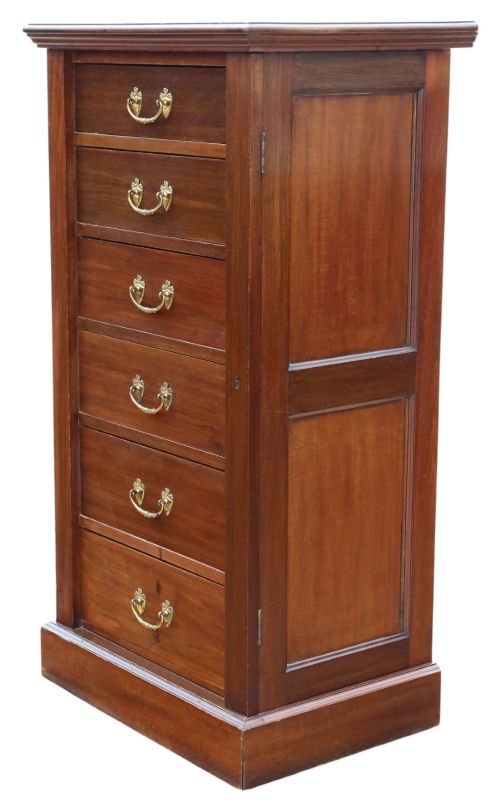
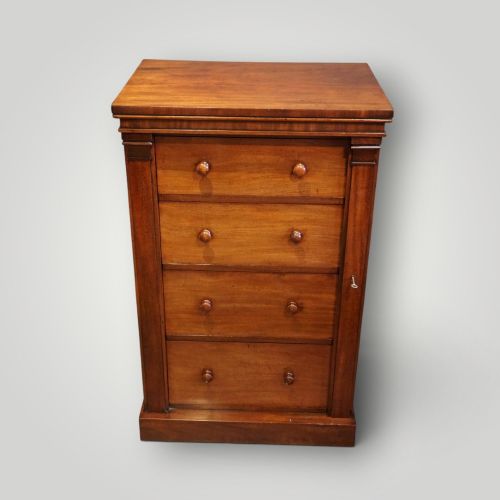
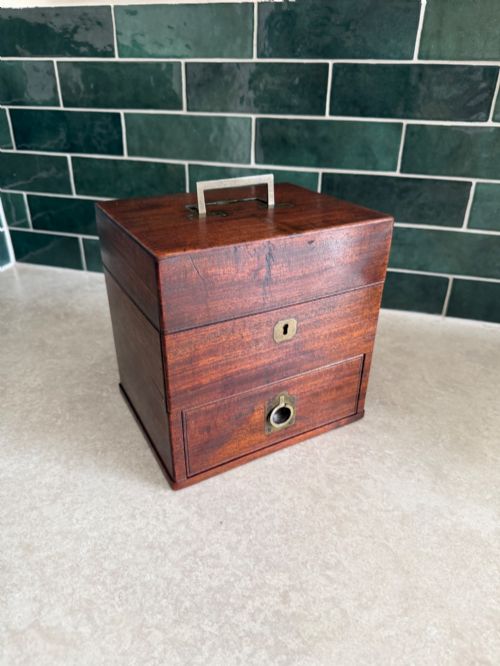
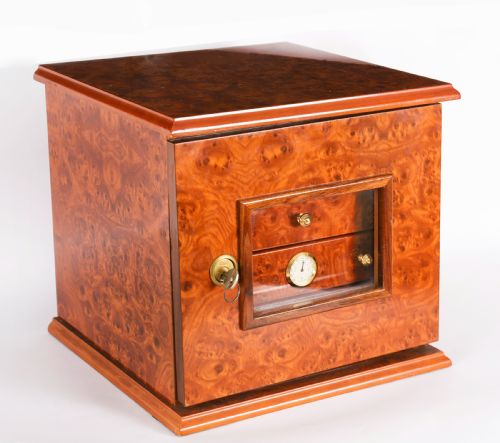
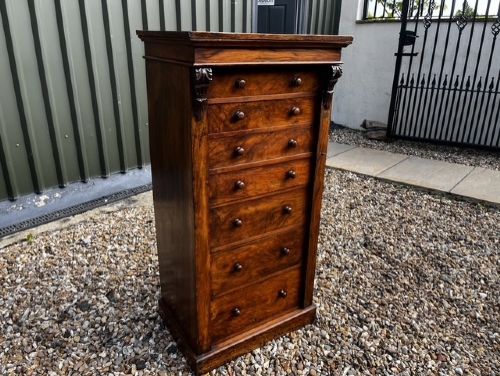
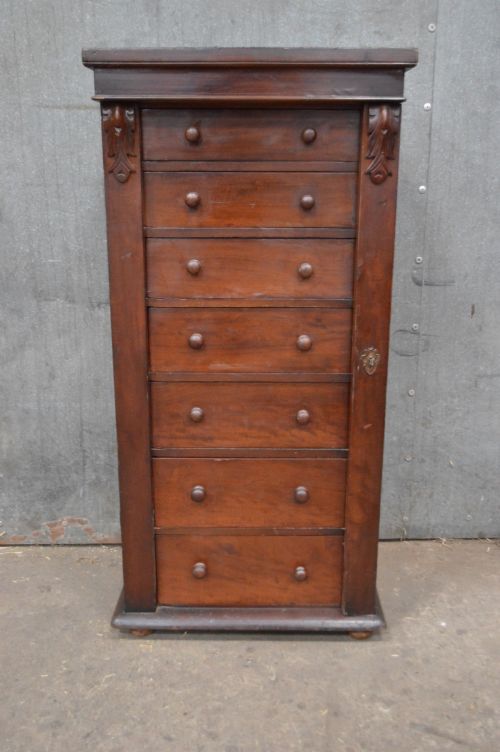
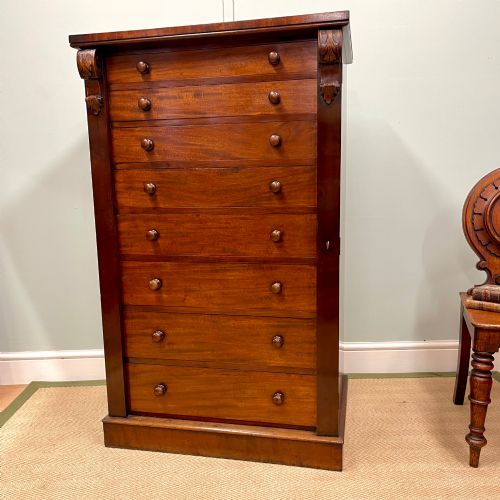
When searching for a vintage locking drawer chest, you encounter tall, narrow case pieces designed with a hinged locking stile that secures all drawers simultaneously when locked with a key. The most common form on this page is the traditional Wellington chest, alongside apothecary boxes, cigar humidors, and specialised collectors cabinets.
The periods represented span from the 1800s through the Victorian era and Edwardian period up to the mid 20th century. Styles range from straightforward Victorian country house examples and Georgian revivals to 19th century French and Qing Dynasty pieces.
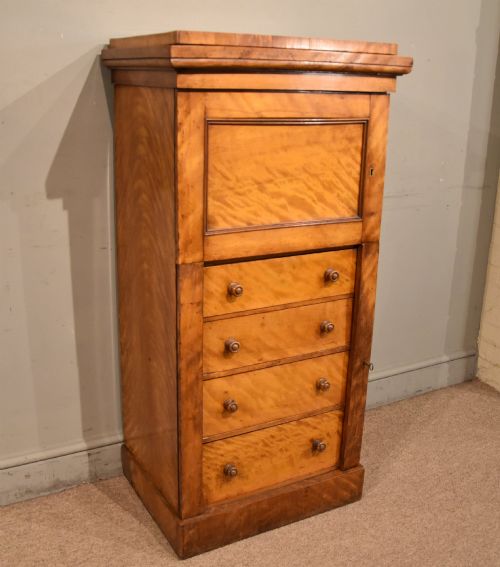
These items primarily function as tall chests of drawers, secretaire chests with hinged fall fronts, and compact sideboards. Their defining characteristic remains the locking mechanism, which protects the contents across multiple tiers of small drawers.
Materials and construction methods
Cabinet makers utilised a variety of dense hardwoods and decorative veneers, notably mahogany, flame mahogany veneer, burr walnut, walnut, oak, blonde oak, pollard oak, burr elm, satin birch, ash, maple, and rosewood. These timbers provide both structural stability for deep drawers and striking surface grain.
Some diminutive pieces were made specifically as child's chests or travel apothecary boxes.
Assessing quality in locking drawer chests
Quality rests upon the selection of timber and the precision of the locking mechanism. Highly figured veneers such as flame mahogany or burr walnut indicate superior cabinet work, whereas plain timbers reflect more utilitarian workshop origins.
The integrity of the hinged locking stile and the presence of the original operating key separate standard examples from finer pieces. Smooth operation of the drawer runners and tight joinery across multiple tiers demonstrate the skill of the original maker.
Gillows of Lancaster·Maple and Co·Druce and Co
The Vintage Locking Drawer Chest Glossary
- Wellington chest
- A tall, narrow chest of drawers featuring a hinged vertical locking bar on one side that secures every drawer when locked with a key. This form originated in the 19th century and typically contains six or seven drawers.
- Secretaire
- A desk form incorporated into a chest of drawers, featuring a hinged fall front that opens to reveal a writing surface and small internal compartments. It combines the height of a locking chest with a pull-down writing desk.
- Scumble paint
- A decorative surface finish applied to timber to imitate a more expensive grain or create a mottled, textured appearance. This technique appears on country house furniture.
- Escutcheon
- A protective metal plate surrounding a keyhole, usually cast in brass on these pieces to prevent wear to the surrounding wood. It secures the lock surround while adding a decorative focal point.
- Stile
- The upright vertical member forming the outer frame of a cabinet door or, in this context, the locking bar that swings to secure the drawer fronts. Its proper fit ensures the entire bank of drawers remains locked.
Vintage Locking Drawer Chest: Frequently Asked Questions
What is a locking drawer chest?
A locking drawer chest is a tall, narrow storage piece featuring a hinged vertical locking stile down one side. When closed and secured with a key, this bar blocks all the drawers from opening.
Most examples seen here are Wellington chests or specialised collectors cabinets designed to keep contents secure in a compact footprint.
How do you lock a Wellington chest?
You push all the drawers fully home, swing the hinged vertical locking bar into place over their edges, and turn the key in the lock. This action engages a tongue or mechanism that holds the bar tight.
Opening the bar requires the key to release the catch, allowing each drawer to pull out individually again.
How do I date an antique chest?
Dating relies on observing timber choices, construction methods, and hardware styles across the piece. Victorian examples often feature solid mahogany or walnut with hand-cut dovetails, while Edwardian pieces introduce lighter satin birch or inlaid details.
The presence of original brass escutcheons and keys further helps anchor the period.
Where should I place a tall chest?
These chests suit tight wall spaces, hallways, or bedrooms where floor area is limited but vertical storage capacity is needed. Their narrow footprint allows them to fit where wider sideboards cannot go.
Ensure you leave enough clearance beside the piece for the locking stile to swing open fully.