



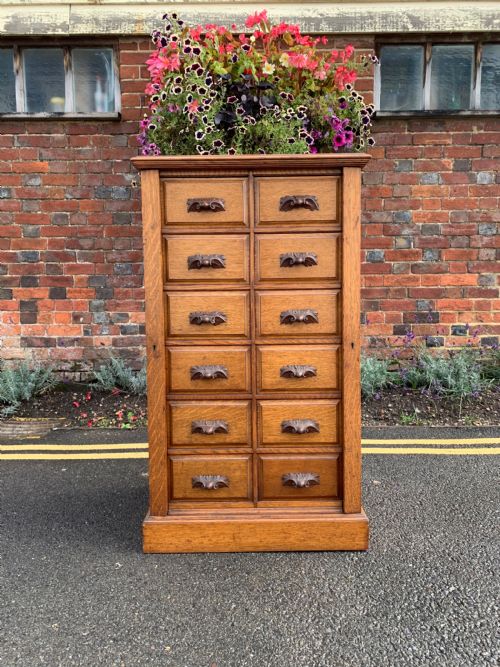


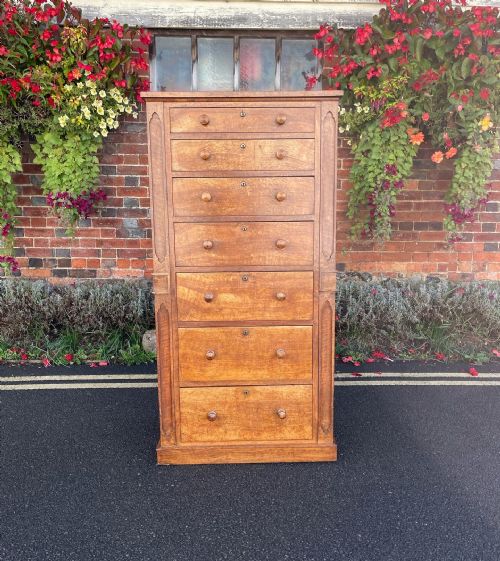
Nineteenth Century Wellington Chest
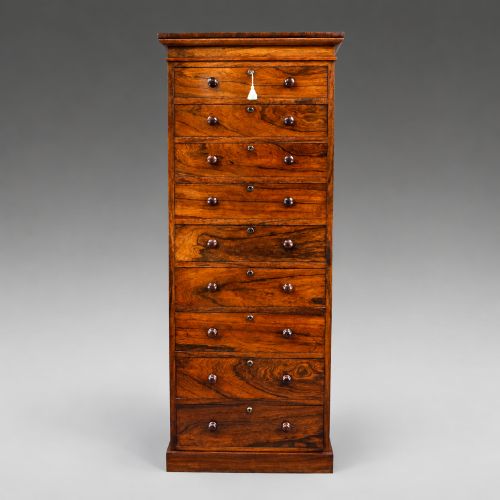
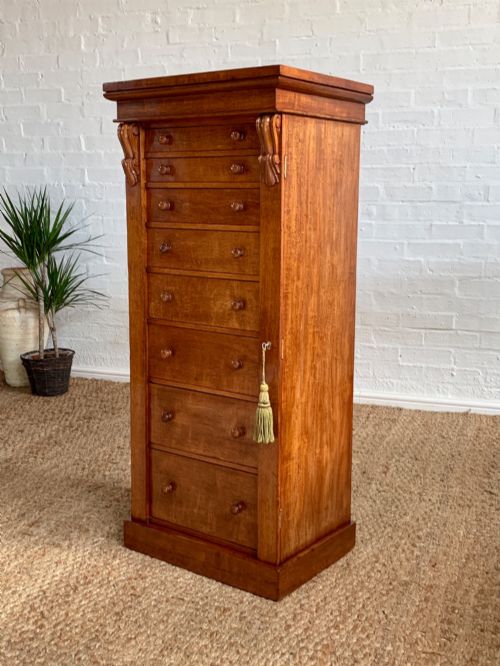
A nineteenth century wellington chest offers secure vertical storage with its signature locking stile, combining practical engineering with elegant period timber.
Nineteenth Century Wellington Chest
When you search for a nineteenth century wellington chest, you are looking at tall, narrow drawer units designed to maximise storage while occupying minimal floor space. These pieces originate from the Victorian and Regency eras, spanning specific decades like 1850, 1860, and 1890, alongside 19th Century French examples.
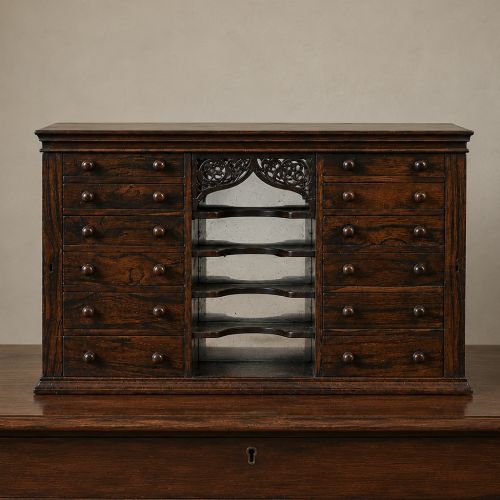
The pieces on this page appear in various materials including mahogany, walnut, burr walnut, rosewood, pollard oak, and standard oak, sometimes featuring marquetry, inlay, or country house scumble paint. Object types range from standard chests of drawers and miniature chests of drawers to specialised collectors cabinets.
You are most likely to meet standard Victorian mahogany or walnut versions on this page, alongside occasional variations such as double chests, miniature models, or mirrored collector pieces. Styles vary from traditional Victorian and Regency to Victorian Country House and French interpretations.
Materials and construction methods
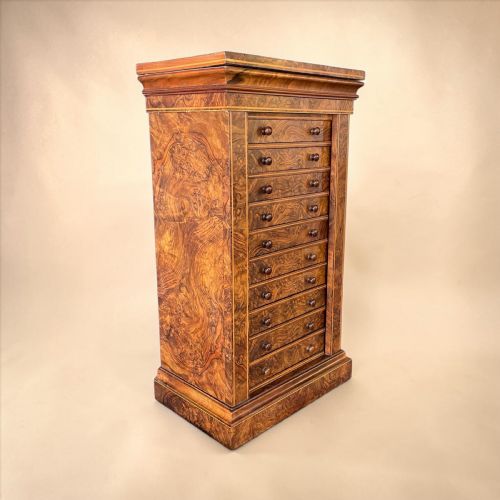
Cabinet makers utilised dense hardwoods such as mahogany, oak, and rosewood, frequently applying burr walnut and walnut veneer to visible drawer fronts and surfaces. Timber framing ensured structural stability for the tall, narrow carcase.
Brass hardware, including original turned knobs and locking mechanisms, functioned alongside specialised locking stiles that secured all drawers simultaneously. Marquetry and inlay added decorative surface detail to select walnut and exotic timber models.
Nineteenth Century Wellington Chest Retail Price Guide 2026
Typical asking prices for nineteenth century wellington chest among the pieces listed under this phrase on Sellingantiques today, from the lower quarter to the upper quarter. They describe what is for sale here now, not the wider market.
Listings feature walnut, burr walnut, mahogany, rosewood, oak, and pollard oak across Victorian and Regency periods.
Distinctions in quality
The grade of timber veneer and the crispness of marquetry or inlay separate standard examples from finer pieces. Figured mahogany and burr walnut display superior natural grain patterns that elevate the visual presence of the cabinet.
Original hardware, such as turned knobs and functional locking stiles, preserves the integrity of the piece. Maker attribution, such as work associated with Holland & Sons, distinguishes specific pieces within the range.
Holland & Sons
The Nineteenth Century Wellington Chest Glossary
- Wellington chest
- A tall, narrow chest of drawers featuring a hinged locking stile on one side that secures all drawers when locked.
- Locking stile
- A vertical wooden bar that swings or locks into place over the drawer edges to prevent them from opening.
- Burr walnut
- A highly prized wood veneer showing intricate, swirling patterns formed from tree growths.
- Marquetry
- Decorative patterns formed by fitting together small pieces of wood veneer onto a surface.
- Scumble paint
- A decorative surface treatment applied to timber to imitate finer grains or aged finishes.
Nineteenth Century Wellington Chest: Frequently Asked Questions
What is a nineteenth century wellington chest?
A nineteenth century wellington chest is a tall, narrow set of drawers distinguished by a vertical locking bar that secures the entire column.
These pieces were produced primarily during the Victorian and Regency periods in timbers such as mahogany, walnut, and rosewood.
How do you lock a wellington chest?
You lock the chest by swinging or securing the hinged vertical stile down the side of the drawer fronts, which is then engaged with a key.
This mechanism secures every drawer simultaneously, making them historically useful for valuables and documents.
What woods were used for these chests?
Cabinet makers utilised a range of domestic and exotic timbers, including mahogany, walnut, burr walnut, oak, pollard oak, and rosewood.
Veneers and marquetry were frequently applied to enhance the decorative appearance of the exterior surfaces.
How do you date a wellington chest?
Dating relies on identifying period characteristics, timber choices, and construction methods associated with the Victorian and Regency eras.
Specific dates and styles in the evidence range from 1850 and 1860 models to later 1890 examples and French interpretations.