





Antique Tabletop Timepiece
An antique tabletop timepiece brings mechanical precision and period elegance to a desk or mantel.
Antique Tabletop Timepiece
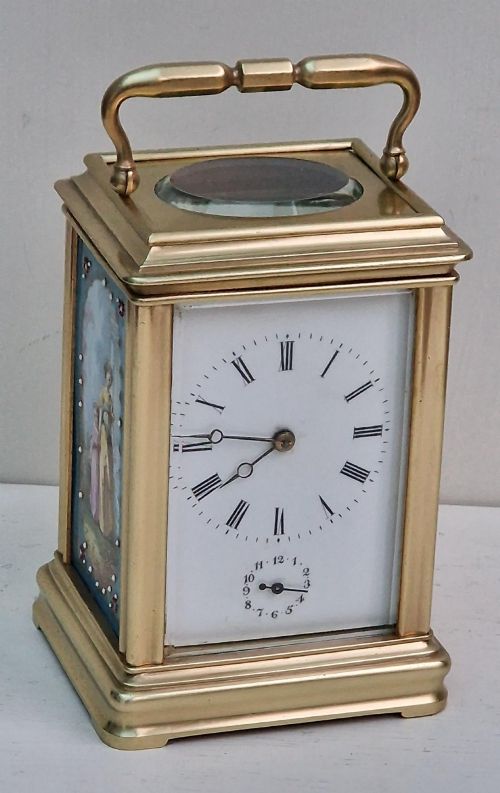
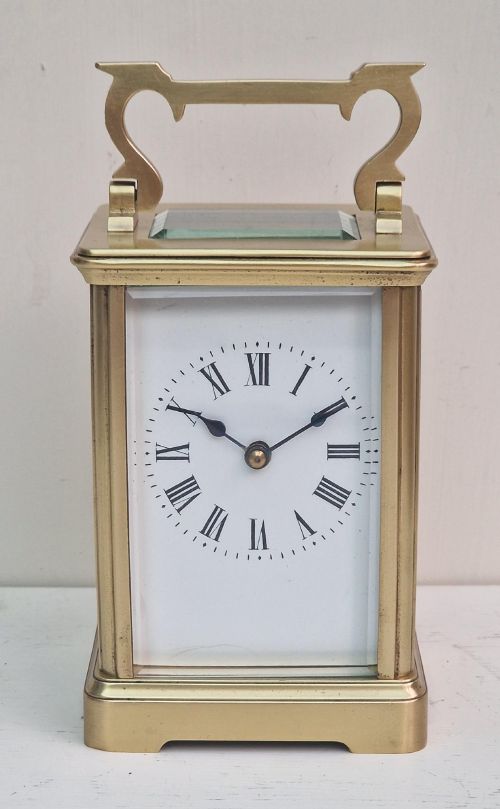
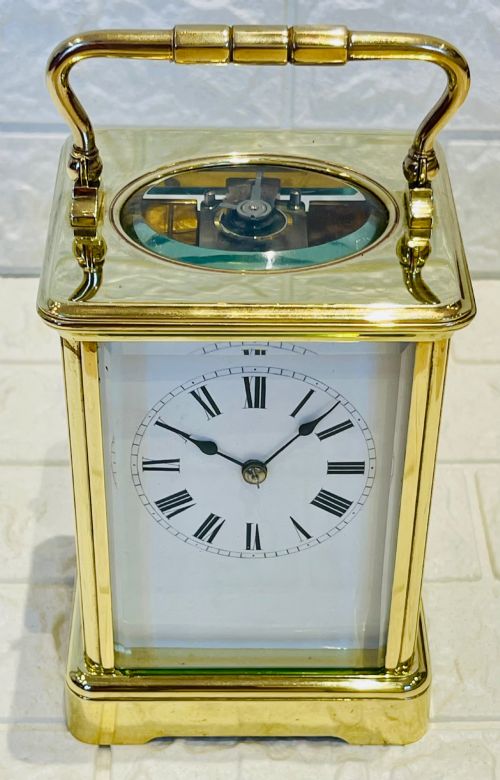
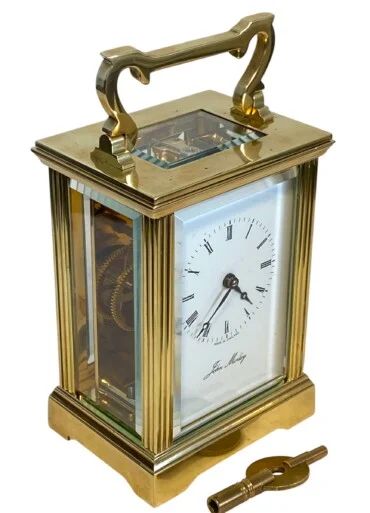
When you search for an antique tabletop timepiece, you find portable and stationary clocks designed for desks, mantels, and travel. These objects range from brass carriage clocks with glass panels to wooden mantel clocks and silver desk timepieces.
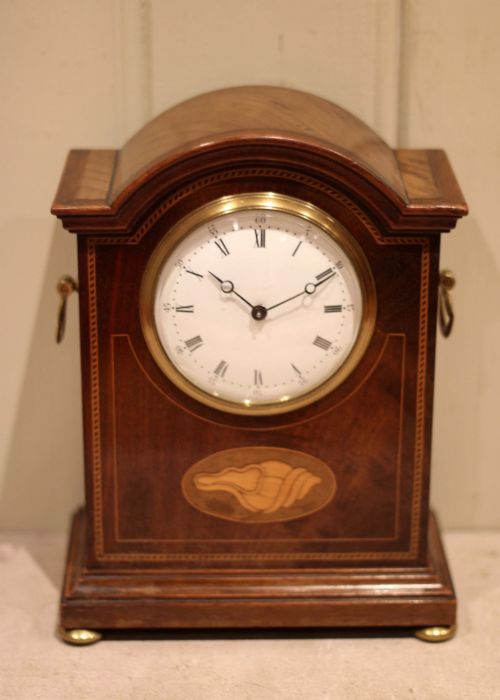
The pieces you meet most often on this page are French carriage clocks and Edwardian mahogany mantel clocks. They originate from the nineteenth and early twentieth centuries, spanning Victorian, Edwardian, and Art Deco periods.
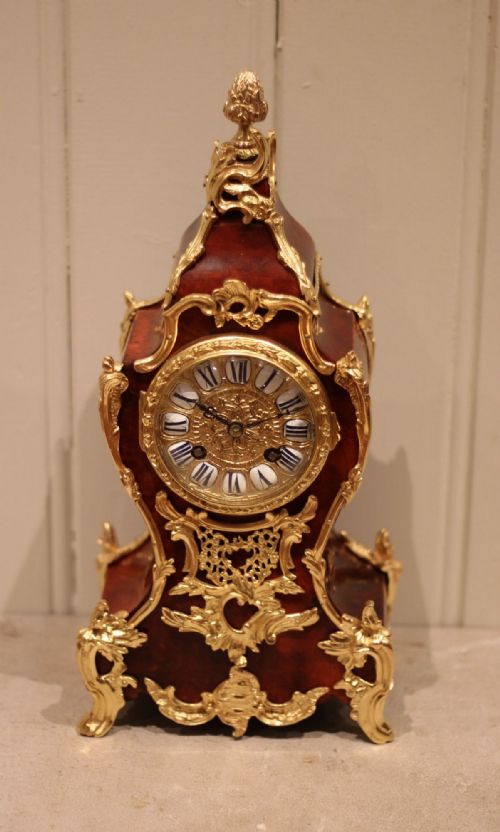
Makers housed these movements in brass, gilt bronze, mahogany, tortoiseshell, and silver. Some feature enamel dials or porcelain panels, designed to sit prominently in domestic and office interiors.
What varies in quality
The distinction between standard and superior pieces rests in the execution of the movement and the refinement of the case. Enamel dials with crisp hand-painted numerals and heavy cast bronze or silver mounts elevate a piece above simpler production.
Signed movements by known makers and retailers demonstrate superior workshop standards. The choice of materials, such as solid mahogany cabinetry or intricate tortoiseshell work, dictates the overall presence and distinction of the clock.
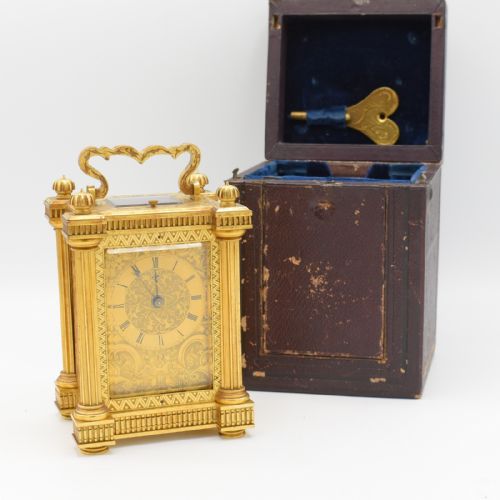
Some travel cases survived a century of journeys better than the clocks they guarded.
Howell & James London·John Morley·Dent·Alfred Hollinge·Penlington & Batty
The Antique Tabletop Timepiece Glossary
- Carriage clock
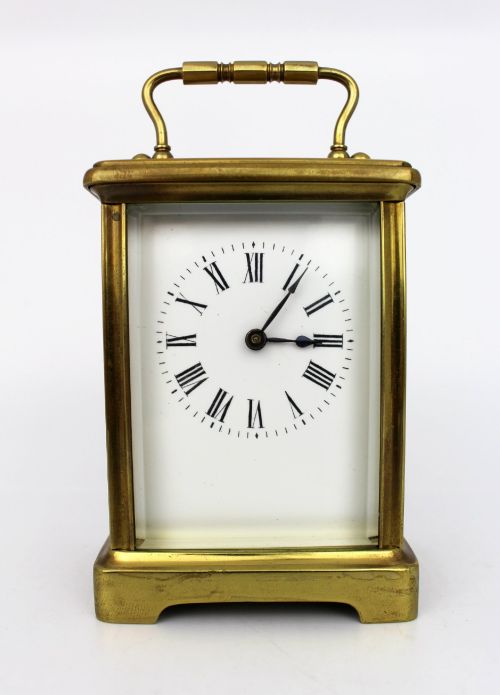
- A small, portable spring-driven clock with a carrying handle, originally designed for travel. These typically feature glass panels that reveal the movement.
- Repeater
- A mechanism that chimes the hours and quarters on demand when a lever or button is pressed. This complication was valued for telling time in the dark.
- Ormolu
- Gilt bronze created by applying a finely ground high-carat gold-mercury amalgam to a bronze object. The technique gives the metal a rich, warm golden finish.
- Strut clock
- A timepiece supported by a hinged prop or strut at the back, designed to stand upright on a desk or table.
- Timepiece
- A clock that indicates the time without striking hours or quarters on a bell or gong.
Antique Tabletop Timepiece: Frequently Asked Questions
What is a carriage clock?
A carriage clock is a portable timepiece fitted with a handle and glass panels. Travellers used them in the nineteenth century inside protective leather cases.
Most examples run on a spring movement and sit on small feet. They were made for easy transport while maintaining accuracy on desks or tables.
How do mantel clocks differ from desk clocks?
Mantel clocks are generally larger wooden or bronze pieces built to stand permanently on a fireplace mantel. Desk clocks tend to be smaller timepieces intended for writing surfaces.
Materials also separate them, with mantel clocks frequently utilising mahogany or gilt bronze, while desk clocks often feature silver mounts or leather elements.
What does a repeater mechanism do?
A repeater mechanism strikes the last hour and quarters audibly when activated by the user. This allowed owners to check the time at night without lighting a candle.
Carriage clocks often housed this complication, requiring extra gear trains within the brass movement.
How do I identify an Edwardian timepiece?
Edwardian timepieces date from the reign of Edward VII and frequently feature mahogany cases with inlaid wood. They often show lighter, refined proportions compared to earlier Victorian designs.
Dial styles and movement markings help confirm this period, alongside silver or enamel boudoir designs from the same era.