


Antique Table Regulator
An antique table regulator provides precise timekeeping enclosed in glass and metal, drawing the eye with visible internal mechanics and polished brass frames.
Antique Table Regulator
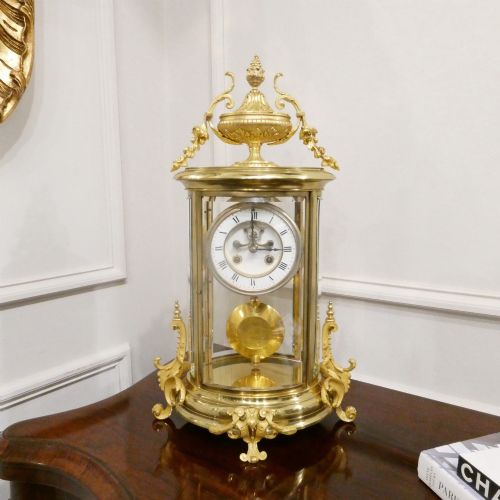
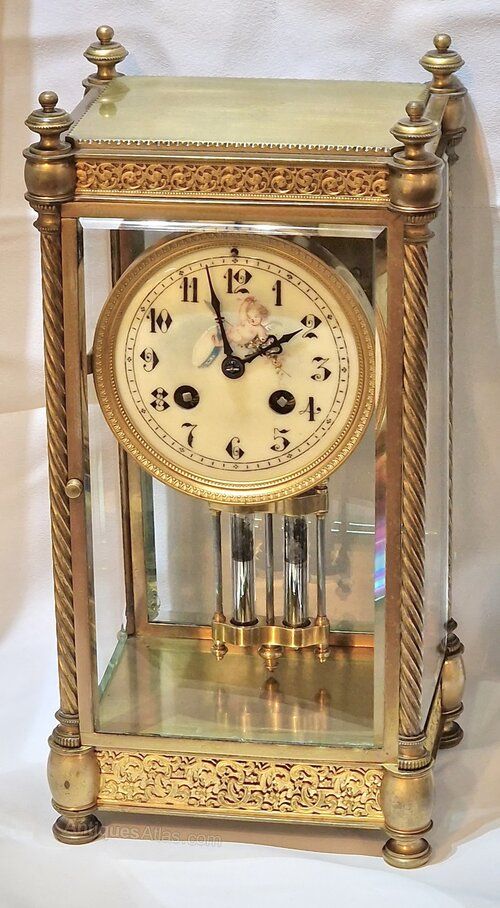
When you search for an antique table regulator, you are looking at precision timepieces housed within upright glazed cases designed for placement on a mantel, bracket, or tabletop. These instruments display complex movements through clear glass panels, allowing observers to watch the pendulums swing and gears turn.
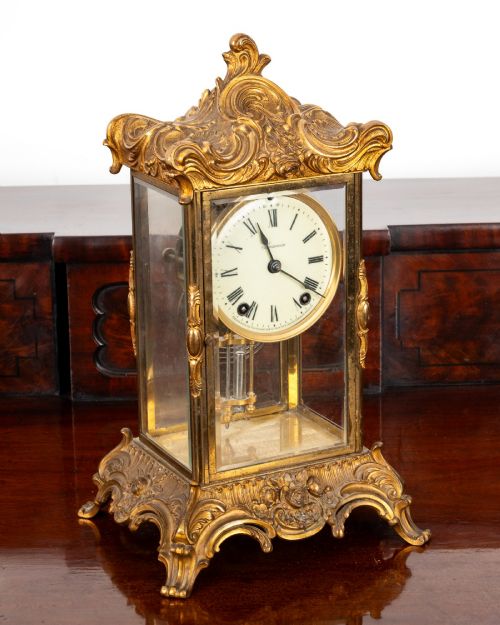
The version you are most likely to meet on this page is the French four-glass clock, originating predominantly from the nineteenth century during the Victorian era and the Belle Epoque. These pieces frequently feature gilt brass or bronze frames, enamel dials, and mercury or knife-edge suspension pendulums.
Evidence across the inventory also points to earlier eighteenth-century English mahogany bracket clocks with striking mechanisms and alarms, alongside American crystal regulators from New York. Variations range from simple rectangular brass housings to bow-fronted designs and ornate Rococo revival cases incorporating marble or painted panels.
Materials and construction methods
Clockmakers constructed the housings of these regulators using heavy cast brass, gilt bronze, and ormolu, paired with thick bevelled glass panes that allowed an unobstructed view of the movement from all sides. Cabinetmakers also utilised mahogany for certain eighteenth-century English bracket and portico examples.
Dials were commonly fashioned from white enamel with painted Roman or Arabic numerals, frequently complemented by decorative brass filigree or hand-painted porcelain centres detailing floral motifs or moon-phase complications.
Materials recorded across the inventory include gilt bronze, ormolu, bevelled glass, enamel, rouge marble, and mahogany.
Distinctions in craftsmanship
The distinction between standard production and superior craftsmanship rests in the weight of the metal castings and the intricacy of the movement. Top-tier pieces feature heavily gilded or chased bronze frames and signed movements by notable makers, whereas simpler versions rely on plain polished brass.
Dial decoration and glass shaping further divide the range, moving from flat panes in standard rectangular cases to curved bow-fronted glass and intricate polychrome enamel panels inset with detailed painting.
Samuel Marti·Ansonia New York·L Epee France·John Taylor·Chater & Son
The Antique Table Regulator Glossary
- Crystal regulator
- A mantel clock featuring glass panels on all four sides, allowing the movement and pendulum to be viewed from multiple angles. These pieces were widely produced in France during the late nineteenth century.
- Four glass clock
- An alternative descriptor for a crystal regulator, housing the mechanism within a brass and glazed framework. They frequently incorporate mercury-filled pendulums designed to compensate for temperature changes.
- Bracket clock
- A portable spring-driven clock originally designed to sit on a wall bracket to aid resonance. Many examples date from the eighteenth century and feature wooden cases with striking trains.
- Ormolu
- Finely ground high-carat gold mercury-gilded onto a bronze base, creating a rich golden surface finish. This technique was extensively utilised on high-end nineteenth-century French clock cases.
- Moon-phase dial
- A specialised clock face displaying the lunar cycle through a rotating disc behind an aperture. This complication appears on select nineteenth-century regulator models.
- Knife-edge suspension
- A delicate clock suspension system utilising a sharp steel edge resting on a flat surface instead of a traditional spring. This arrangement reduces friction in precision timekeepers.
Antique Table Regulator: Frequently Asked Questions
What is a crystal regulator clock?
A crystal regulator is a mantel clock enclosed in glass panels on all sides with a brass or gilt-bronze frame. This design showcases the entire movement and pendulum in motion.
Most examples seen here originate from late nineteenth-century France and incorporate fine enamel dials alongside mercury or gridiron pendulums.
How do I wind an antique regulator?
Winding requires a matching key inserted into the winding holes on the enamel dial, turning gently until resistance indicates the mainspring is fully tensioned. Care must be taken not to overwind.
Many of these movements are spring-driven rather than weight-driven, requiring attention to the striking and time trains independently depending on the specific mechanism.
Where should I place a table regulator?
These clocks require a stable, level surface such as a heavy mantelpiece, sideboard, or dedicated clock bracket to ensure the pendulum swings evenly. Vibrations from heavy footfall can disrupt the beat.
Because the cases feature glass on multiple sides, positioning them away from direct sunlight and busy household traffic protects the delicate interior mechanism and gilt surfaces.
How do I identify the period of a clock?
Dating relies on stylistic clues, case materials, dial signatures, and movement stamps. Nineteenth-century French pieces often exhibit Rococo revival brass casting and maker stamps on the backplate.
Earlier eighteenth-century English bracket clocks are typically housed in mahogany with brass carrying handles, while later Victorian pieces lean towards ornate gilt bronze and bevelled glass.