


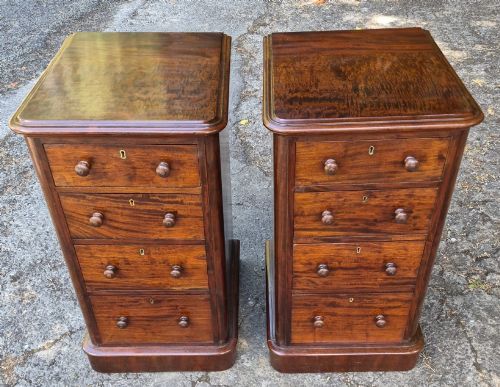
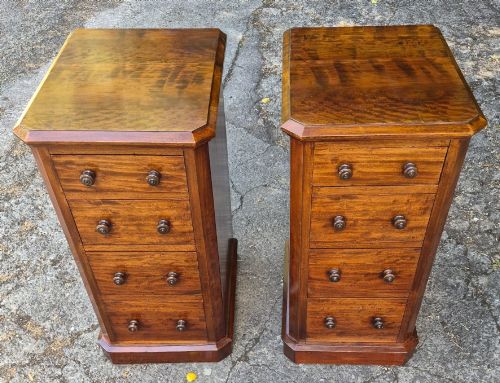
Antique Table Chest Drawers
When you search for an antique table chest drawers, you are looking for compact storage that combines the surface utility of a table with the compartmentalised drawers of a proper chest.
Antique Table Chest Drawers
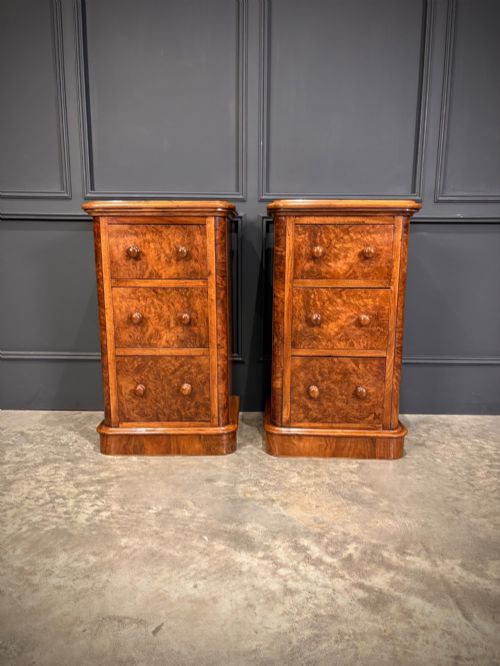
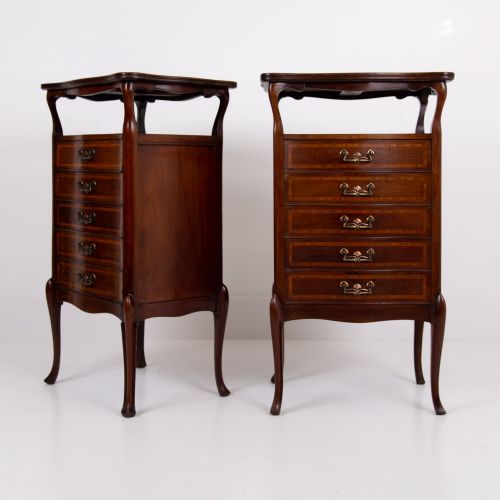
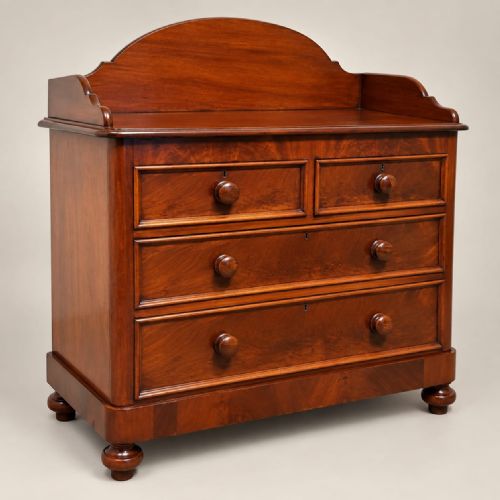
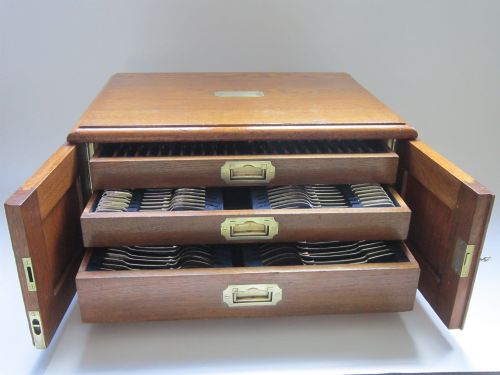
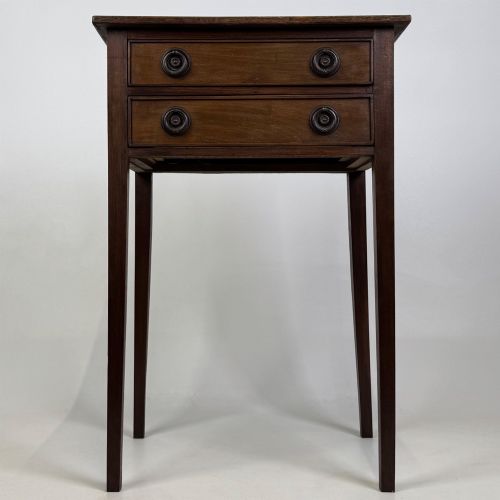
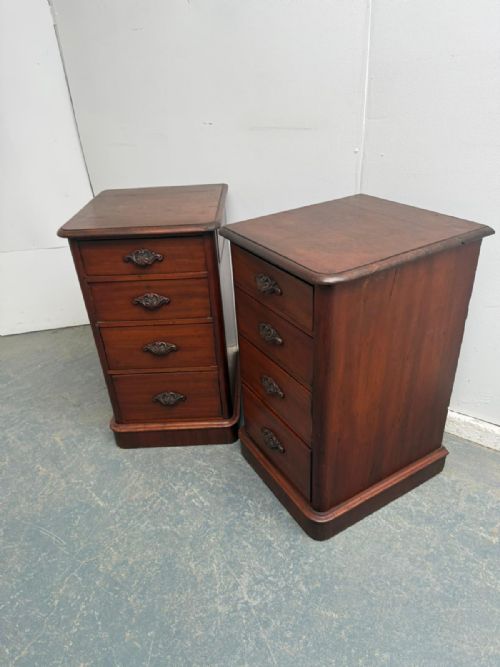
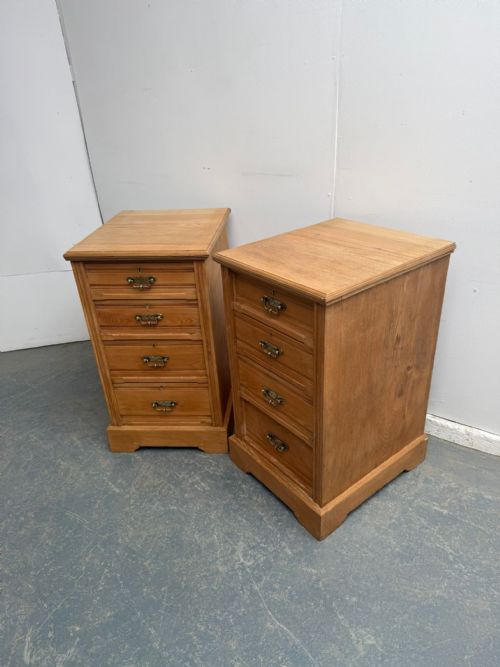
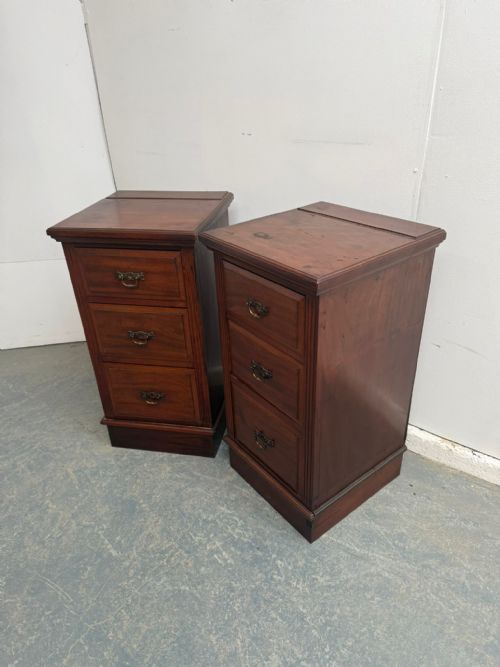
An antique table chest drawers unites several small-scale domestic forms, appearing most frequently on this page as bedside chests, nightstands, and dressing chests designed to fit modest bedroom spaces. These functional items span the Georgian, Victorian, and Edwardian eras, often taking the form of pairs designed to flank a bed.
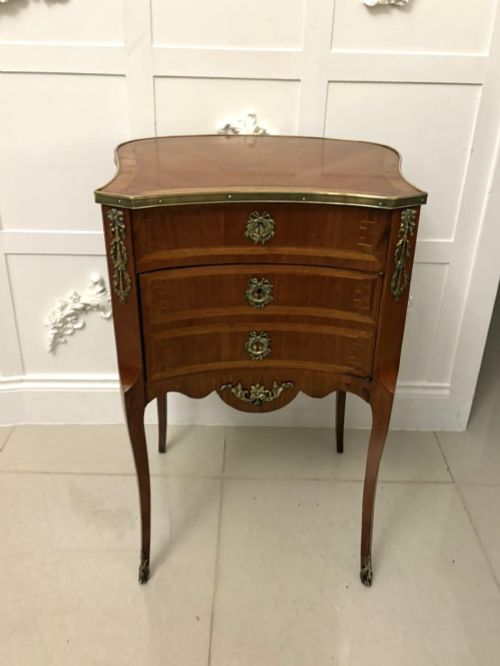
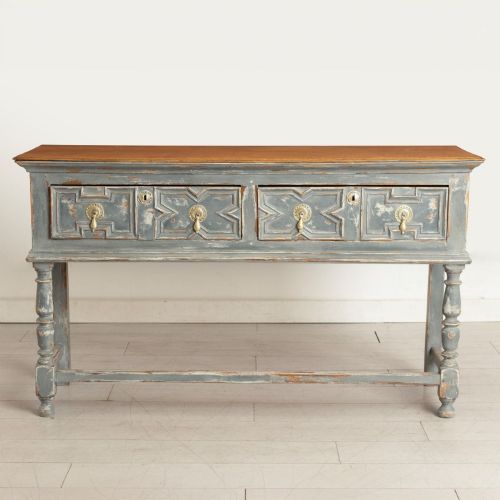
The category also encompasses smaller table top specimens and dressing table chests that integrate mirrors or tiered surfaces above multiple working drawers. Cabinetmakers constructed these pieces to provide concealed storage without dominating the floor plan of a period interior.
How they were made
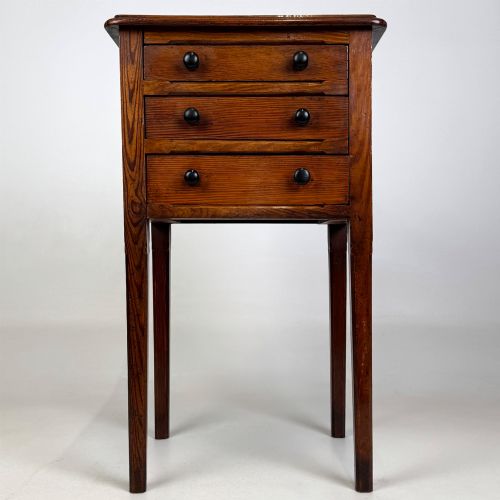
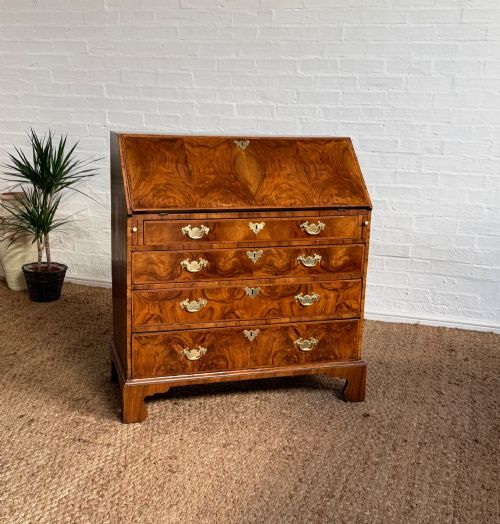
Cabinetmakers relied on sturdy timbers like mahogany, oak, and walnut for primary carcases, frequently applying decorative veneers such as burr walnut, flame mahogany, and kingwood to principal drawer fronts and surfaces. Secondary woods such as pine appear within drawer linings and internal framing.
Joinery methods involved hand-cut dovetails for drawer construction and sturdy mortise and tenon frames, ensuring durability across decades of daily use. Surface finishes typically rely on traditional wax polishes that accentuate the natural grain figures of the timber.
Specialised decorative techniques include floral marquetry inlay, brass hardware fittings, and moulded serpentine fronts that require precise shaping of solid timber or layered veneers.
Several diminutive specimens survive as table top chests, built precisely for collecting botanical specimens or storing delicate personal letters.
What varies in quality
The standard of a piece rests heavily on the selection of timber veneers, where highly figured burr walnut or matched flame mahogany elevate the visual depth of the drawer fronts. Superior examples exhibit continuous grain patterns flowing across multiple drawers.
Structural refinement distinguishes finer workshop production, evident in tightly fitted drawer joints, original brass handles, and precisely balanced proportions. Pieces retaining their original marble tops or subtle marquetry work demonstrate higher craftsmanship than utilitarian equivalents.
Warings Liverpool·Maple Co
The Antique Table Chest Drawers Glossary
- Burr walnut
- A decorative timber veneer taken from the knotted growths of a walnut tree, prized for its swirling, highly textured grain patterns.
- Marquetry
- The art of applying fitted pieces of wood veneer to a structure to form decorative patterns and pictorial designs.
- Serpentine front
- A furniture front characterised by a concave central section flanked by two convex curves, creating an undulating profile.
- Nightstand
- A small low bedside table or cabinet equipped with drawers or a cupboard door for nighttime storage.
- Dovetail
- A joint formed by interlocking wedge-shaped fingers, widely used in period drawer construction for superior tensile strength.
Antique Table Chest Drawers: Frequently Asked Questions
What is an antique table chest drawers used for?
These versatile items served traditionally as bedside nightstands, dressing chests, or miniature storage units placed against bedroom walls. Their combination of a flat top surface and sliding drawers provides both display space and concealed storage.
Today, they adapt easily to modern interiors as compact bedside tables, hallway surfaces, or living room lamp tables that maintain period character.
Are these pieces usually found as pairs?
Many bedside chests and nightstands survive as matched pairs intended to sit on either side of a larger bed frame. Sourcing matching pairs requires careful attention to dimensions, wood tone, and handle configurations.
Single examples are equally common, originating from dressing chests, table top cabinets, or freestanding bedroom suites designed for smaller chambers.
How should I care for a waxed wood surface?
Maintain polished timber surfaces by applying a quality beeswax periodically to nourish the grain and protect against drying out. Avoid placing these items in direct sunlight or near heat sources that can crack vintage veneers.
Dust regularly with a soft, dry cloth and lift objects rather than sliding them across the top surface to preserve the antique finish.