
Collector Small Chest Drawers
These compact collector small chest drawers offer scaled storage and specimen organisation across Victorian, Georgian and Edwardian periods.
Collector Small Chest Drawers
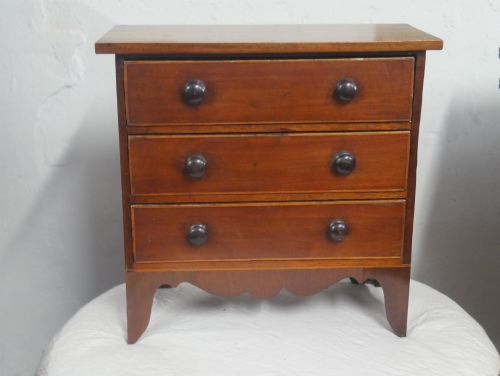
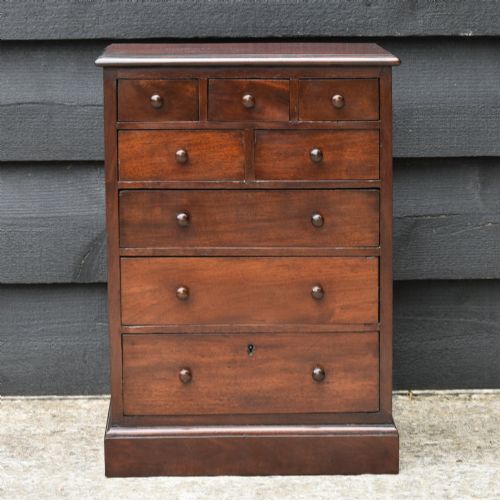
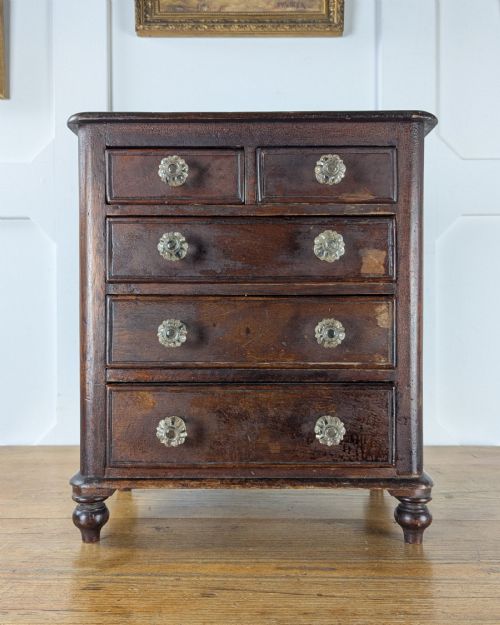
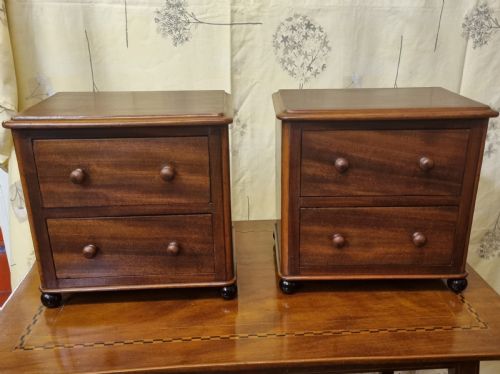
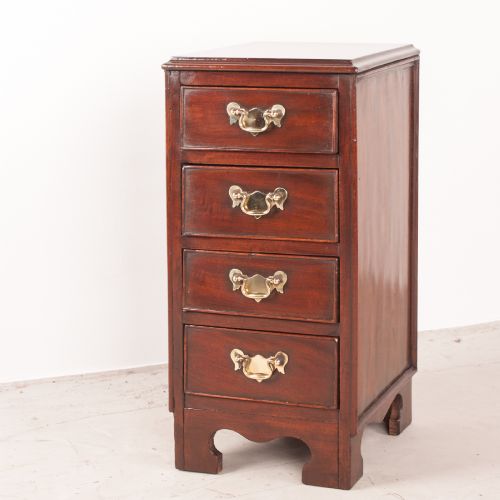
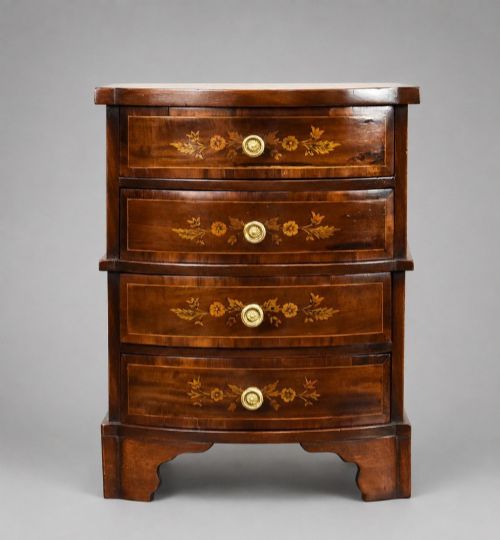
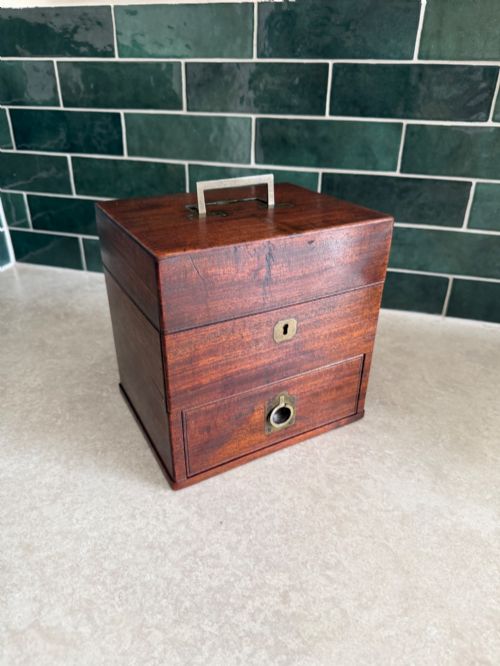
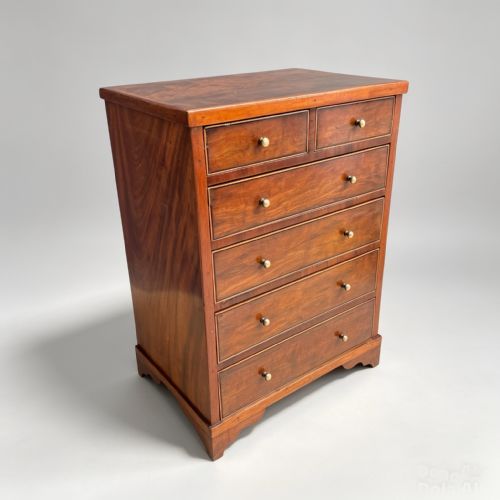
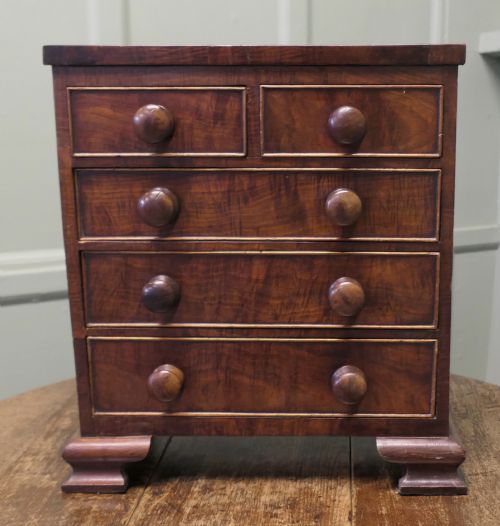
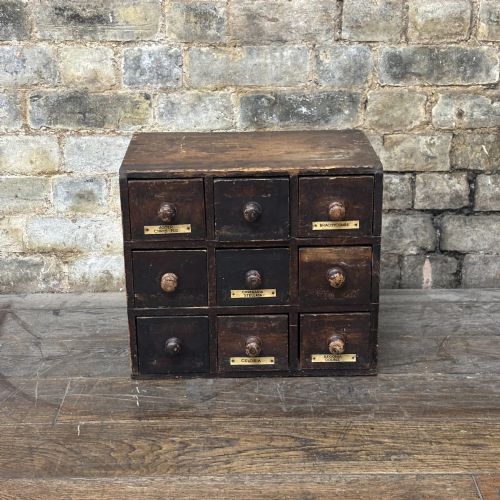
Collector small chest drawers span miniature furniture, spice drawers, apothecary cabinets and apprentice pieces designed for tabletop use. Buyers find Georgian, Victorian and Edwardian examples built to hold small treasures, coins, medicinal samples or botanical specimens.
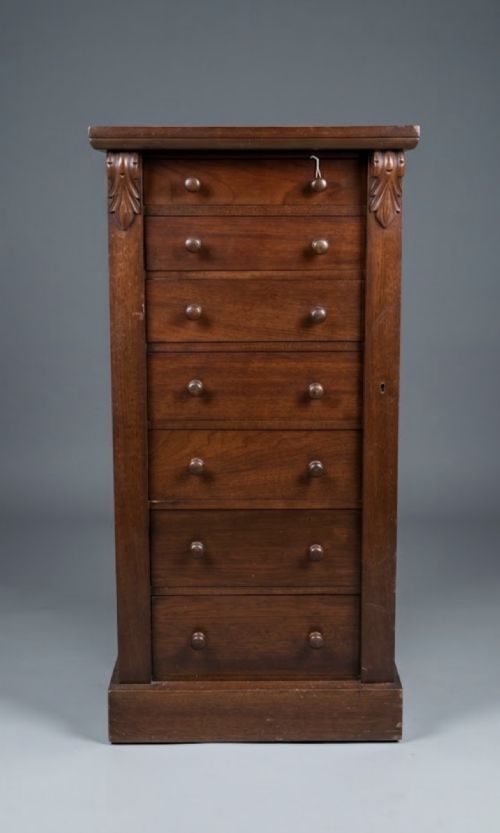
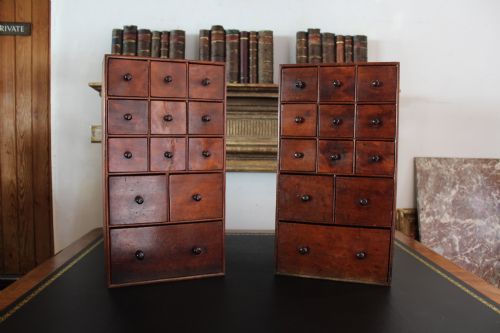
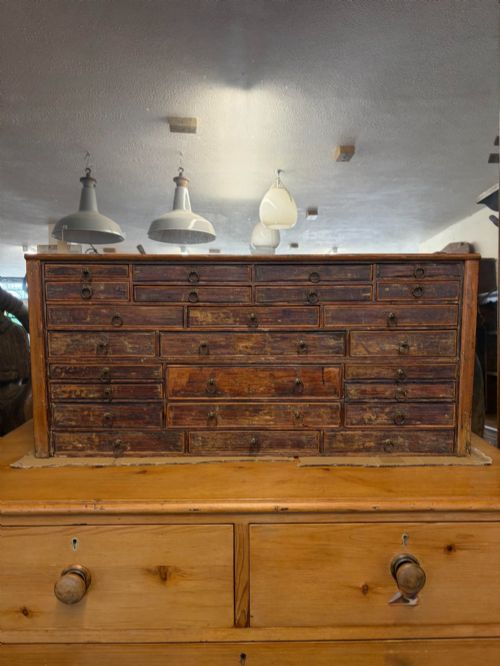
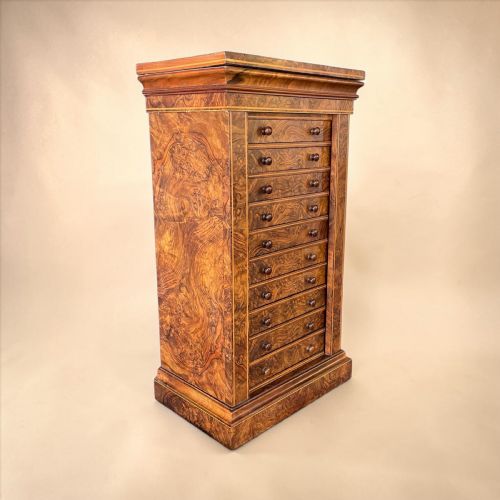
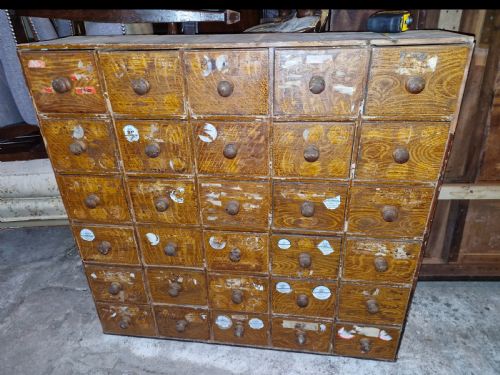
Mahogany, walnut and pine dominate the domestic versions, while utilitarian banks of drawers and filing cabinets appear in oak and fruitwood. Miniature bow fronts and Wellington chests sit alongside multi-drawer apothecary and florist seed chests.
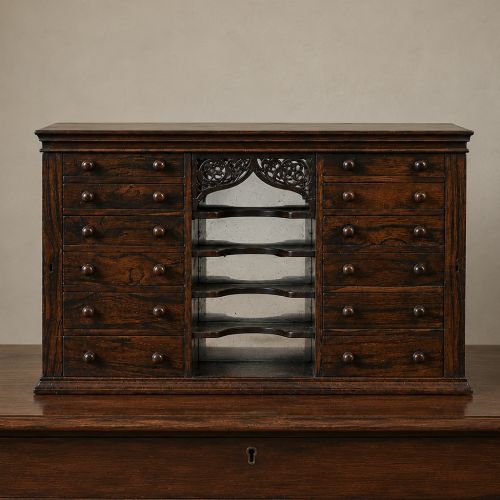
The nineteenth century provides the greatest share of pieces, ranging from fine mahogany apprentice pieces on turned feet to large apothecary banks with numerous small compartments. These smaller forms replicate full-sized case furniture or serve specific trade and scientific purposes.
Materials and Construction
Cabinetmakers utilised hardwoods like mahogany, walnut, rosewood and satinwood for finer domestic miniature chests, frequently employing marquetry inlay or polished veneers. Pine and oak served for sturdy apothecary chests, spice drawers and utility filing cabinets.
Drawer construction relies on tight dovetail joints, smooth internal runners and period brass handles or knobs. Secondary timbers such as oak or pine line the drawer interiors, while specialised pieces incorporate bone escutcheons or locking mechanisms like those found on Wellington chests.
Listings feature woods including mahogany, walnut, oak, pine, rosewood, fruitwood, satin birch, and elm.
Judging Quality
Quality rests on the precision of the cabinetwork, the choice of timber figurations and the integrity of the original hardware and surface finish. Finer miniature chests show meticulous dovetailing and matched veneers, whereas utilitarian spice drawers and medical cabinets prioritize robust timber and functional drawer division.
The balance of proportions between the miniature scale and standard furniture design dictates visual success. Surviving surface patination, original brass pulls and unaltered drawer configurations separate exceptional specimen cabinets from later alterations.
D Napier And Sons
The Collector Small Chest Drawers Glossary
- Apprentice piece
- A small item of furniture created by a craftsman to demonstrate skill before gaining master status. These miniature chests replicate full-sized prototypes with precise detail.
- Wellington chest
- A tall, narrow chest of drawers secured by a locking hinged side pilaster that fastens over the drawer edges. This form originates in the nineteenth century.
- Apothecary chest
- A multi-drawer cabinet constructed for storing medicines, herbs, or medical supplies. Pharmacists and physicians utilised these partitioned units.
- Specimen cabinet
- A small chest designed specifically for housing natural history collections like insects, minerals, or botanical samples. Shallow drawers protect delicate items.
- Dovetail joint
- An interlocking wood joint formed by wedge-shaped fingers that provides strong tensile strength. Cabinetmakers use this construction method for drawer corners.
Collector Small Chest Drawers: Frequently Asked Questions
What is an apprentice chest?
An apprentice chest is a small-scale model built by a craftsman to demonstrate mastery of joinery techniques.
These pieces mirror full-sized furniture designs in miniature proportions.
How were apothecary chests used?
Apothecary chests stored medicinal ingredients, dried herbs, and powders in rows of small fitted drawers.
Chemists and doctors kept them on tabletops for quick access during treatments.
How do I date a small chest?
Dating relies on timber selection, secondary woods, hardware styles, and construction methods like hand-cut dovetails.
Georgian and Victorian versions show distinct wood choices and decorative veneers characteristic of their eras.