
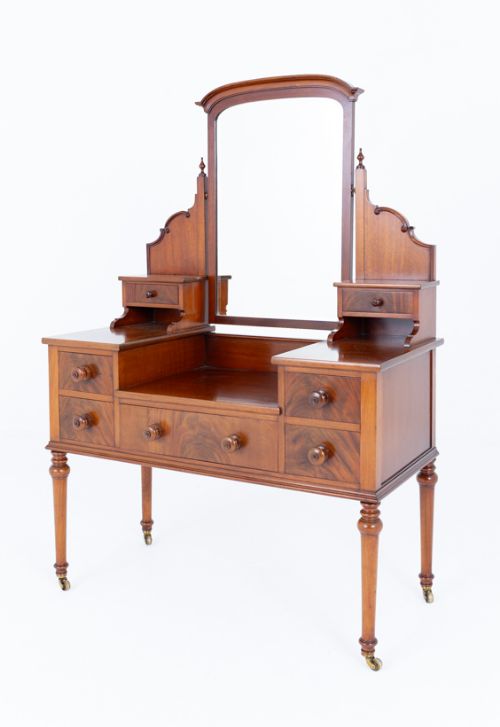
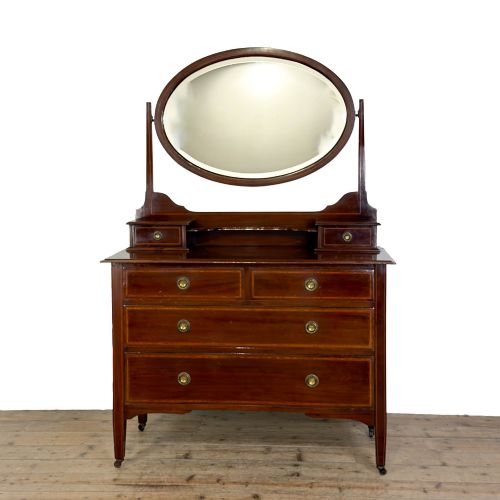


Antique Swivel Mirror Desk
These antique swivel mirror desk and dressing table pieces combine practical glass with fitted drawers, offering a traditional workspace addition.

Antique Swivel Mirror Desk
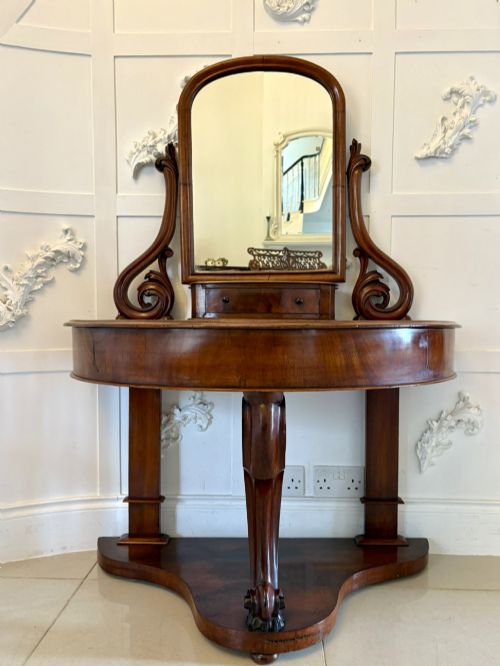
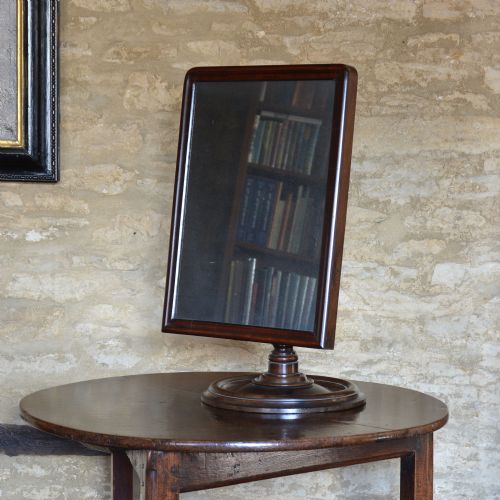
When searching for an antique swivel mirror desk, buyers encounter dressing tables, toilet mirrors, and table mirrors spanning the 17th century through the Edwardian period. These forms range from compact table mirrors with drawers to large pedestal dressing tables and duchess styles equipped with swing mirrors.
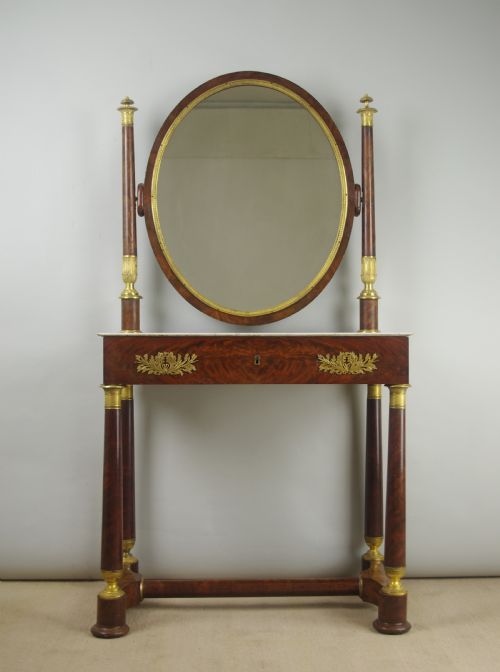
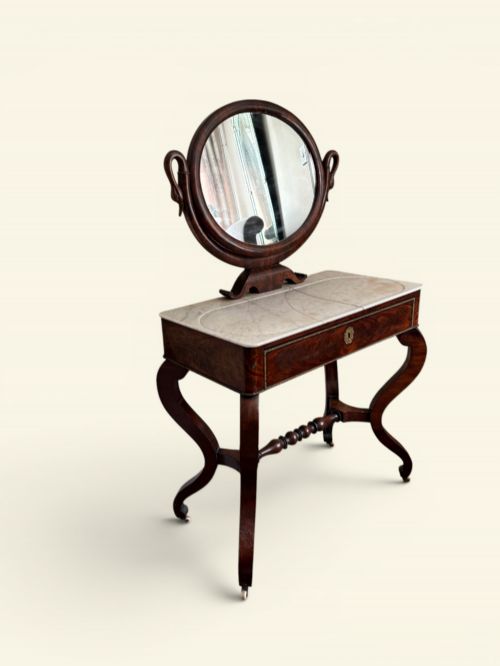
The Victorian and Edwardian eras supply the majority of mahogany and burr walnut examples on this page. Pieces also reach back to earlier centuries, including Georgian and 17th century walnut and boxwood designs alongside French Empire and 18th century French pieces with marble tops.
Function dictates the layout, connecting a rotating or swinging mirror glass directly to a surface or a chest of drawers. Buyers find scientific optical mirrors alongside standard dressing mirrors and dressing table chests.
Materials and construction
Makers built these pieces primarily using solid and veneered timbers such as mahogany, burr walnut, and satin birch. Boxwood stringing and brass mounts frequently accent the primary woods.
Glass forms the swiveling mirror component, often supported by brass or cast bronze hardware. Marble tops appear on specific French variants to provide a durable surface.
Listings span from the 17th century through to the Edwardian period, featuring mahogany, burr walnut, brass, and marble.
Assessing quality and craftsmanship
Construction standards differ between standard domestic furniture and specialised scientific optical equipment. The choice of figured timbers like burr walnut versus plain mahogany elevates a piece visually.
Hardware complexity dictates the tier of manufacture, distinguishing simple wooden frames from those featuring cast bronze dressing table mirrors or intricate ormolu mounts.
Thomas Rubergall of London
The Antique Swivel Mirror Desk Glossary
- Swing mirror
- A glass plate mounted on pivots that allows the user to tilt the reflection angle. This mechanism sits atop a base or desk structure.
- Duchess dressing table
- A large Victorian form featuring a large central swivel mirror supported by smaller drawers or trinket boxes. It combines a writing surface with a vanity setup.
- Toilet mirror
- A smaller tabletop glass with integrated drawers designed for grooming. These sit upon chests or tables rather than standing independently on the floor.
- Ormolu
- Gilded bronze mounts applied for decoration on French Empire and continental furniture. This material catches the light against dark mahogany surfaces.
- Boxwood
- A dense, pale wood utilised for contrasting inlay lines and stringing on walnut and mahogany carcases.
Antique Swivel Mirror Desk: Frequently Asked Questions
How do I date an antique swivel mirror?
Dating relies on timber choices, construction methods, and hardware styles associated with periods from the 17th century to the Edwardian era. Walnut and boxwood typically indicate earlier centuries, while mahogany dominates Victorian and Edwardian examples.
Examining the bevel of the glass and the composition of the support pivots helps differentiate between Georgian table mirrors and later reproductions or Victorian revivals.
What is the difference between a toilet mirror and a dressing table?
A toilet mirror is a compact glass and drawer unit designed to sit on top of an existing chest or table. It provides a movable reflection surface without occupying floor space.
A dressing table is a complete piece of furniture that integrates the mirror directly into a desk or drawer structure, as seen in pedestal and duchess forms.
Are these mirrors detachable from the desk?
Most table mirrors and dressing mirrors are constructed so the glass frame lifts away from the upright supports for transport. Larger duchess and pedestal dressing tables may secure the mirror frame to the main carcase with screws or wooden tenons.
Checking the specific mounting style reveals whether the mirror was designed to be easily separated from the base.
How do I care for antique mirror glass and wood?
Maintain the timber surfaces by applying appropriate wax polish sparingly and avoiding direct sunlight to prevent fading. Protect burr walnut and mahogany veneers from excessive moisture and extreme temperature fluctuations.
Clean the mirror glass gently using a soft cloth, ensuring moisture does not seep behind the silvering or into the wooden frame rebate.