

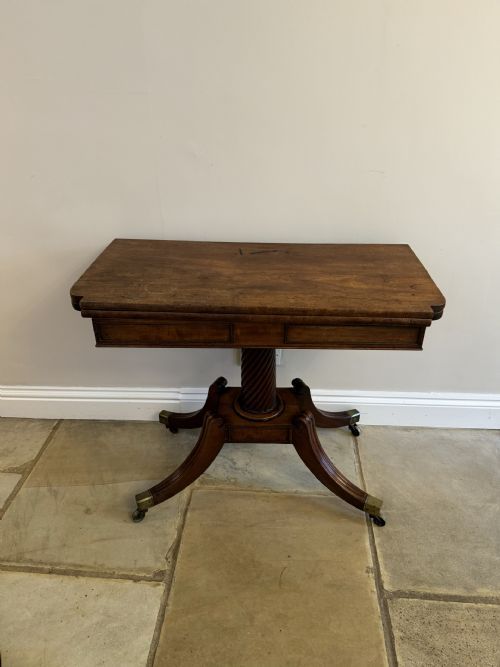
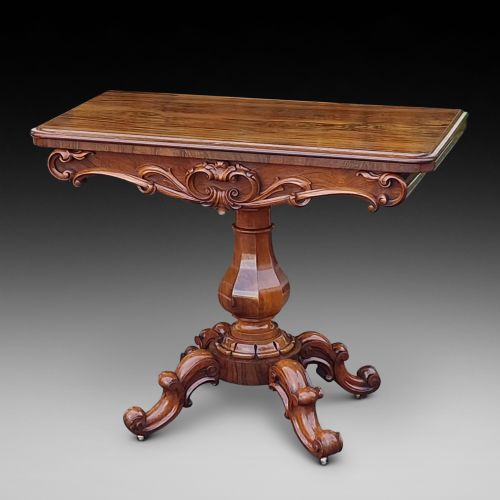
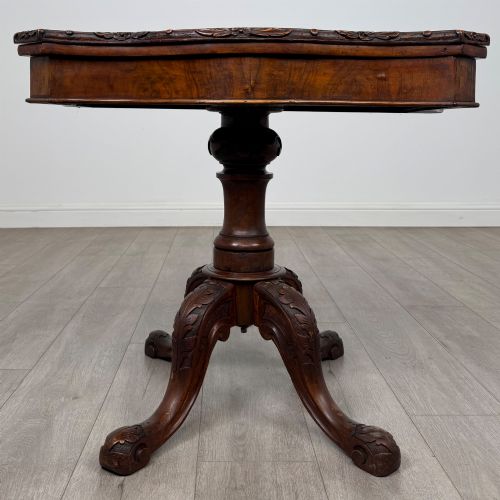
Antique Swivel Card Table
An antique swivel card table opens to reveal a felt-lined surface, combining ingenious pivoting mechanisms with rich timbers like mahogany and rosewood.
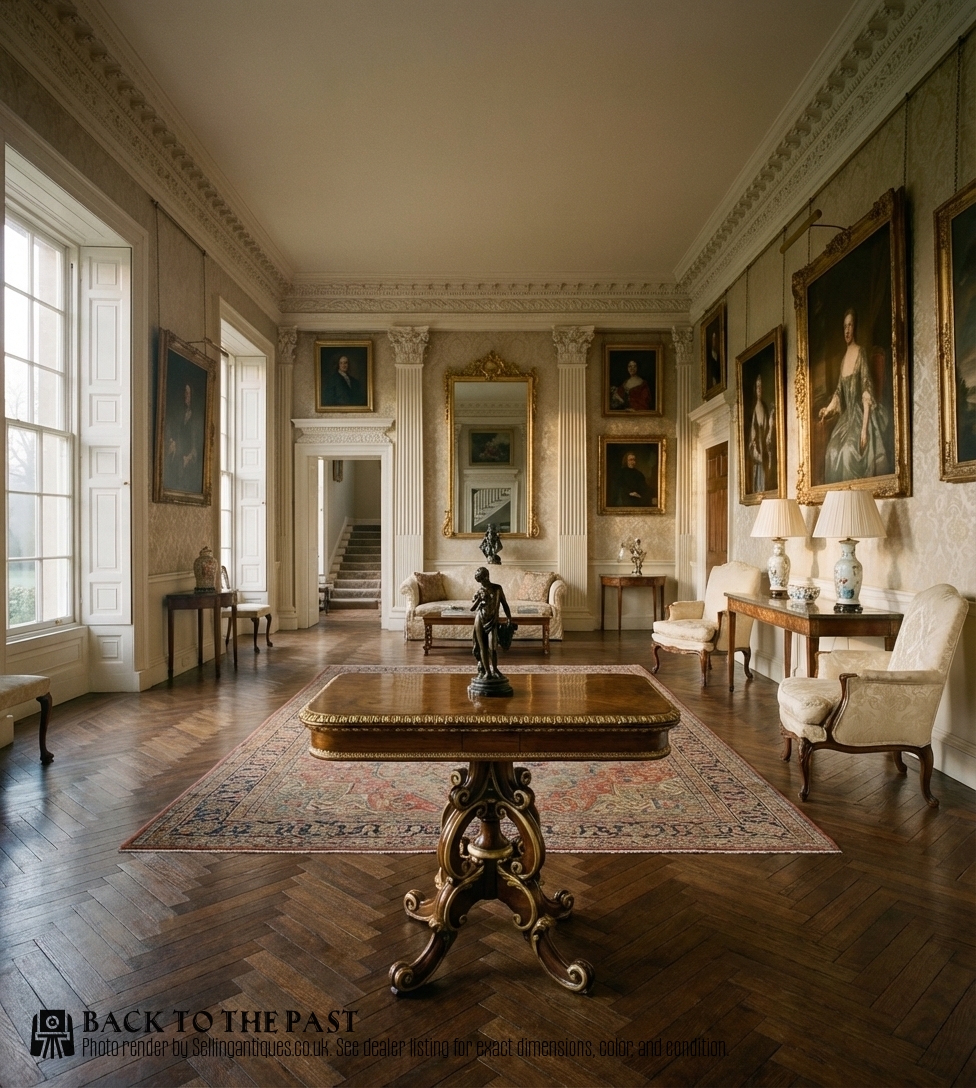
Antique Swivel Card Table
An antique swivel card table is a dual-purpose piece designed for domestic socialising, functioning as a console or side table when closed and pivoting open to provide a stable surface for games. These tables date predominantly from the Regency, William IV, and Victorian periods, reflecting the shifting interior fashions of the nineteenth century.
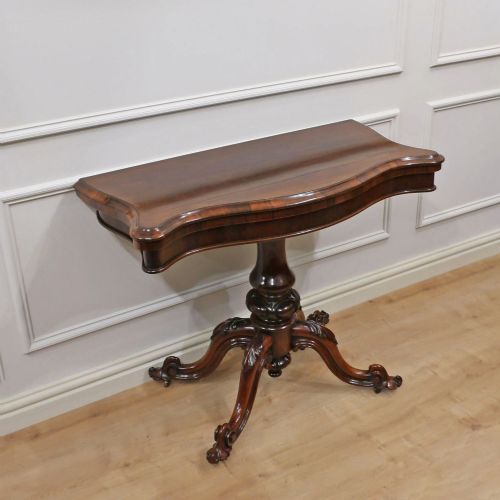
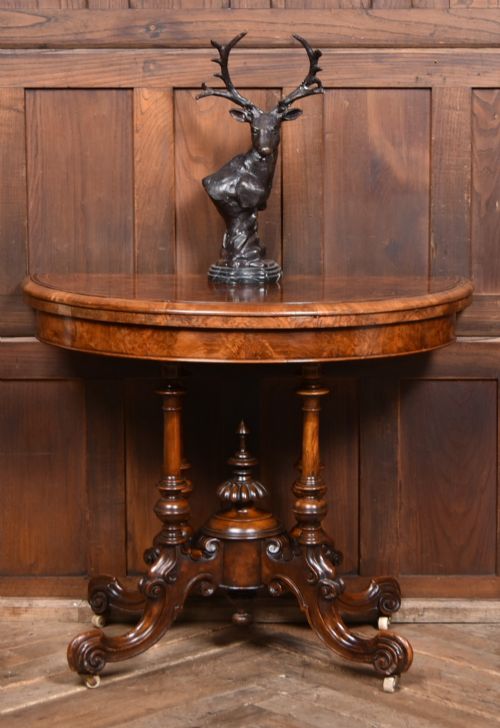
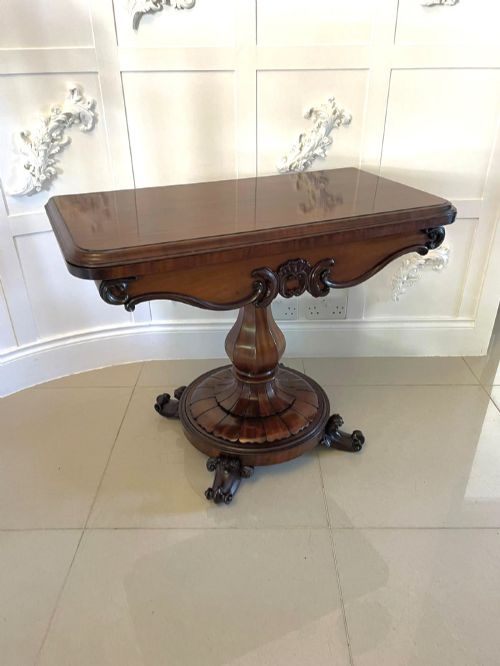
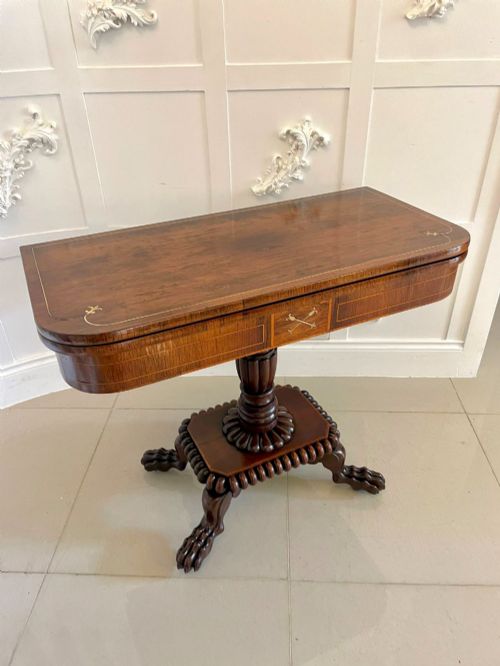
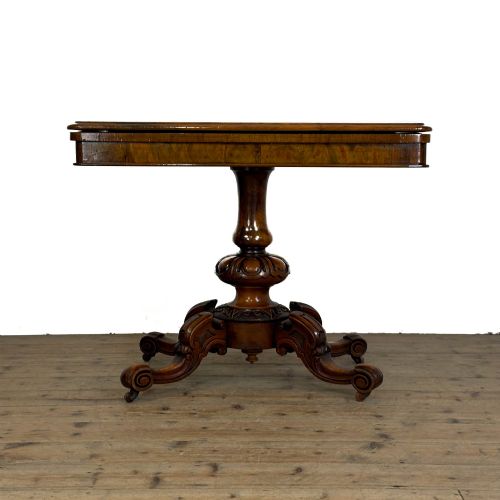
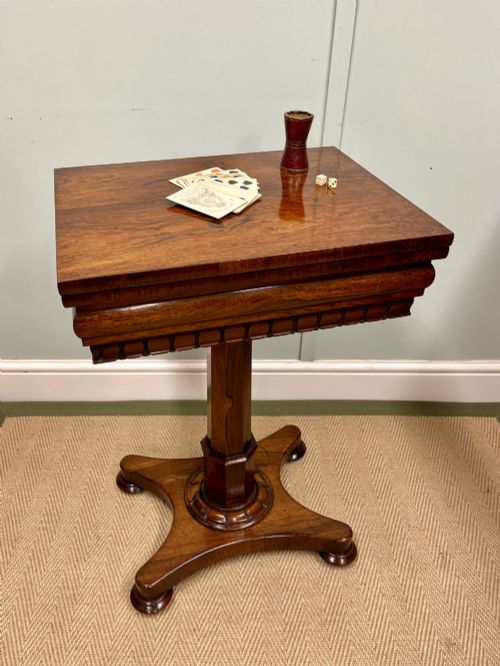
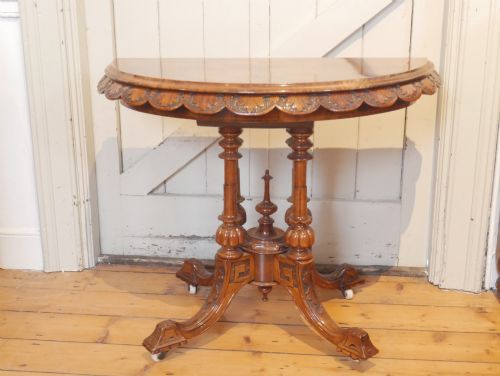
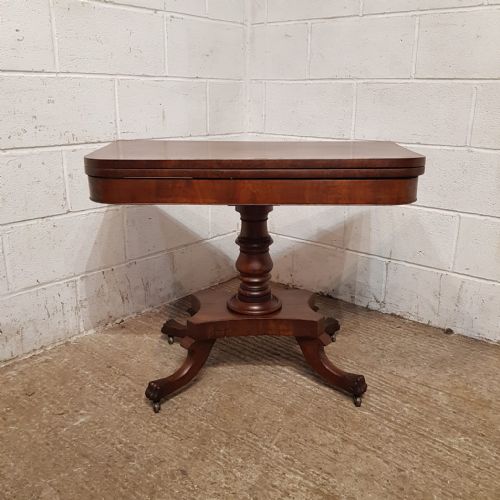
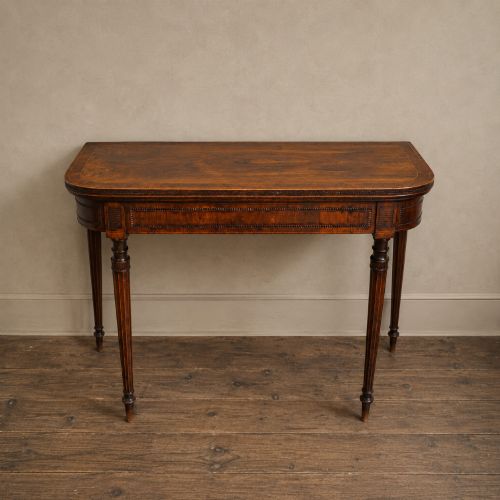
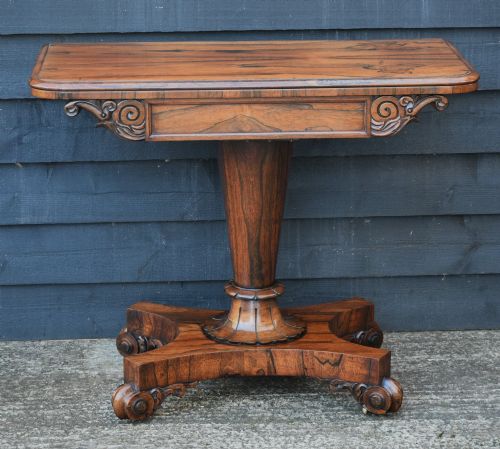
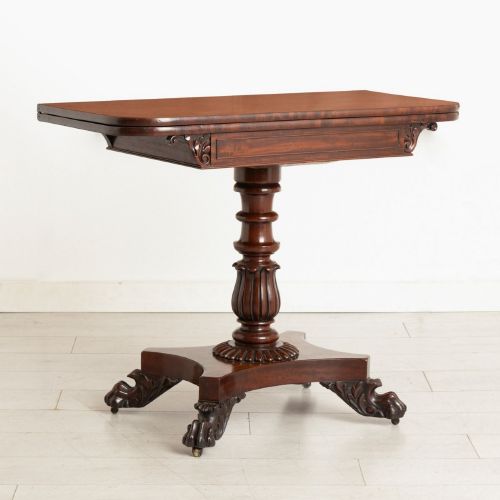
The most common versions met on this page are constructed from rosewood, mahogany, and walnut, often featuring fold-over tops that rotate on a central pivot to reveal a concealed compartment underneath. The forms range from rectangular and demilune shapes to pedestal bases supported by carved columns and brass castors.
How they were made
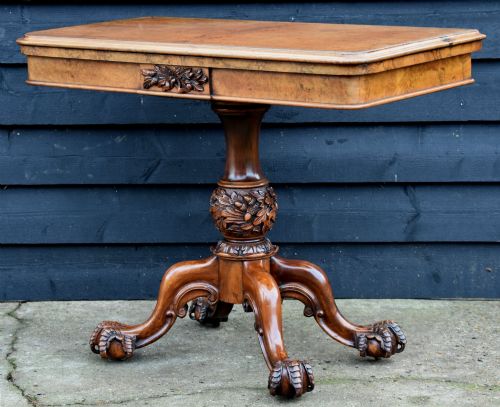
Cabinetmakers utilised dense tropical hardwoods such as mahogany and rosewood for structural stability and rich natural grain patterns. Burr walnut and burr yew wood were frequently applied as veneers and crossbanding to create decorative geometric borders on the top surfaces.
Internal components incorporate brass hardware for the pivoting and hinging actions, allowing the double-flap top to unfold smoothly. Joinery techniques from the period ensured the pivot mechanism bore the weight of the folding leaf without warping the underlying frame.
Listings feature rosewood, mahogany, walnut, burr walnut, and burr yew across Victorian, Regency, and William IV periods.
What varies in quality
The standard of timber selection and veneer matching defines the upper tier of these tables, where burr walnut or figured mahogany panels display symmetrical grain patterns across the folding leaves. Expert cabinetwork is evident in crisp, hand-carved mouldings on the pedestals and legs rather than cast plaster ornaments.
Structural integrity of the swivel and hinge mechanism dictates mechanical performance, as superior examples pivot without friction or sagging when open. The precision of the inlaid brass lines or boxwood stringing further separates standard workshop production from finer cabinet-maker output.
Edwards & Roberts
The Antique Swivel Card Table Glossary
- Swivel top
- A table top designed to pivot ninety degrees on its base, allowing the lower leaf to open out and rest upon the rotated section.
- Crossbanding
- A border of veneer laid with the grain running perpendicular to the main surface of the table top, often contrasting in timber type.
- Demilune
- A half-moon shape characteristic of certain card tables designed to sit flush against a wall when closed.
- Figured mahogany
- Timber selected for distinctive wave, curl, or mottle patterns in the grain, enhancing the visual depth of the polished surface.
- Pedestal base
- A central column support rising from a platform base with feet, common in Regency and Victorian designs.
Antique Swivel Card Table: Frequently Asked Questions
How do you open an antique swivel card table?
The top leaf lifts slightly and rotates on a central pivot mechanism built into the top of the pedestal or frame. Once turned ninety degrees, the folding upper leaf swings open to rest horizontally upon the newly revealed framework.
This movement exposes a recessed compartment beneath the leaves, originally intended for storing playing cards and small gaming counters. The swivel action locks securely into position to prevent the surface from shifting during use.
What were antique swivel card tables used for?
These tables served primarily as multi-functional furniture for domestic entertainment, accommodating card games such as whist, quadrille, and bridge during the evening. When not in use for gaming, the folded top allowed the piece to function as a side table, console, or tea table against a drawing room wall.
During the nineteenth century, polite society required versatile furniture that could transform a room from a formal reception space into an active social parlour. The concealed well beneath the folding top kept gaming accessories out of sight when the furniture returned to its closed position.
How do you date an antique swivel card table?
Stylistic markers and timber choices indicate the period of manufacture, moving from the classical lines and brass inlay of Regency pieces to the heavier proportions and carved rosewood of the Victorian era. Earlier nineteenth-century examples often display subtle mahogany or satinwood elements, while mid-century pieces favour burr walnut veneers and demilune shapes.
Construction details such as screw types, secondary woods used in the internal framing, and the design of the pedestal base provide further chronological clues. Cabinet-maker stamps or paper labels, when present, offer precise attribution.
How do you care for a rosewood or mahogany card table?
The polished timber surfaces require protection from direct sunlight and extreme humidity fluctuations to prevent the fine veneers from drying out or splitting. Regular dusting with a soft, dry cloth maintains the finish without the need for heavy silicone polishes.
Care must be taken when operating the swivel mechanism and folding leaf to avoid straining the internal pivot and hinges. Placing felt or baize protection inside the gaming well helps preserve the original interior lining if cards or counters are stored.