

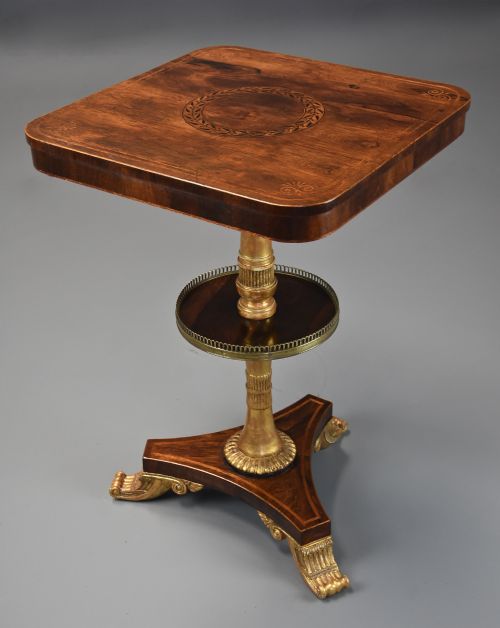
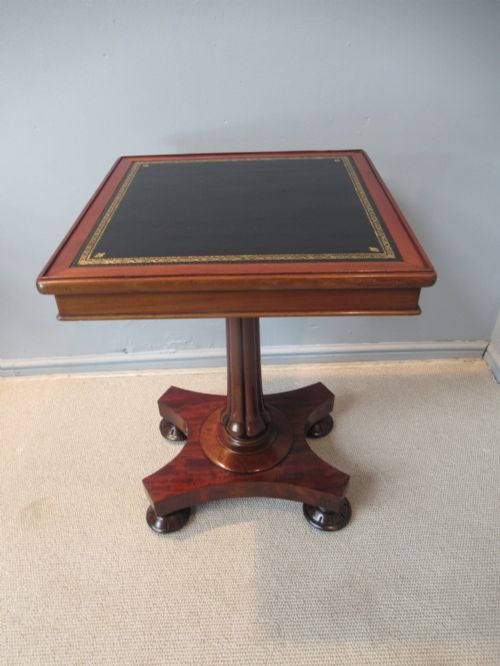
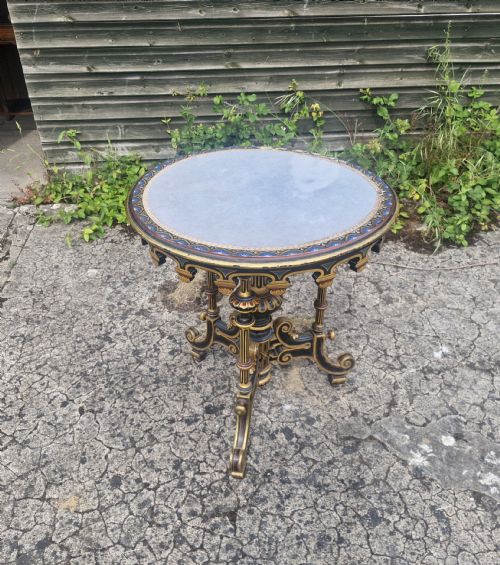


Gilt Pedestal Table
These gilt pedestal table pieces bring gilded warmth and classical proportion to a room, spanning the 18th century through to the 20th century.
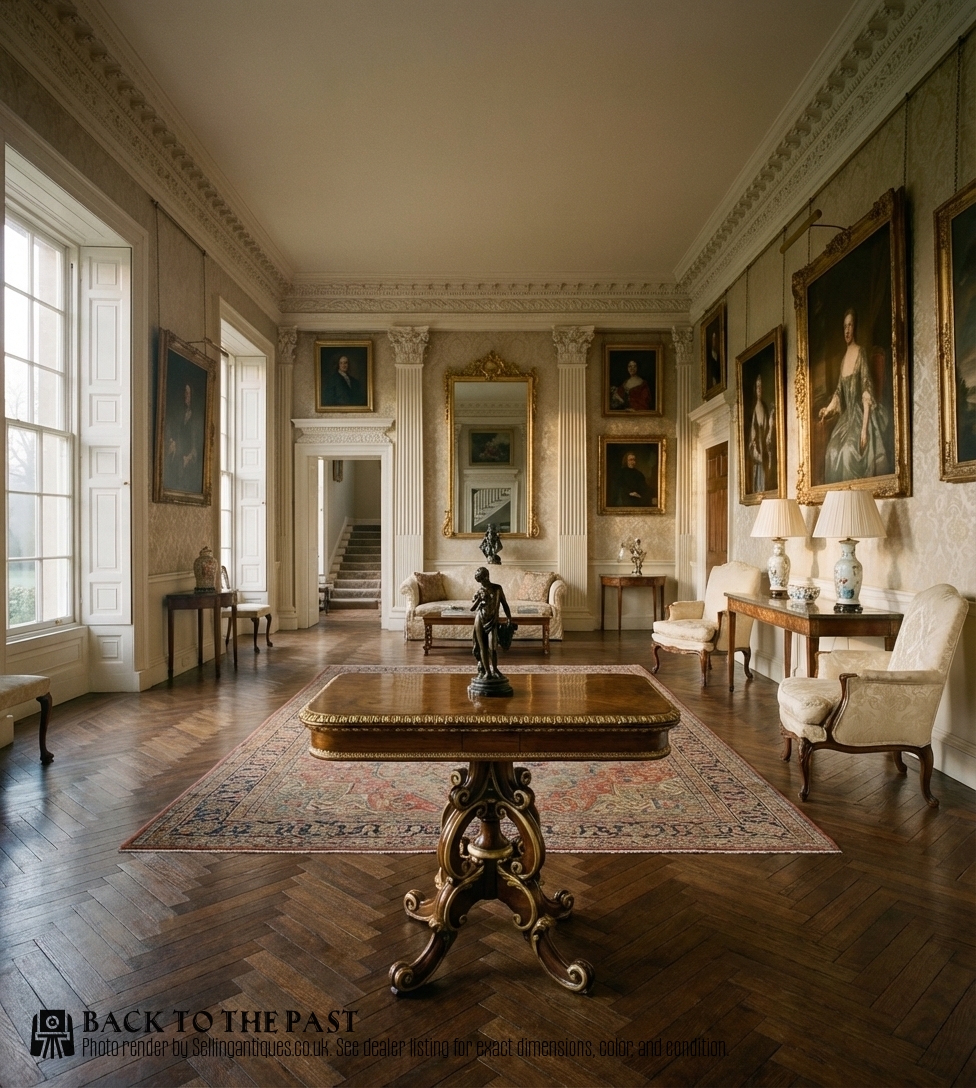
Gilt Pedestal Table
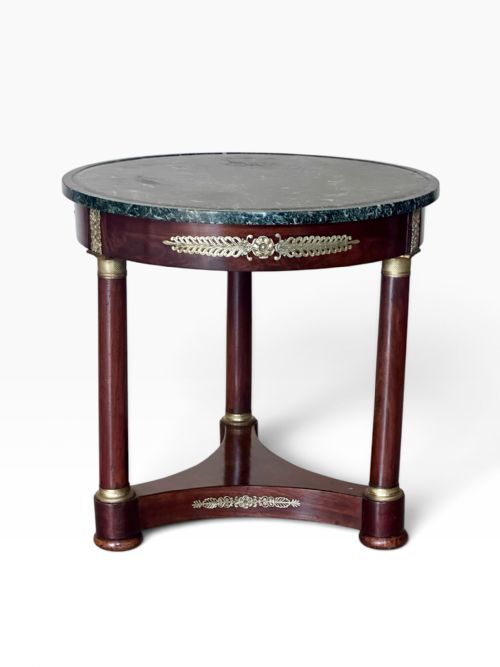
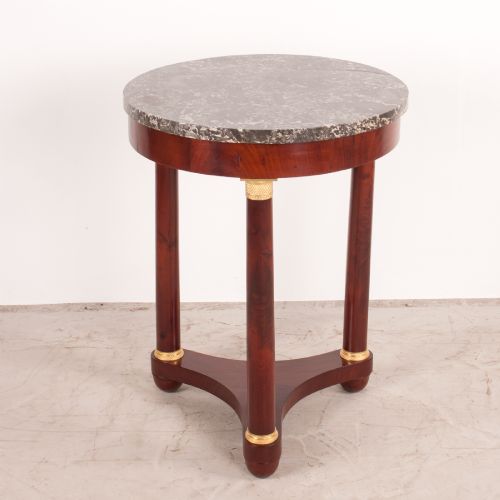
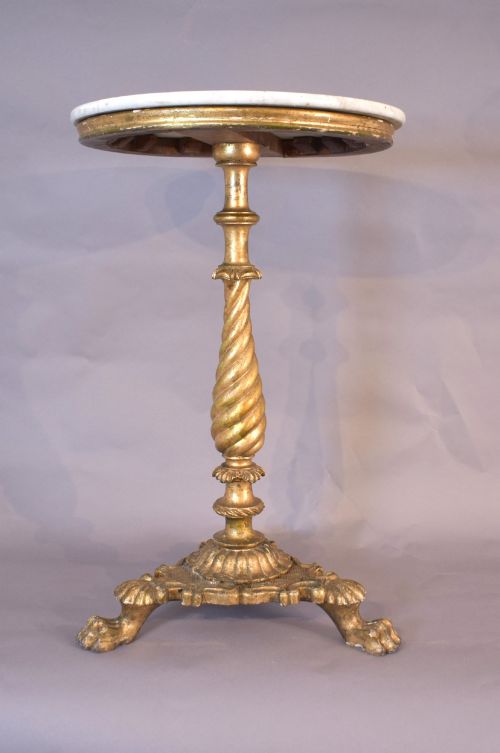
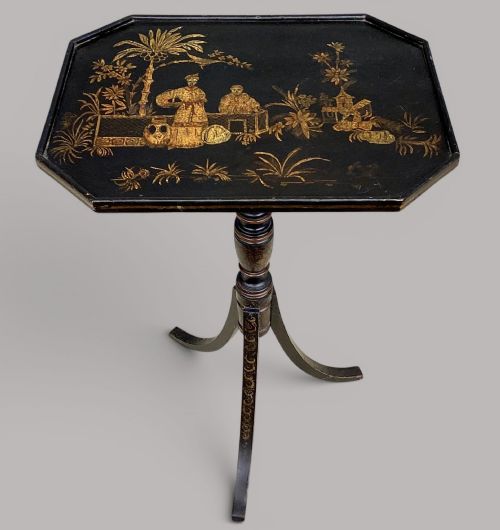
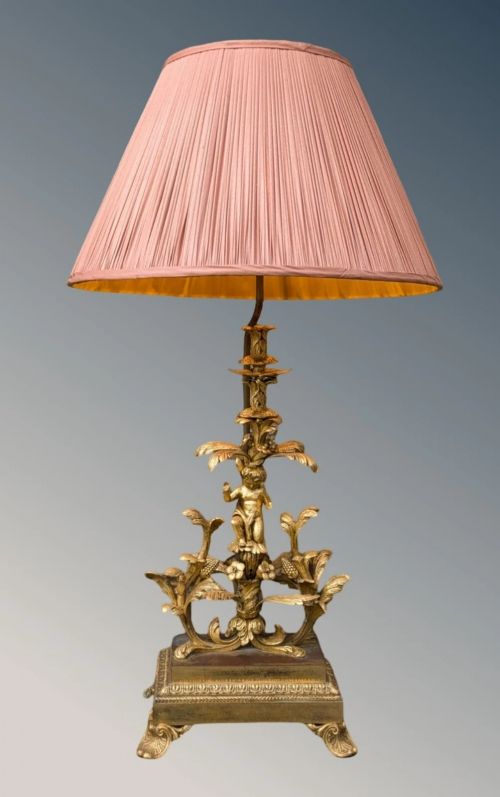
A gilt pedestal table stands on a central column or tripod support rather than four corner legs, often finished in gold leaf, ormolu or parcel gilt. The form spans various types including centre tables, occasional tables, gueridons and lamp tables.
Most examples found here date from the 19th century and the Victorian era, alongside Regency, Georgian and occasional 20th-century revivals. French Empire and Neoclassical styles appear frequently alongside British Victorian pieces.
Materials and construction
The construction relies on solid timbers like mahogany, rosewood or walnut as a carcase, paired with decorative surfaces of marble, onyx or leather. Gilding techniques apply gold leaf or paint directly onto carved wood, or utilise cast ormolu and gilded brass mounts.
Makers shaped structural columns using turned or carved wood, incorporating tripod legs or heavy circular plinths for stability. Ormolu and bronze mounts provide structural accents and decorative detail around the pedestals and table rims.
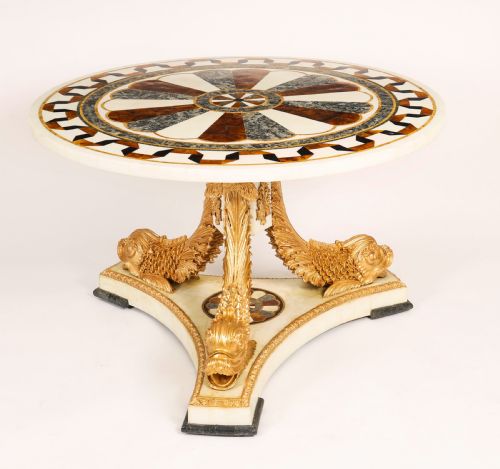
Dolphins swim through neoclassical design, propping up occasional tables with carved wooden tails.
Factors determining quality
Quality rests upon the crispness of the carving in the wood or the precision of the cast bronze and ormolu mounts. Finer pieces display hand-chiselled details on metal and deeply carved acanthus or foliate motifs on the timber.
The choice of top material alters the piece, with solid marble or onyx slabs and inlaid pietra dura marking out higher grade items compared to painted or simpler timber tops.
Wylie & Lochead·George Bullock·Messenger·Weisweiler
The Gilt Pedestal Table Glossary
- Gueridon
- A small French occasional table supported by a single central pillar, popular in neoclassical and empire schemes. These pieces frequently feature round marble tops.
- Ormolu
- Gilded bronze used for decorative mounts on furniture, highly prized for its warm metallic lustre. Craftsmen fire-gilded the bronze with mercury in historical pieces.
- Parcel Gilt
- Woodwork or metalwork partially covered in gold leaf while other areas show the natural wood or paint beneath. This technique highlights specific carved details.
- Pietra Dura
- An inlay technique using cut and fitted polished coloured stones to create pictorial designs on tabletops. Florentine workshops mastered this meticulous craft.
- Tripod Table
- A small table standing on three legs connected to a central pedestal column. The design allows the table to remain stable on uneven floors.
Gilt Pedestal Table: Frequently Asked Questions
Where should I place a gilt pedestal table?
These tables suit hallways, drawing rooms or corners where a central pillar offers easy circulation around the piece. They function well as lamp tables or display surfaces for decorative objects.
Because they rest on a single pedestal, positioning them away from heavy traffic prevents accidental knocks while allowing the carved or gilded column to catch the light.
How do I care for marble top tables?
Marble tops require gentle cleaning with a damp cloth and mild soap, avoiding acidic substances like lemon or vinegar that etch the polished stone. Coasters protect the surface from rings and spills.
The wooden or gilded pedestals beneath need dusting with a dry, soft cloth to preserve the gold leaf and prevent moisture damage to the finish.
What is the difference between Regency and Victorian styles?
Regency pieces lean towards classical antiquity with clean lines, rosewood, brass inlay and influences from French Empire design. They date from the early 19th century.
Victorian pieces often use heavier timbers like walnut and mahogany, featuring more ornate carving, ormolu mounts and eclectic revivals like the Aesthetic Movement.
Are tilt top tables practical for daily use?
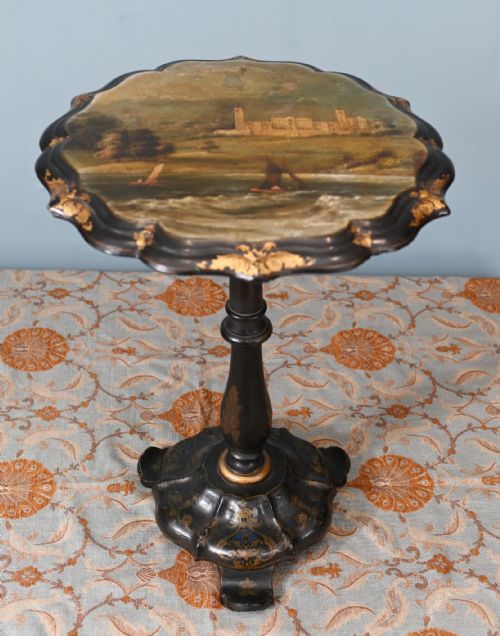
Tilt top tables feature a mechanism allowing the tabletop to pivot vertically when not in use, originally designed to save space against a wall. This makes them versatile for smaller rooms.
The hinge mechanism requires gentle handling when lowering the top to ensure the catch engages securely with the pedestal.