

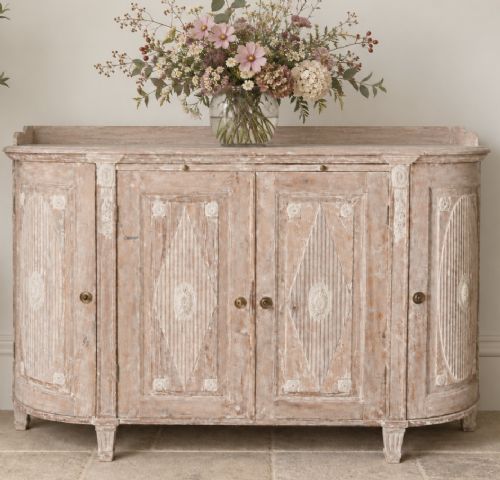
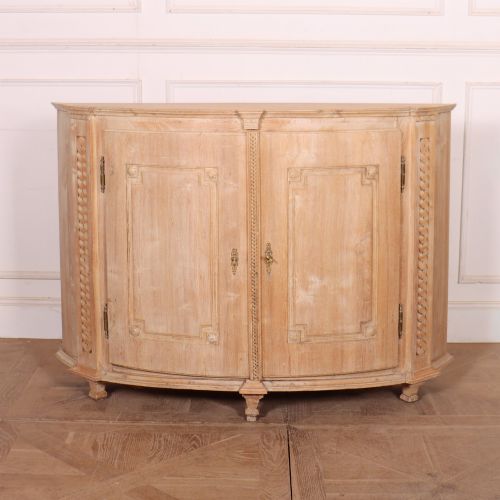
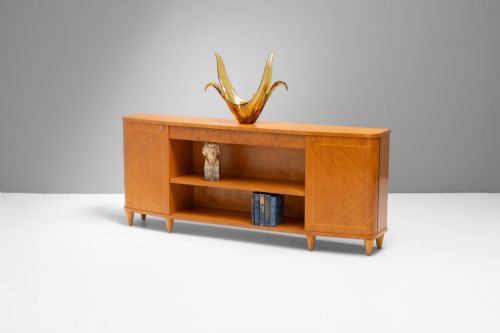
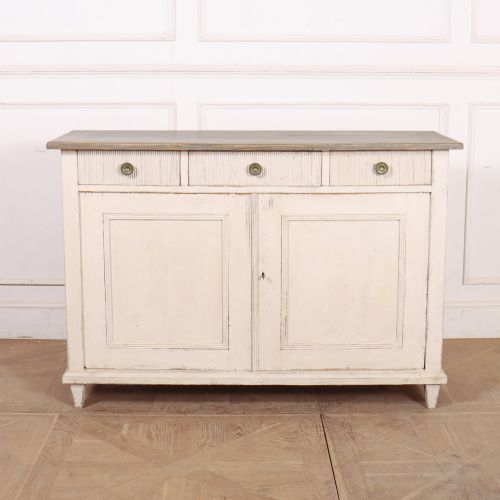
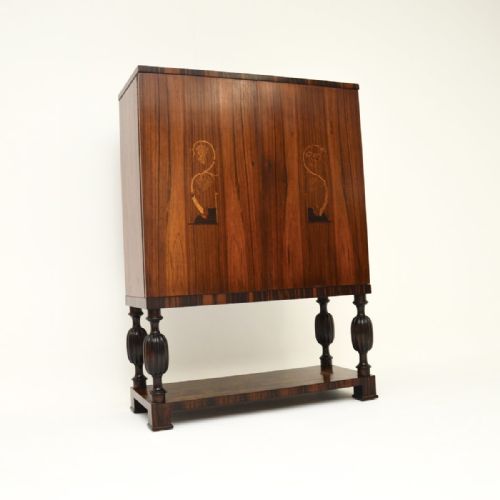
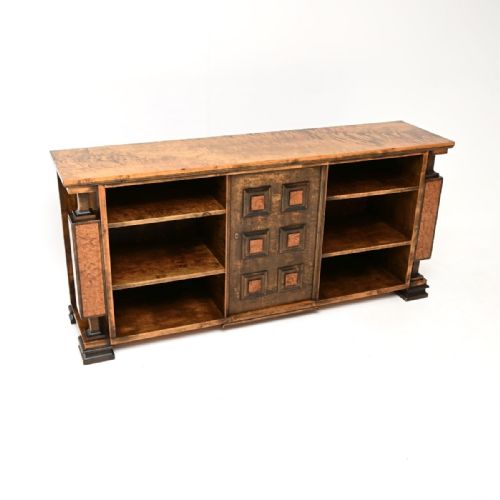


Antique Swedish Sideboard
An antique Swedish sideboard brings sculptural Nordic presence and generous storage to a room, uniting clean proportion with honest regional craftsmanship.
Antique Swedish Sideboard
An antique Swedish sideboard encompasses substantial storage furniture originating from Scandinavian workshops, spanning the eighteenth, nineteenth, and early twentieth centuries. When searching for an antique Swedish sideboard, buyers encounter a robust variety of forms including painted pine cupboards, birch buffets, and enfilades.
The selection here ranges from rustic painted pine kitchen cupboards and linen presses to refined birch sideboards and art nouveau cabinets. Regional variations draw upon Gustavian, Scandinavian country, and Biedermeier traditions, offering both understated elegance and utilitarian practicality.
Makers utilised native softwoods and hardwoods to construct pieces suited to domestic storage, from diminutive dressers to grand architectural cabinets. Surface treatments vary widely, featuring original scraped paint, ragwork decoration, and polished wood grains.
How they were made
Carpenters constructed these pieces primarily using native pine, birch, and satin birch, frequently applying layered lead-based or milk paints to softwood carcases. Surface finishes often display original scraped paint effects and decorative ragwork techniques executed by regional artisans.
Hardware details incorporate forged iron hinges, latches, and cast brass escutcheons, securing doors and drawers built with traditional joinery methods. Certain iterations integrate contrasting elements like burr elm veneers or zinc tops to create durable working surfaces.
Antique Swedish Sideboard Retail Price Guide 2026
Typical asking prices for swedish sideboard among the pieces listed under this phrase on Sellingantiques today, from the lower quarter to the upper quarter. They describe what is for sale here now, not the wider market.
Materials span plain pine and softwoods to decorative satin birch, burr elm, and zinc work surfaces.
What varies in quality
Quality rests upon the preservation of original surface treatments, where untouched scraped paint or patinated wood grain commands greater appreciation than modern refinishing. The crispness of carved mouldings and the integrity of regional joinery distinguish master cabinet work from simpler utilitarian output.
Proportion and structural balance dictate the visual success of each piece, with restrained Gustavian lines sitting at a different aesthetic tier from rustic country cupboards. The choice of timber, from humble pine to figured birch and burr elm, marks the boundary between everyday utility and high-status interior furnishing.
The Antique Swedish Sideboard Glossary
- Gustavian
- A Swedish neoclassical design movement spanning the late eighteenth and early nineteenth centuries, characterised by restrained symmetry, fluted columns, and pale painted finishes.
- Enfilade
- A suite of pieces or a long sideboard designed to stand in a row against a wall, providing extensive surface and cabinet space.
- Ragwork
- A decorative painting technique where rags are used to dab or wipe colour across a surface, creating a mottled or textured finish on furniture.
- Scraped paint
- A method of conservation or original decoration where top layers of paint are partially removed to reveal historic colours underneath.
- Commode
- A low chest of drawers or cabinet, often standing on legs, originating from French influence but widely adopted across Scandinavia.
Antique Swedish Sideboard: Frequently Asked Questions
How do I identify a true period piece?
Examine the timber construction methods, tool marks on the interior boards, and the composition of the paint layers. Older pieces utilise hand-cut joinery and forged iron fixings distinct from later industrial production.
Look for natural wear patterns around handles and hinges that correspond with age rather than artificial distress. Regional Swedish characteristics, such as specific moulding profiles and native pine or birch substrates, help confirm origin and period.
How do I care for original painted finishes?
Dust surfaces gently with a dry, soft cloth and avoid chemical cleaning agents that can strip delicate historical paint layers. Keep wooden furniture away from direct heat sources and strong sunlight to prevent warping and pigment fading.
Maintain stable room humidity to protect both the softwood carcase and the fragile surface decoration. Professional conservation advice should be sought before attempting any remedial work on historic paint.
Where should I place a sideboard in my home?
These cabinets suit dining rooms, living spaces, and hallways where their substantial storage and strong silhouette can anchor the room. Ensure adequate wall clearance and measure access routes carefully, as historic cupboards often feature solid, non-demountable carcases.
Pair painted pieces against neutral walls to highlight subtle tones, or use birch sideboards to introduce warm golden grain textures into modern interiors.
What is the difference between a buffet and a sideboard?
Buffets traditionally served lower dining functions for holding food and tableware, frequently featuring open lower shelves or closed cabinet doors. Sideboards often incorporate a combination of central cupboards and flanking drawers designed for comprehensive dining room storage.
In Scandinavian cabinet making, these terms frequently overlap, describing utilitarian case furniture adapted for domestic dining and linen storage.