
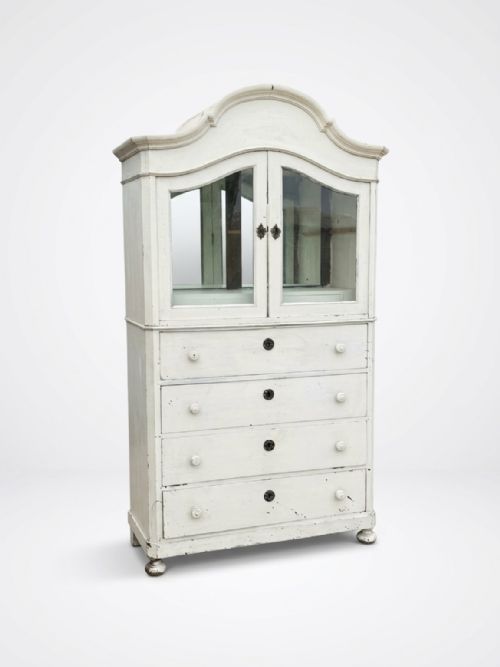
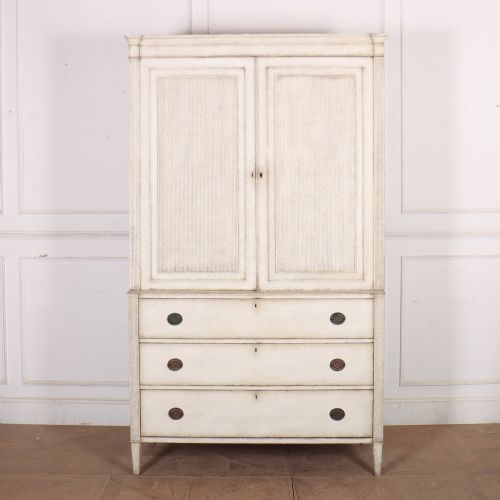
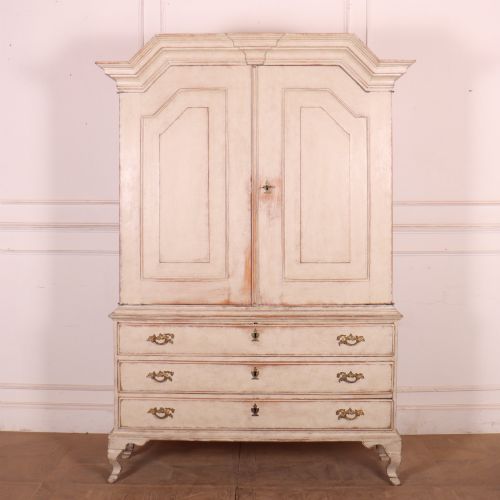


Antique Swedish Linen Press
An antique Swedish linen press brings sculptural storage and pale painted charm to a room.
Antique Swedish Linen Press
An antique Swedish linen press provides tall, capacious storage with origins in the eighteenth and nineteenth centuries. These large cupboards and cabinets often feature double doors enclosing fitted interior space for domestic textiles.
The version most commonly met on this page is constructed from pine and finished with hand-applied paint, reflecting Scandinavian country and Gustavian traditions. Pieces range from simple rustic cupboards to elaborate bonnet top and cabinet-on-stand forms.
Dating spans the eighteenth, nineteenth and early twentieth centuries, including occasional Georgian and revival examples. Regional vernacular styles such as folk art and Scandinavian Baroque appear frequently among the painted surfaces.
Materials and Construction
Pine forms the structural core for the majority of these presses, complemented by harder woods like birch, satin birch and bird's eye maple on select revival pieces. Iron and brass provide the hinges, escutcheons and structural hardware.
Surfaces receive layered coats of paint, occasionally incorporating traditional ragwork techniques to create textured decorative finishes. Cabinetmakers utilised timber veneers and solid boards alongside glass panels for upper display sections.
Some nineteenth century boards still bear the faint, chalked initials of rural makers hidden beneath layers of pale Swedish paint.
Evaluating Quality
Quality rests in the subtlety of the painted surface, the crispness of carved mouldings such as bonnet tops, and the integrity of the timber framing. Early pieces display hand-planed boards and traditional joinery that distinguish them from later revivals.
Proportion and decorative restraint govern the appeal of Gustavian and country pieces, where restrained neoclassical details elevate standard pine construction. The sophistication of interior fittings and original iron hardware further separate standard storage from exceptional examples.
The Antique Swedish Linen Press Glossary
- Gustavian
- The Swedish neoclassical style spanning the late eighteenth and early nineteenth centuries, characterised by restrained symmetry, fluted columns and pale painted finishes. It draws inspiration from French Louis XVI design interpreted through a northern aesthetic.
- Ragwork
- A decorative paint technique using rags or cloths to apply or wipe colour, creating a mottled or patterned finish on furniture surfaces. This method adds subtle texture to country pine pieces.
- Bonnet top
- An arched or curved upper cabinet roofline that softens the rigid rectangular profile of a tall wardrobe. This architectural feature often houses extra storage space within the sweep of the curve.
- Cabinet on stand
- A two-part form where a storage cupboard rests upon a separate supporting frame with legs. This configuration lightens the visual weight of heavy pine furniture.
- Scandinavian Baroque
- An ornate northern European style preceding the Gustavian period, featuring heavier carved details and robust proportions. Surviving examples display deep mouldings and darker original pigments.
Antique Swedish Linen Press: Frequently Asked Questions
What is a Swedish linen press used for?
These tall cupboards provide substantial vertical storage for bedding, folded garments and household textiles behind enclosed doors. Their deep shelves and internal fittings keep fabrics organised while concealing clutter.
Beyond utility, they serve as prominent architectural focal points in bedrooms, hallways and living spaces. Their painted facades introduce height and colour to neutral interior schemes.
How do I identify a Gustavian piece?
Gustavian pieces display neoclassical motifs such as fluting, rosettes and straight tapered legs beneath pale monochrome paint finishes. The overall design emphasises clean symmetry and understated elegance.
They appear lighter and more formal than rustic country furniture, reflecting direct inspiration from French royal courts filtered through Swedish craftsmanship.
Are these cupboards made of solid pine?
The majority of these pieces utilise solid pine for their primary carcass, framing and internal shelving. Master cabinetmakers selected local conifers for their availability and workability.
Later revival examples occasionally incorporate birch veneers, satin birch or exotic hardwoods like bird's eye maple on exterior surfaces for decorative contrast.
How do I care for painted pine furniture?
Protect the painted finish by keeping the cupboard away from direct sunlight and steady heat sources that cause wood to dry and crack. Dust gently with a dry, soft cloth and avoid chemical cleaning agents.
Maintain stable room humidity to preserve both the underlying pine timbers and the historical paint layers against flaking or movement.