
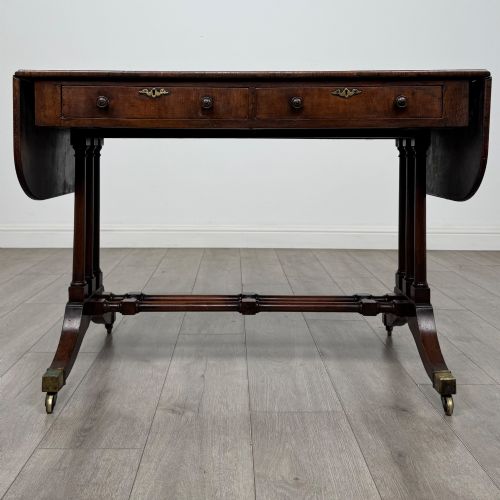
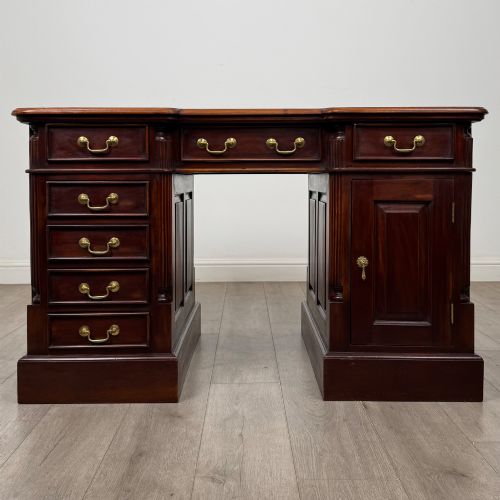
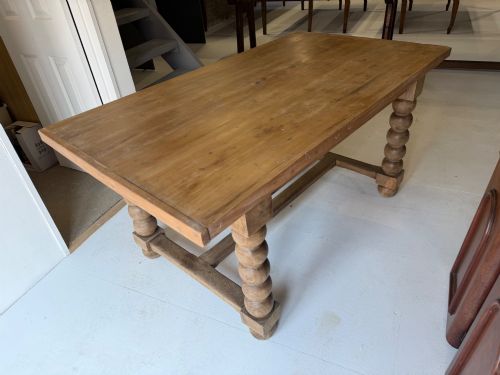
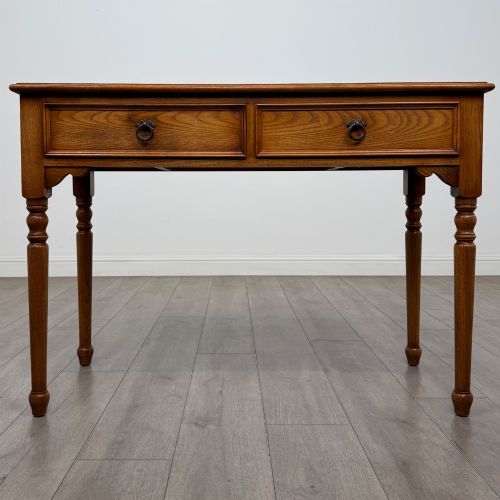


Antique Style Writing Table
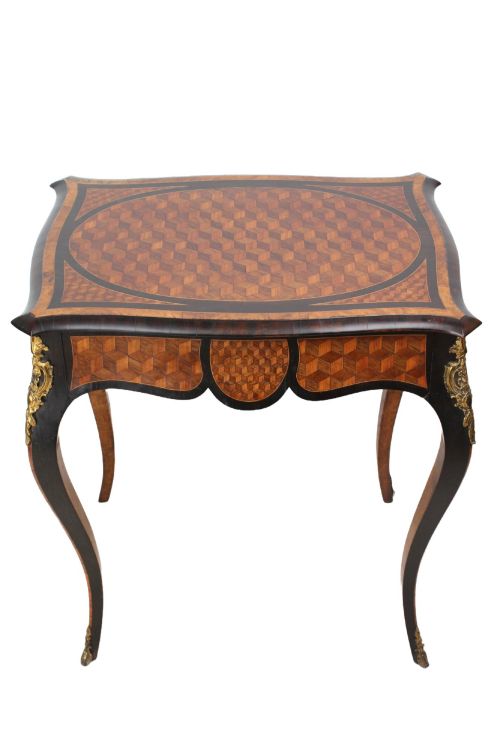
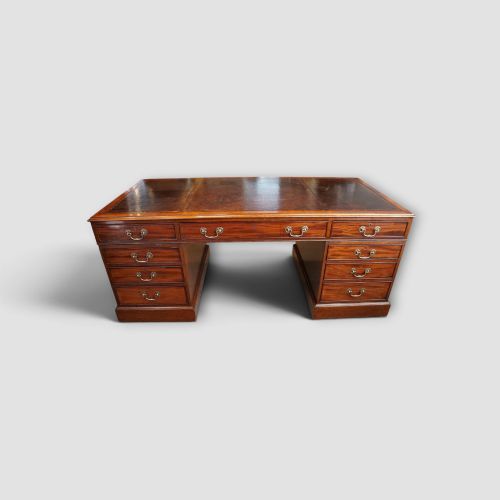
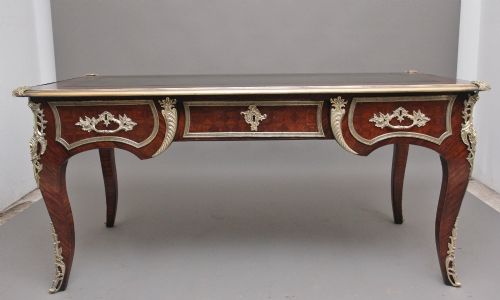
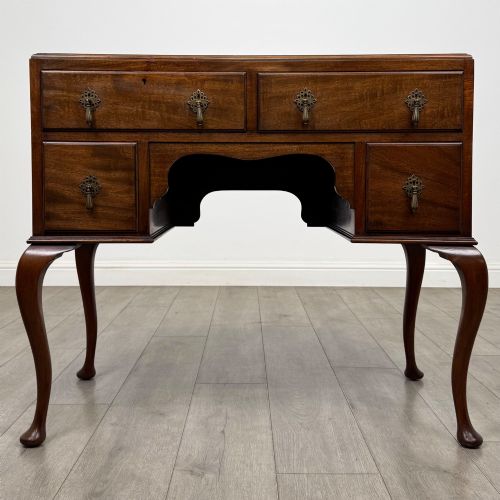
An antique style writing table brings traditional craftsmanship and practical workspace into a room, offering everything from mahogany kneehole desks to ornate French bureau plats.
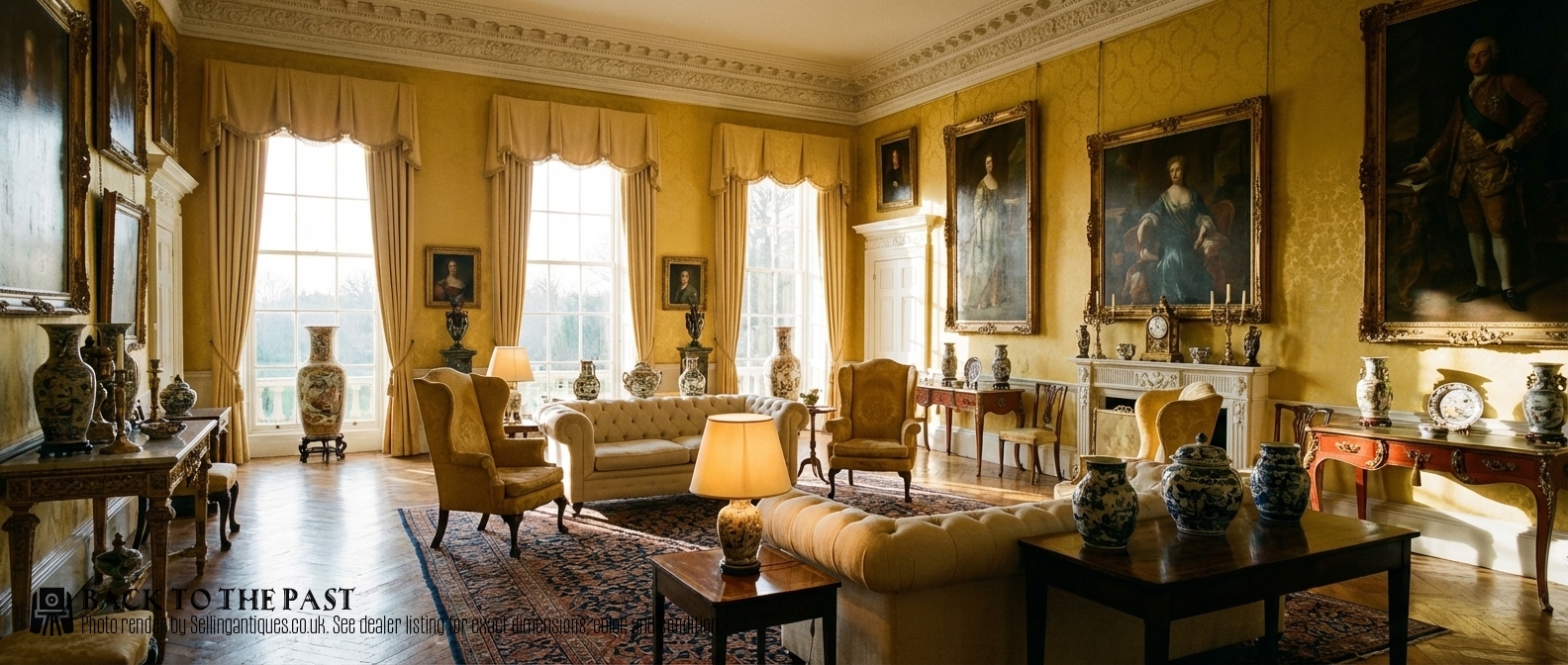
Antique Style Writing Table
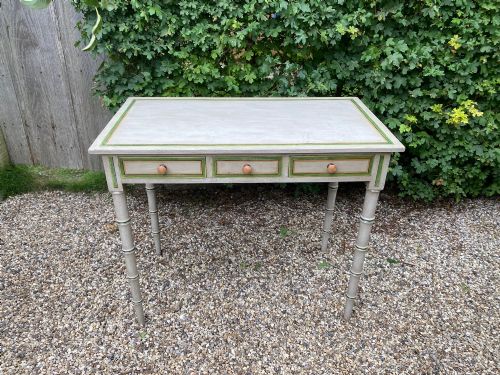
When you search for an antique style writing table, you encounter a wide variety of freestanding desks, bureau plats, partners desks, and side tables designed for domestic work and correspondence.
The pieces on this page span the Georgian, Victorian, Edwardian, and later periods, capturing revivals of Louis XV, Chippendale, and Regency aesthetics.
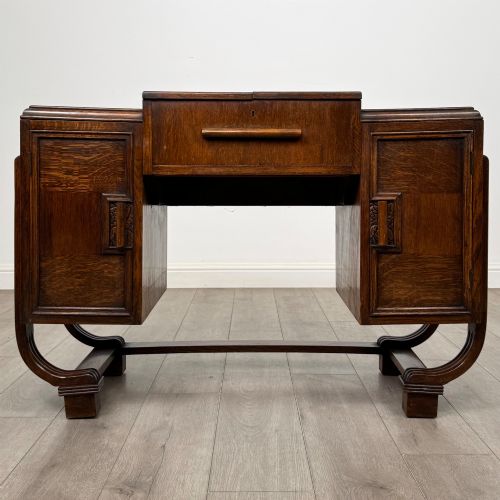
Mahogany and oak dominate the timber choices, frequently accompanied by leather writing surfaces, burr walnut veneers, and elaborate marquetry inlay.
Materials and Technique
Cabinetmakers utilised solid hardwoods such as mahogany, oak, and walnut, often applying figured veneers like burr walnut, flame mahogany, and kingwood to key display surfaces.
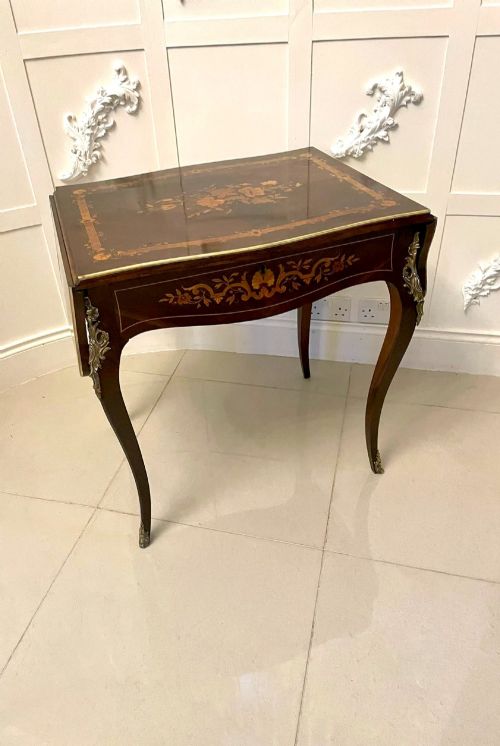
Decorative embellishments include intricate marquetry, parquetry, brass handles, and cast ormolu mounts, particularly on French-influenced bureau plats and revival pieces.
Many tables incorporate fitted drawers, leather writing inserts with gilt tooling, and turned or tapered legs reflecting the prevailing style of their period.
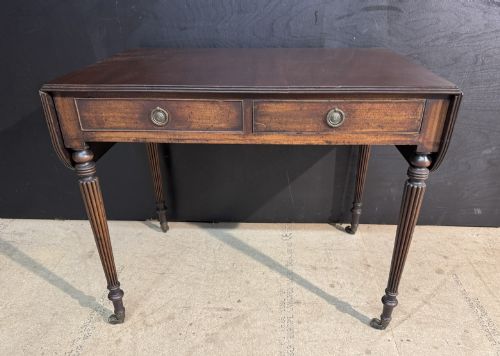
Several desks feature drop-side flaps, ready to expand instantly for unexpected bouts of serious correspondence.
Defining Quality
The distinction between standard production and exceptional craftsmanship rests on the selection of timber figures, the precision of cabinet joinery, and the refinement of brass or ormolu mounts.
Maker attribution elevates a piece significantly, with works associated with established workshops like Gillows, François Linke, or JAS Shoolbred demonstrating superior hand-carved detailing and structural integrity.
JAS Shoolbred·Francois Linke·Edwards and Roberts·S and H Jewell·Waring and Gillows
The Antique Style Writing Table Glossary
- Bureau plat
- A freestanding writing table, typically with drawers in the frieze, originating in France during the eighteenth century and frequently revived in later periods.
- Partners desk
- A large double-sided pedestal desk designed to allow two people to work opposite one another simultaneously.
- Marquetry
- Decorative patterns formed by the insertion of pieces of wood, ivory, or shell into a veneer to create pictorial or geometric designs.
- Ormolu
- Gilded bronze mounts and decorative hardware utilised extensively on French and revival furniture during the nineteenth century.
- Parquetry
- Geometric wood mosaic work used for flooring or furniture surfaces, particularly prominent on revival tables.
Antique Style Writing Table: Frequently Asked Questions
What is an antique style writing table?
An antique style writing table is a desk or freestanding table designed for correspondence and light administrative work, drawing inspiration from historical periods such as Georgian, Regency, or Louis XV.
These pieces range from modest Edwardian mahogany tables to elaborate Victorian bureau plats featuring marquetry and ormolu mounts.
How do I choose the right size desk?
Consider the available floor space and how the desk will sit in the room, particularly if it is a freestanding centre table that requires clearance on all sides.
Compact Edwardian and Victorian options suit smaller studies, whereas large partners desks and pedestal desks demand substantial rooms.
How are leather inserts maintained?
Leather writing surfaces benefit from occasional gentle cleaning with a damp cloth and conditioning with specialist leather balm to prevent drying and cracking.
Avoid harsh chemical cleaners that can strip the original gilt tooling around the perimeter of the insert.
Can these tables be used daily?
These tables were built for functional use and remain sturdy enough for contemporary laptop work and writing tasks when handled with reasonable care.
Placing coasters on the timber and protecting leather surfaces ensures the antique finish survives everyday activity.