
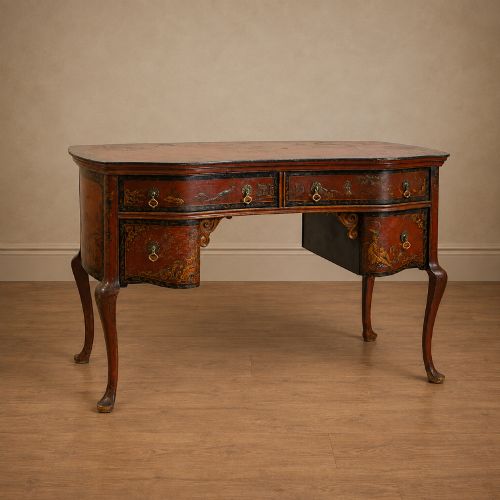
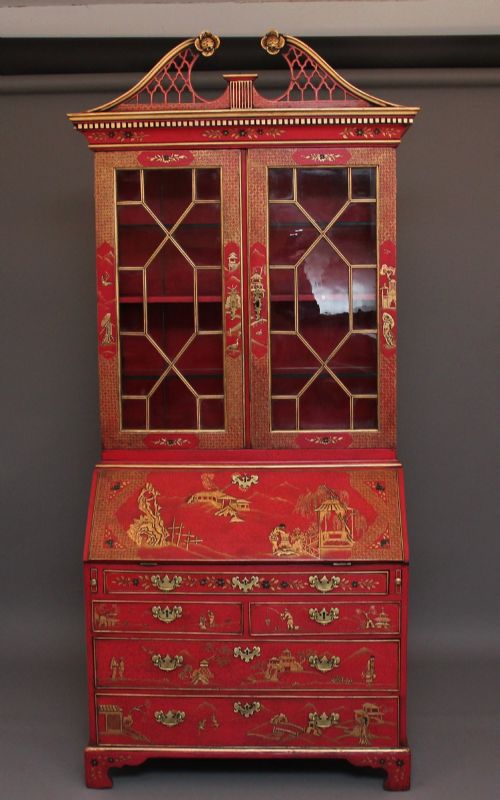



Red Chinoiserie Desk
These red chinoiserie desk pieces bring bright painted lacquer and gilt ornament to writing furniture from Georgian times to the twentieth century.
Red Chinoiserie Desk
A red chinoiserie desk unites European furniture forms with Asian decorative motifs executed in vibrant red lacquer and gilt. The pieces appearing here range from compact side tables and dressing tables to large bureau bookcases with fitted writing compartments.
Most examples date from the Victorian era and the early twentieth century, though older Georgian and eighteenth-century items also appear. Makers drew on traditional Chinese designs, French Rococo curves, and Queen Anne proportions to shape the timber carcases.
Writing furniture in this finish includes bureau plat desks, pedestal desks, and gentleman's writing desks alongside related side tables and dressing tables. Each item relies on the distinctive red painted surface to create a focal point in a room.
How they were made
Craftsmen built the underlying carcases from timber, applying multiple layers of lacquer to achieve a smooth ground before adding painted or gilt decoration. Brass handles, escutcheons, and occasional leather writing inserts completed the structural and functional design.
Surface ornament involves hand-painted figures, landscapes, and architectural details rendered in gold and contrasting pigments over the red ground. The application requires careful drying between coats to build up the hard, glossy finish characteristic of lacquerwork.
Listings combine eighteenth-century Georgian items with Victorian and twentieth-century interpretations, utilising timber, brass, lacquer, and gilt.
What varies in quality
The precision and detail of the hand-painted ornament dictate the visual success of each piece, distinguishing fine artistic work from simpler decorative application. Crisp gilt lines and well-composed figural scenes elevate the overall standard.
The depth and preservation of the red lacquer surface affect the presence of the furniture, as does the structural integrity of the timber carcase and brass mounts. Pieces retaining their original finish without extensive re-painting command stronger interest.
The Red Chinoiserie Desk Glossary
- Chinoiserie
- European artistic interpretation of Chinese and East Asian styles, prominent in furniture decoration. This aesthetic relies on whimsical motifs, pavilions, and figures.
- Bureau bookcase
- A writing cabinet featuring a sloping desk flap above drawers, topped by a shelved bookcase section. These large pieces provide substantial storage.
- Bureau plat
- A flat-topped freestanding writing table without an upper superstructure. Such desks typically stand on cabriole or tapered legs with brass mounts.
- Lacquer
- A durable resin finish applied in thin coats and polished to a hard sheen. It serves as the primary coloured ground for chinoiserie decoration.
- Gilt
- Application of gold leaf or gold paint to highlight carved details and painted scenes. This metallic enrichment catches the light against the red background.
Red Chinoiserie Desk: Frequently Asked Questions
How do I care for red lacquer?
Keep the surface clean using a soft, dry cloth and avoid harsh chemical polishes or direct sunlight. Consistent indoor humidity prevents timber movement beneath the lacquer layer.
Protect the writing surface from moisture and sharp objects to preserve the integrity of the painted and gilt decoration over time.
Are these desks practical for daily work?
Many writing desks and bureau bookcases offer functional compartments and drawers suitable for modern stationery and laptops. Compact side tables function well as occasional writing spots or dressing surfaces.
Consider the height and knee clearance of older bureau plat desks to ensure comfort during extended periods of use.
How do I date a chinoiserie piece?
Examine the underlying furniture style, such as Queen Anne cabriole legs or Regency proportions, to establish a baseline period. Construction methods, timber types, and drawer dovetailing offer further clues to age.
Twentieth-century interpretations often combine earlier decorative styles with newer manufacturing techniques and standardised hardware.
What rooms suit a red chinoiserie desk?
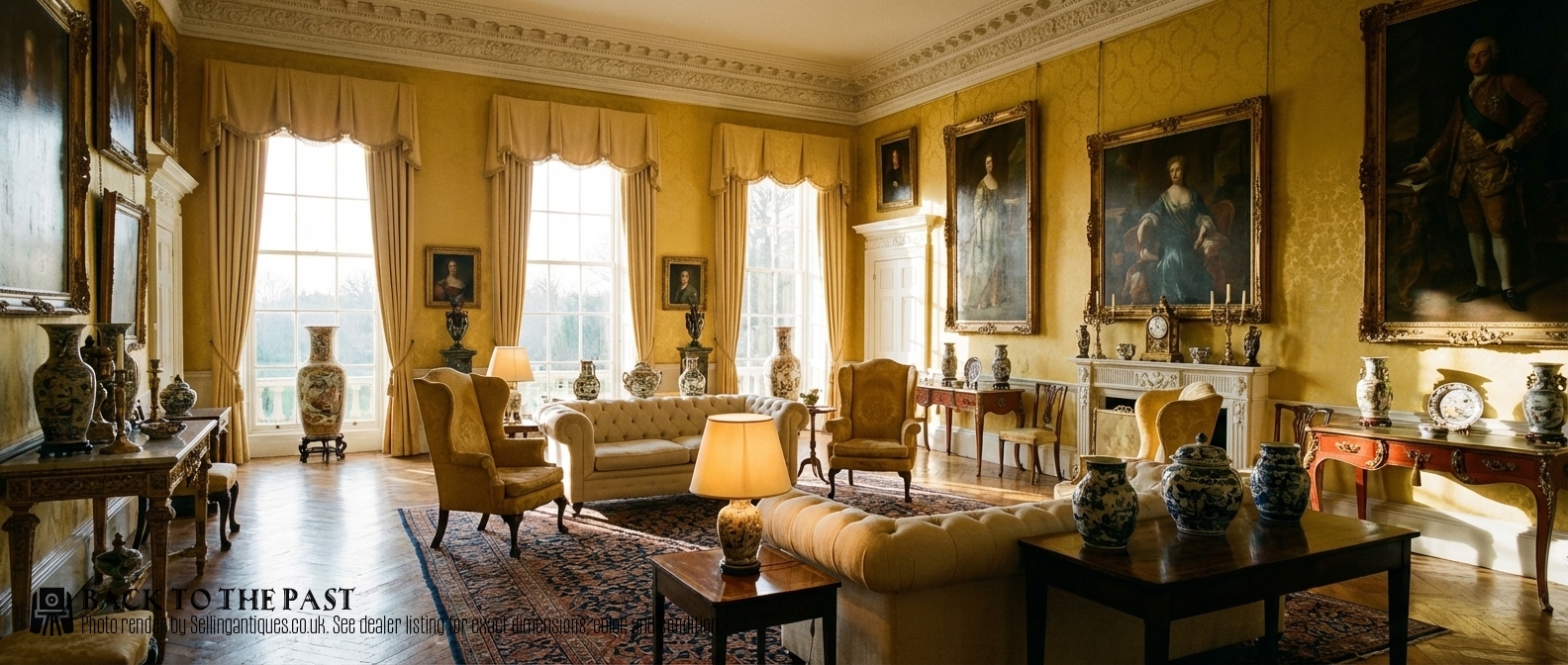
The vibrant red finish allows these pieces to act as statement items in studies, bedrooms, or living rooms. They contrast effectively against neutral walls and traditional architectural backgrounds.
Pairing the desk with understated seating lets the painted lacquer and gilt ornament remain the primary visual focus.