





Hand Painted Red Desk
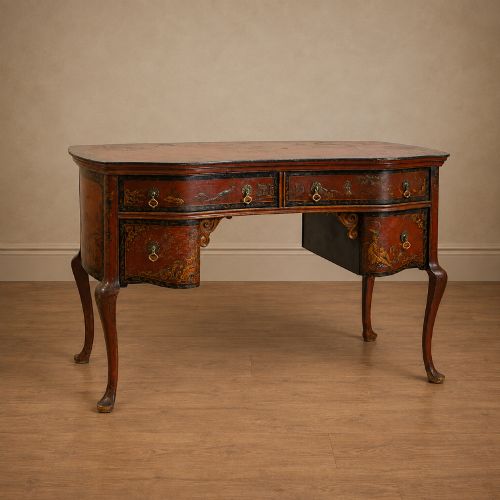
These hand painted red desk pieces bring bold colour and intricate painted detail into a room, combining practical surfaces with striking decorative presence.
Hand Painted Red Desk
When you search for a hand painted red desk, you encounter a selection of dressing tables, bureaux, and side tables spanning the Victorian era through the early twentieth century. These pieces draw heavily on Chinoiserie, Japanese Meiji and Edo periods, and Art Deco styles, often utilising lacquer and wood.
The most common forms on this page include dressing tables and bureaux finished with bright finishes, alongside smaller side tables and related lighting pieces sharing similar decorative aesthetics. Periods range from the seventeenth century up to the 1930s, reflecting diverse global craft traditions imported or adapted over centuries.
Materials and construction
Construction relies on timber foundations treated with layers of lacquer, enamel, or paint to create smooth, durable surfaces. Artisans applied hand painted motifs directly onto these prepared grounds, often incorporating gilt or contrasting pigments.
Details such as brass fittings, fabric elements, and porcelain inserts appear alongside carved wood and papier-mache structures. The combination of traditional joinery with applied surface decoration defines the physical build of these items.
Bright mandarin orange hues bring unexpected warmth to these painted surfaces.
Assessing quality and craftsmanship
Quality rests in the precision of the hand painted details and the stability of the underlying timber and lacquer. Superior examples display crisp brushwork and well-preserved surface depth that resists wear over time.
The integration of decorative elements, from applied brass to fitted drawers, distinguishes finer workshop production from simpler utilitarian pieces. Consistency in the finish across complex curved surfaces indicates higher skill levels.
The Hand Painted Red Desk Glossary
- Chinoiserie
- European artistic style reflecting Chinese motifs and techniques. It gained immense popularity during the eighteenth and nineteenth centuries for furniture and decorative arts.
- Lacquer
- A durable resin finish applied in multiple coats. It provides a glossy, protective surface suited to detailed painting and polishing.
- Meiji
- A period in Japanese history spanning from 1868 to 1912. Art from this era often influenced Western decorative tastes significantly.
- Bureau
- A sloping desk with compartments and drawers. It provides a dedicated writing surface that conceals paperwork when closed.
- Lowboy
- A small side table with drawers, typically raised on cabriole or straight legs. It functions as a compact dressing or writing table.
Hand Painted Red Desk: Frequently Asked Questions
Are these desks suitable for daily writing?
Most antique bureaux and dressing tables provide sturdy writing surfaces for everyday use.
Protect the painted top with a blotter if you write heavily on the surface.
What distinguishes Chinoiserie from Japanese styles?
Chinoiserie reflects European interpretations of Chinese art and motifs.
Japanese Meiji and Edo pieces originate from authentic Japanese aesthetic traditions of those specific eras.
How do I identify the period of a desk?
Examine the underlying timber construction, joinery methods, and hardware styles.
Stylistic cues in the hand painted motifs also point towards specific decades like the Victorian era or the 1920s.