

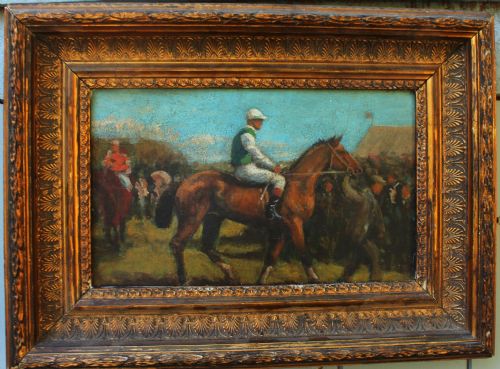


Antique Style Equestrian Picture
An antique style equestrian picture brings centuries of sporting heritage indoors, capturing horses, riders and hunts in oil, watercolour and tapestry.
Antique Style Equestrian Picture
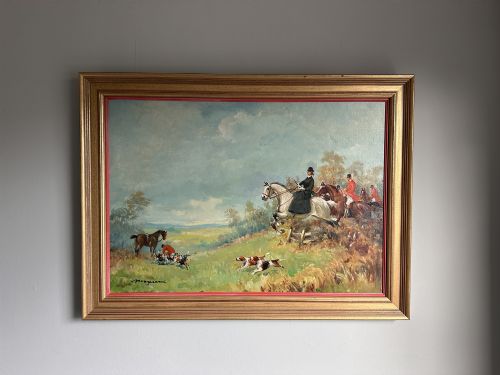
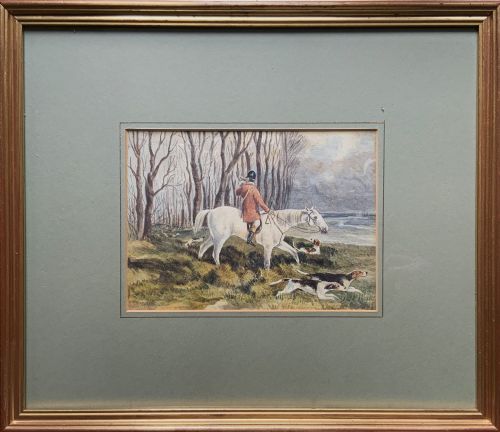
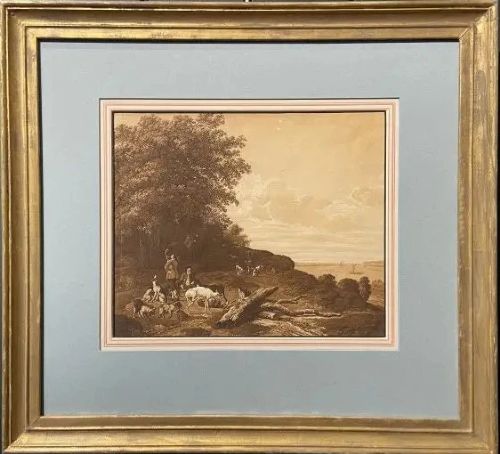
When you search for an antique style equestrian picture, you encounter works celebrating horses, racing, hunting and coaching scenes across several centuries. The selection ranges from nineteenth-century Victorian watercolours and oil paintings to mid-century British school studies and earlier Dutch golden age depictions.
Most pieces you meet on this page are nineteenth-century oil paintings and framed watercolours depicting fox hunting, stagecoaches and race paddocks. You also find needlework tapestries and engravings portraying historic hunts and equestrian gatherings.
Materials and construction
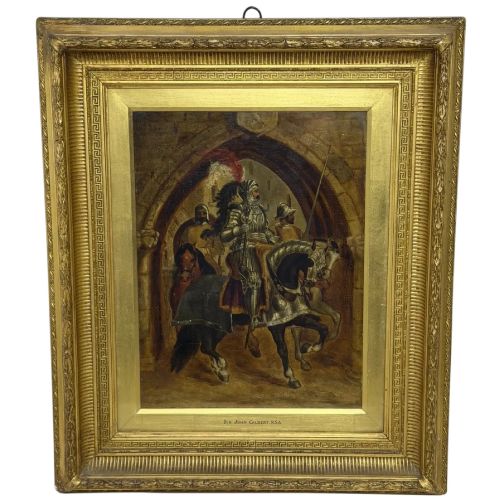
These works rely primarily on oil paint on canvas or panel, watercolour on paper, and detailed needlework on textiles. Canvases frequently sit within substantial giltwood frames finished with gold leaf, while paper works utilise glass protection.
Artisans applied traditional pigments using brushwork ranging from tight academic studies to loose impressionistic strokes. Tapestries employ woven threads of large proportions to recreate complex hunting scenes and rural landscapes.
Antique Style Equestrian Picture Retail Price Guide 2026
Typical asking prices for style equestrian picture among the pieces listed under this phrase on Sellingantiques today, from the lower quarter to the upper quarter. They describe what is for sale here now, not the wider market.
Listings include works spanning from the seventeenth century through to mid-century twentieth-century British school paintings.
Evaluating quality
Quality rests upon the anatomical accuracy of the horses, the dynamism of the composition and the handling of light across the figures and landscape. Superior works capture movement and tension convincingly, whereas weaker pieces show stiff postures and flat backgrounds.
The sophistication of the framing and the prestige associated with the circle of the artist or named painters elevate certain works above standard decorative examples.
Sir John Gilbert RA·Johannes Lingelbach·Alfred Munnings·John Richard Worsdale·John Charles Maggs·Abraham Cooper RA
The Antique Style Equestrian Picture Glossary
- Oil on Canvas
- A painting medium where pigments suspended in drying oil are applied to stretched fabric. It allows for rich blending and textured brushwork.
- Giltwood
- Wood carved and covered with a thin layer of gold leaf or gold paint. It provides traditional ornate framing for historical paintings.
- Watercolour
- A painting method where paints are made of pigments suspended in a water-based solution. Paper serves as the standard support for this medium.
- Needlework Tapestry
- A textile piece created by stitching yarn through a woven fabric base. These large works often depict narrative hunting and pastoral scenes.
- Engraving
- A printmaking technique where an image is incised into a metal plate. Ink settles in the grooves and transfers to paper under pressure.
Antique Style Equestrian Picture: Frequently Asked Questions
How do I identify the period of an equestrian painting?
Examine the canvas preparation, stretcher frames and the clothing styles of the riders. Pigment analysis and framing techniques also offer strong chronological clues.
Nineteenth-century works often feature specific Victorian dress and heavier giltwood frames, whilst earlier pieces display distinct Dutch golden age painting conventions.
Where should I hang a large equestrian oil painting?
Select a prominent wall space away from direct sunlight and excessive moisture fluctuations. Dining rooms and studies traditionally suit these sporting subjects.
Ensure the hanging brackets securely support the weight of heavy wood and gilt frames to protect the canvas.
What is the difference between a study and a finished painting?
An oil study is typically a quicker, looser execution capturing movement or light before a larger work is undertaken. They often reveal immediate brushwork.
Finished paintings show greater detail, tighter composition and a higher degree of polish across all figures and background elements.
How do I care for antique canvas and gilt frames?
Dust surfaces gently with a soft, dry brush without applying liquid cleaners directly to the paint or gold leaf. Keep paintings in stable room temperatures.
Professional conservators should handle any tears to the canvas or repairs needed to fragile giltwood framing.