



Antique Style Corbels
Antique style corbels provide architectural support and ornamental projection, bringing historical character to interior walls through carved wood, cast iron and giltwood forms.
Antique Style Corbels
Antique style corbels encompass architectural salvage, wall brackets, and carved elements designed to support shelves or project from walls. These pieces draw from periods ranging from the seventeenth century through to the early twentieth century, reflecting diverse historical design influences.
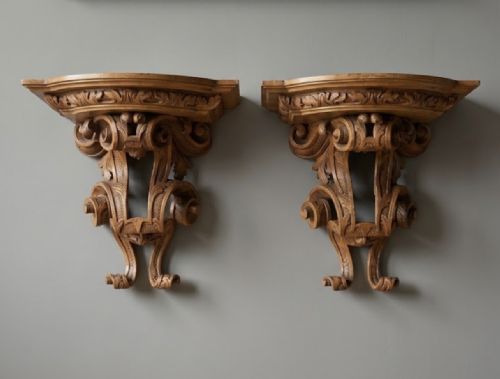
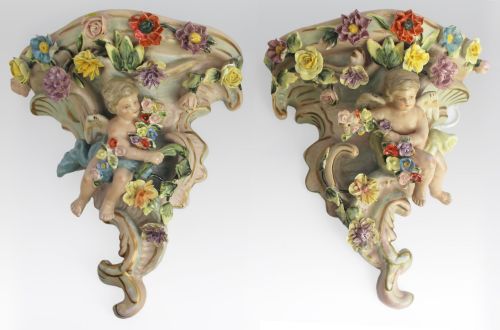
Buyers encounter items ranging from simple oak carvings and heavy iron brackets to elaborate giltwood consoles and porcelain cherub corbels. Forms vary from functional architectural fragments to decorative wall furniture.
Assessing quality in corbels
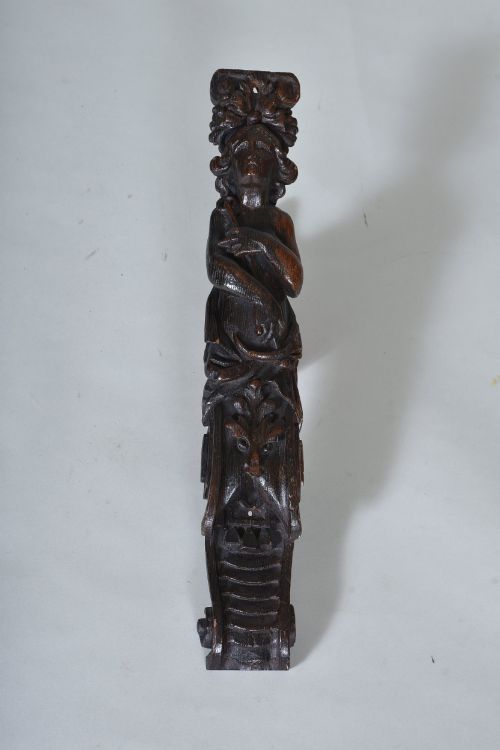
Depth and crispness of the carving distinguish superior wooden corbels from simpler production pieces. Hand-carved details in oak or limewood show precise tool marks and natural anatomical proportions in figures like cherubs and caryatids.
The quality of surface finish plays a significant role, particularly in giltwood and painted pieces. Original gilding over gesso exhibits a warmth and wear pattern distinct from later repainting, while cast iron brackets vary according to the sharpness of the original mould.
Listings feature items spanning the seventeenth century to the 1930s, utilising carved wood, cast iron, gesso, and gold leaf.
Henri Dasson·Minton·Meissen
The Antique Style Corbels Glossary
- Corbel
- A structural piece of stone, wood, or metal jutting from a wall to carry a superincumbent weight. In decorative contexts, they function primarily as wall brackets or shelf supports.
- Giltwood
- Wood that has been coated with gold leaf or gold paint. This finish appears frequently on decorative brackets from the Baroque and Rococo revival periods.
- Caryatid
- A sculptured female figure serving as an architectural support taking the place of a column or a pillar. These appear in seventeenth century oak carvings.
- Majolica
- Tin-glazed earthenware of Italian origin or style. Certain wall brackets in the inventory utilise this colourful ceramic technique.
- Ormolu
- Finely ground high-carat gold-mercury amalgam applied to an object of bronze. It is found on nineteenth century bracket pieces.
Antique Style Corbels: Frequently Asked Questions
What is the difference between a corbel and a wall bracket?
Corbels traditionally project from walls to bear weight, while wall brackets often serve a decorative or display function for shelves and objects.
In practice, antique sellers and makers often use the terms interchangeably for architectural shelf supports.
How do I mount heavy antique corbels safely?
Heavy cast iron or dense oak corbels require solid wall fixings, ideally anchored directly into masonry or structural studs.
For larger architectural pieces, internal metal brackets or concealed batons provide the necessary load-bearing strength.
Can these corbels support a functional bookshelf?
Sturdy cast iron and solid oak corbels easily support wooden boards for functional shelving when mounted correctly.
Lighter giltwood or plaster-based brackets suit decorative display rather than heavy book storage.
How do I identify the period of a wooden corbel?
Period identification relies on tool marks, wood species like seventeenth century oak or Victorian limewood, and stylistic indicators such as Baroque scrolls.
Patina, timber shrinkage, and construction joints also offer clues to the age of the carving.