


Cast Bronze Wall Brackets
Cast bronze wall brackets bring heavy architectural weight and period illumination to a room, offering enduring metalwork that collectors prize.
Cast Bronze Wall Brackets
When you search for cast bronze wall brackets, you encounter heavy metal light fittings, bells, and architectural supports spanning the nineteenth century and the early decades of the twentieth century. These items include French single and multi-arm wall lights, English sconces, and utility brackets formed from durable metal alloys.
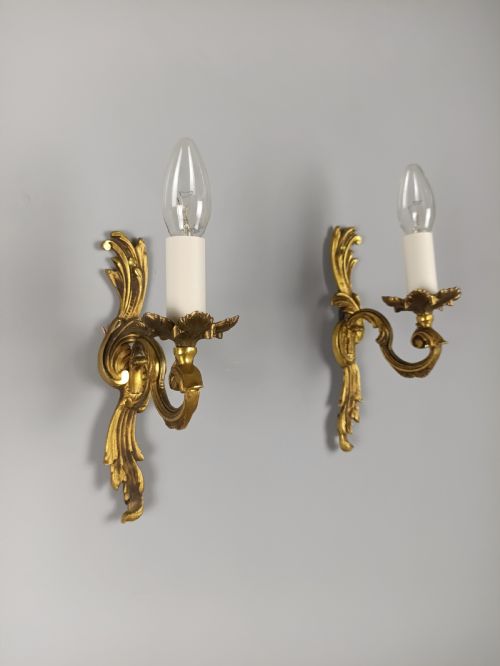
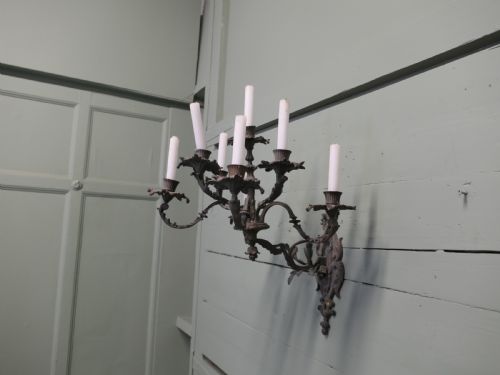
The selections on this page draw heavily from French Rococo, Gothic Revival, and Neoclassical traditions alongside Victorian industrial forms. You are most likely to meet pairs of gilded bronze wall sconces and heavy nineteenth-century bronze wall lights designed for fixed interior placement.
How they were made
The creation of these fixtures relies upon traditional casting techniques using molten metal poured into moulds to achieve intricate relief work and solid structural forms. Artisans then finished the raw castings by hand, applying gilding, patination, or polish to the metal surfaces.
Makers combined bronze and brass with secondary materials such as wrought iron for mounting brackets and glass elements for lighting components. The resulting pieces balance heavy metal durability with ornamental detail appropriate to their architectural function.
Victorian domestic life relied on heavy iron brackets to hold loud wall bells that summoned servants from across the house.
What varies in quality
Quality in these metal fixtures rests upon the crispness of the casting and the depth of the chased surface detail. Superior examples display sharply defined ornamentation without the softening often found in secondary production runs.
The integrity of the original mounting hardware and the preservation of the surface finish further distinguish finer pieces. Weight, balance, and the quality of the primary alloy separate standard utility brackets from finely modelled artistic sconces.
The Cast Bronze Wall Brackets Glossary
- Bronze
- An alloy consisting primarily of copper, traditionally mixed with tin, used to create durable decorative metalwork. It forms the primary material for the structural bodies of these wall fittings.
- Gilded Bronze
- Bronze that has been coated with a thin layer of gold or gold leaf to enhance its visual richness. This finish appears frequently on French wall sconces from the nineteenth and early twentieth centuries.
- Wall Sconce
- A decorative light fixture fixed to a wall that directs illumination upwards or outwards into a room. The listings here include multi-arm versions holding several candle or electric points.
- Gothic Revival
- An architectural and decorative style drawing inspiration from medieval design elements. Pieces in this style often feature pointed arches, heavy tracery, and dark patination.
- Patinated Metal
- Metal that has developed a surface coloration through age or chemical treatment. This natural or induced oxidation adds depth to the appearance of antique brackets.
Cast Bronze Wall Brackets: Frequently Asked Questions
How do I mount a heavy bronze wall bracket safely?
Heavy cast bronze fixtures require secure attachment directly into structural wall studs or solid masonry using appropriate fixings. The substantial weight of nineteenth-century metalwork demands professional installation to ensure stability.
Take care to distribute the load evenly across the mounting plate to prevent strain on the wall surface. Consulting a qualified electrician is essential when mounting wired wall lights.
Can I use old bronze brackets for modern wiring?
Many antique wall sconces and lights can be adapted for modern electrical standards by a professional electrician. Original backplates and arm configurations generally accommodate internal rewiring without altering the exterior metalwork.
Ensure that any electrical conversion preserves the structural integrity of the antique mount. Modern bulbs should match the scale and heat output appropriate for historical fixtures.
How do I clean patinated bronze without damage?
Dust bronze brackets gently with a soft, dry cloth to remove surface debris without disturbing the historic finish. Avoid abrasive cleaners, harsh chemicals, or metal polishes that strip away original patination and gilding.
Preserving the natural age of the metal maintains the character and historical value of the piece. Professional conservation is recommended for heavily soiled or degraded surfaces.
What is the difference between bronze and brass brackets?
Bronze is a copper and tin alloy known for its strength and darker, richer natural tones when patinated. Brass is an alloy of copper and zinc that typically yields a brighter, more golden appearance.
Both metals were utilised across the periods represented on this page, sometimes appearing together in composite fixtures. Surface finishes like gilding can make visual identification between the two metals more challenging.