


Decorative Architectural Brackets
Decorative architectural brackets offer structural support and ornament, bringing period character and sculptural form to interior walls.
Decorative Architectural Brackets
Decorative architectural brackets take the form of wall brackets, shelf brackets, and corbels designed for both utility and display. The selection includes cast iron, wrought iron, and carved timber examples ranging from the eighteenth century to the early twentieth century.
Buyers will encounter heavy cast iron shelf brackets, painted wrought iron variants, and carved pine or walnut display pieces. French plaster corbels and putto wall corbels also appear alongside large nineteenth-century mahogany architectural brackets.
These items originate from various periods including Georgian, Victorian, and Edwardian eras. Styles span from Victorian Gothic and Rococo Revival to French Chateau and Victorian Industrial.
How they were made
Makers utilised traditional casting methods for iron pieces, producing robust cast iron and wrought iron brackets sometimes featuring painted finishes or bronze tones. Plaster and gesso compositions allowed for ornate sculptural detailing on French corbels.
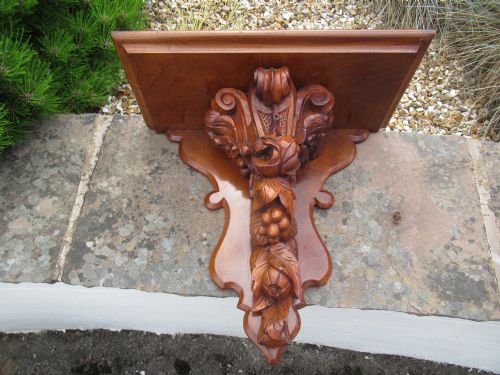
Carved timber examples relied on skilled hand woodworking, employing solid timbers such as walnut, mahogany, pine, and carved wood. Artisans shaped these materials into intricate scrollwork, figurative putti, and functional support profiles.
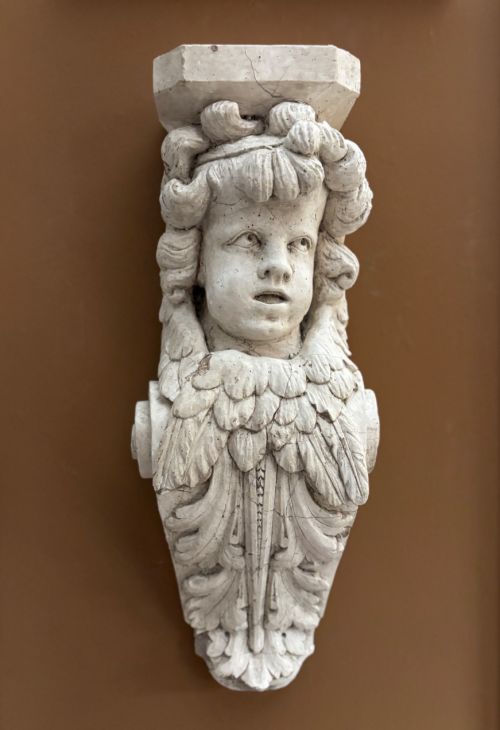
Several pieces feature winged putti peering out from the woodwork, ready to hold up your heaviest volumes.
What varies in quality
The standard of carving or casting defines the upper tier of these pieces, where crisp lines, deep relief, and precise execution elevate simple hardware into sculptural art. Finer examples display meticulous attention to anatomical proportion in figures like putti or clarity in foliate scrolls.
Material selection and historical integrity also separate ordinary specimens from superior ones. Original surfaces, untouched patinas on ironwork, and dense, high-grade timbers such as walnut and mahogany distinguish the most accomplished items.
The Decorative Architectural Brackets Glossary
- Corbel
- A structural piece of stone, wood, or plaster projecting from a wall to support a weight inside. They often feature decorative carving or moulded plaster profiles.
- Gesso
- A plaster mix used as a base for paint or as a moulded decorative material. It allows for sharp relief details on architectural ornaments.
- Wrought iron
- Iron beaten out by a hammer, valued for its malleability and strength. It differs from cast iron by possessing a fibrous structure.
- Putto
- A figure of a small infant, commonly winged, used in classical and revival art. These appear frequently on sculptural wall corbels.
Decorative Architectural Brackets: Frequently Asked Questions
How were architectural brackets used?
These pieces served dual purposes as structural supports for shelves, beams, and lintels while providing ornamental enrichment to interiors. They distributed weight effectively while contributing to the architectural style of a room.
Over time, many functioned purely as display brackets for ornaments or as standalone architectural salvage mounted directly to walls for decorative effect.
How do I identify a Victorian bracket?
Victorian examples often display heavy cast iron construction, industrial motifs like dragons, or revival styles such as Victorian Gothic and Rococo Revival. They reflect the era's penchant for ornate detailing and robust utility.
Timber versions from this period frequently utilise walnut or pine with deep hand-carved ornamentation, aligning with nineteenth-century interior design tastes.
What is the difference between a corbel and a bracket?
A corbel typically projects from a wall to bear a heavy load and often possesses a solid, block-like stone, plaster, or timber form. They frequently feature figural or classical sculptural elements.
Brackets generally describe a wider range of supporting pieces, including shelf brackets and metal variants designed to angle outward from the vertical wall plane.
How do I live with antique brackets?
Mounting these pieces securely to walls allows them to function once again as functional shelf supports or dedicated display ledges for smaller objects of art. Their varied materials bring textural contrast to modern or traditional wall surfaces.
Caring for them requires gentle dusting appropriate to the surface, whether preserving the original paint on ironwork or the polished grain of walnut and mahogany timber.