







Antique Striped Rug
An antique striped rug brings bold linear rhythms and rich tribal character into a room through bands of pattern.
Antique Striped Rug
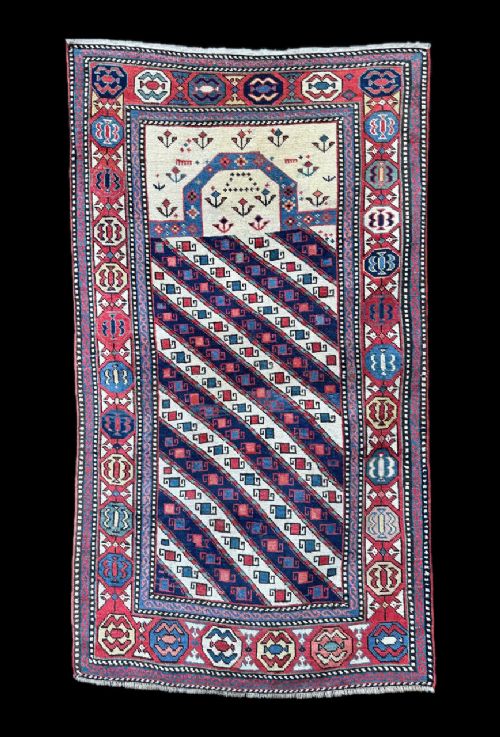
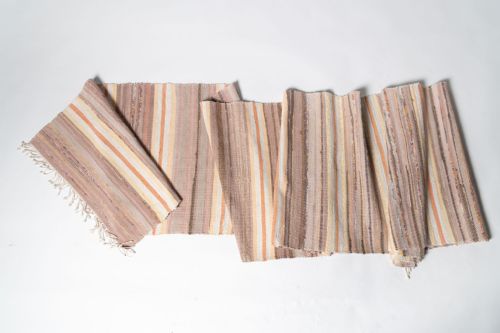
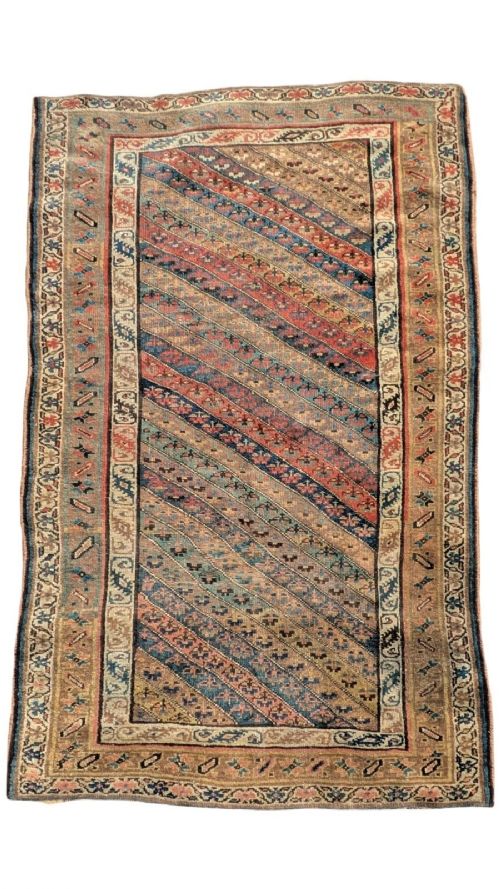
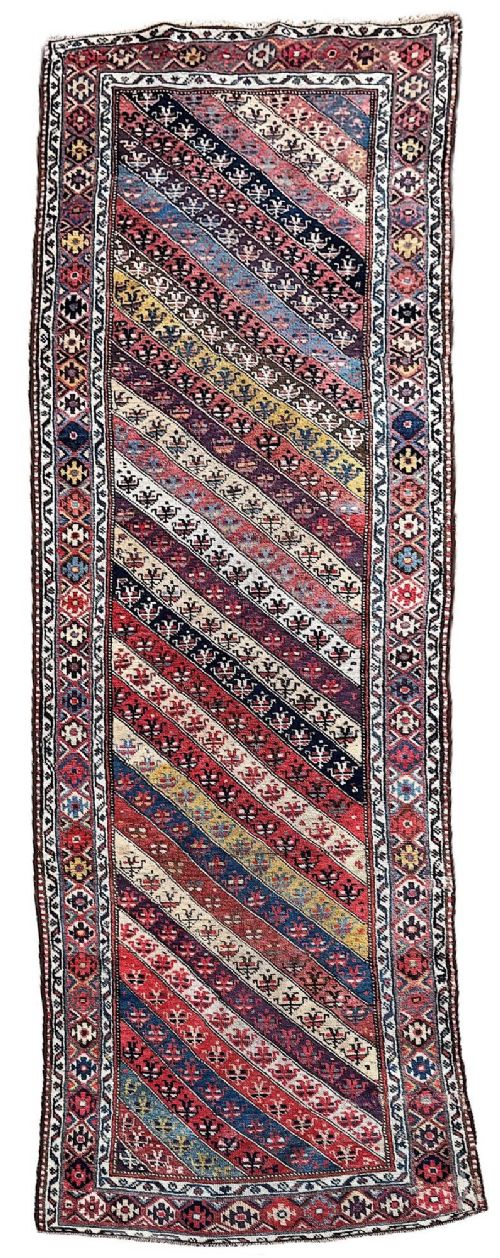
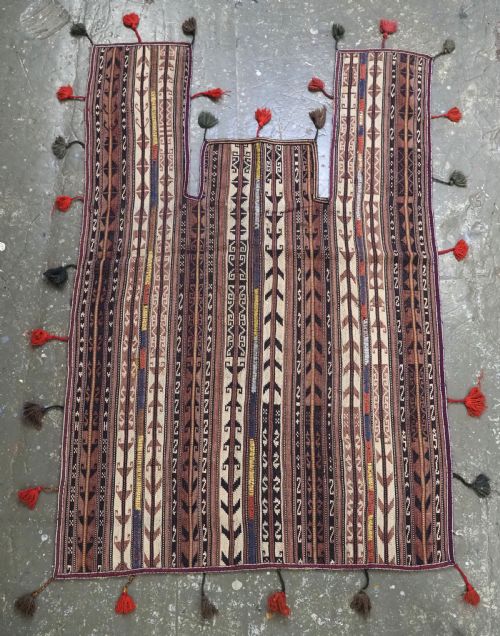
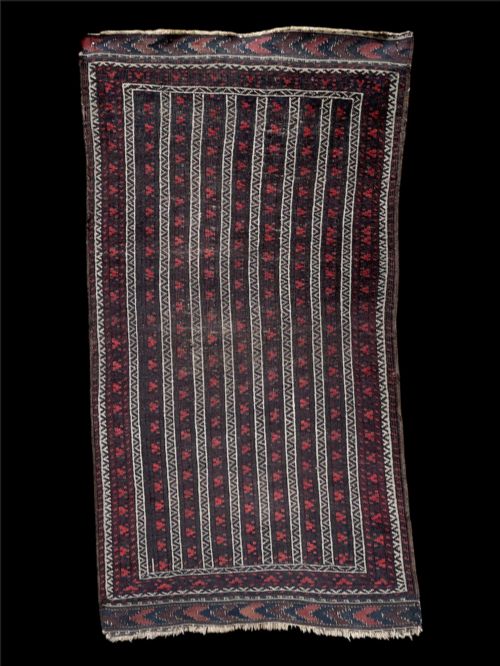
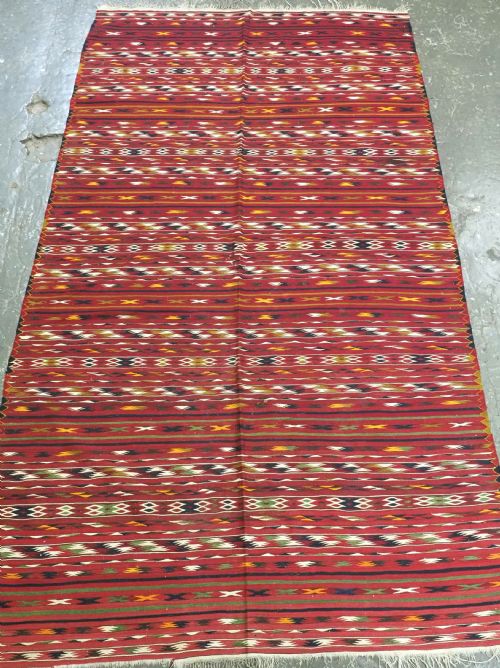
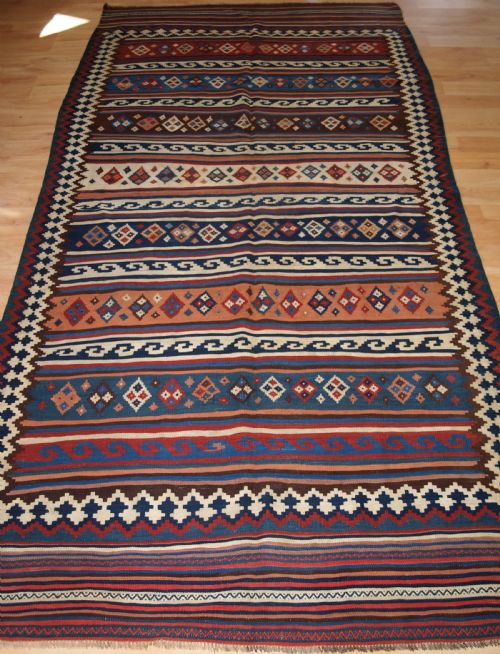
An antique striped rug encompasses flatweaves, runners, and village textiles featuring distinct linear bands, often created by nomadic and tribal makers. These textiles serve various utilitarian purposes, from floor coverings and horse blankets to grain sacks and dining spreads.
The selections encountered here originate primarily from the late nineteenth century and the early decades of the twentieth century. Production centres span Persia, the Caucasus, and Central Asia, representing groups such as the Turkmen, Uzbek, Kurdish, and Qashqai tribes.
Flatwoven kilims, jajims, and pile-woven runners form the core of these offerings, showcasing graphic horizontal or vertical arrangements. Each piece reflects the specific weaving traditions and regional palettes of its maker.
Materials and construction
Weavers relied principally on hand-spun wool and cotton, occasionally incorporating silk, goat hair, and leather details for structural contrast or decorative effect. Natural dyes provided the deep, stable palette seen across these textiles, developing subtle variations in tone over decades of use.
Techniques varied between flatweaving methods like kilim and cicim, and knotted pile construction for denser floor rugs. Warp and weft threads were tightly beaten together to create durable, resilient fabrics designed to withstand nomadic daily life.
Antique Striped Rug Retail Price Guide 2026
Typical asking prices for striped rug among the pieces listed under this phrase on Sellingantiques today, from the lower quarter to the upper quarter. They describe what is for sale here now, not the wider market.
Assessing quality
The integrity of a piece depends heavily on the tightness of the weave and the precision of the structural execution. Finer thread counts and secure selvedges indicate greater skill and patience on the loom.
Colour retention and the harmonious interaction of natural dye hues separate standard examples from superior ones. Age-related wear remains acceptable, but the original balance of the graphic design must stay intact.
The Antique Striped Rug Glossary
- Kilim
- An un-piled flatwoven textile produced by tightly interweaving warp and weft strands. This technique creates a smooth, reversible surface often characterised by geometric patterns and sharp colour transitions.
- Sofreh
- A utilitarian textile traditionally used for dining or food preparation. These flatweaves frequently display striking banded or linear compositions.
- Mafrash
- A large rectangular storage bag face or panel woven by nomadic groups. They typically feature bold horizontal bands designed to be viewed from multiple angles.
- Jajim
- A strong flatwoven textile traditionally utilised as a blanket, cover, or floor spread. They are often constructed in narrow panels stitched together to form wider geometric stripes.
- Cicim
- An embroidery-like supplementary weft technique woven directly into the foundation. This method adds raised textural patterns across the surface of the textile.
Antique Striped Rug: Frequently Asked Questions
What is an antique striped rug?
These pieces are traditional woven textiles featuring linear bands, created by nomadic and village weavers across Persia, the Caucasus, and Central Asia during the nineteenth and early twentieth centuries.
They include functional items like flatwoven kilims, runners, grain sacks, and horse blankets that utilise repeating stripes or graphic geometric layouts.
How were these rugs used?
Nomadic and village communities utilised these textiles for daily survival, including floor insulation, animal trappings, bedding, and storage containers for grain and provisions.
Many examples served specific domestic rituals, such as communal dining spreads or ceremonial horse blankets during seasonal migrations.
How do I care for an antique textile?
Protect the weave by placing a breathable, high-friction underlay beneath the textile to prevent sliding and reduce fibre abrasion from foot traffic.
Keep the piece away from direct sunlight to preserve the natural dyes, and clean it only through specialist textile conservation methods when necessary.
How can I tell different tribal styles apart?
Distinctions rely on structural techniques, wool quality, and regional colour palettes unique to specific groups like the Turkmen, Yomut, Shahsavan, or Bakhtiari.
Motifs such as specific boteh arrangements, prayer niches, or characteristic banded flatweaves help identify the geographic origin and weaving tradition.