







Red Striped Persian Rug
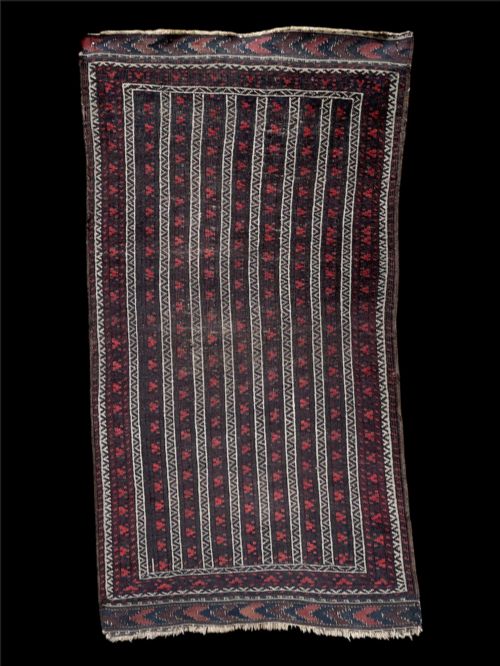
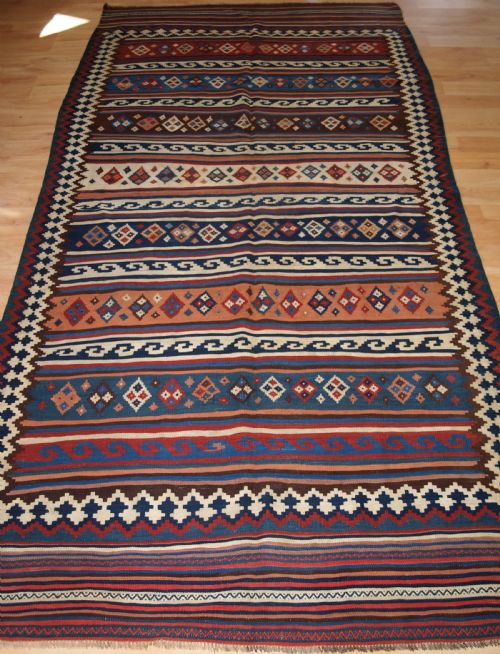
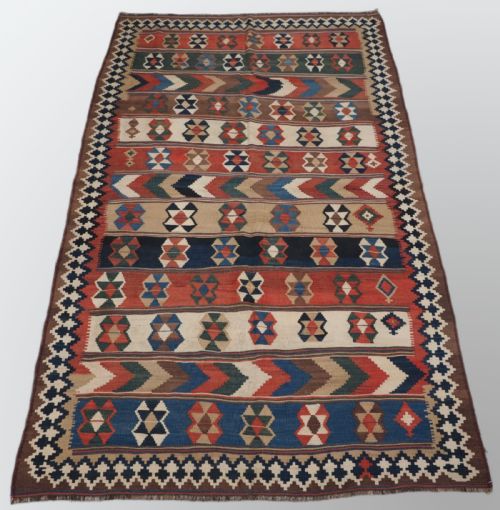
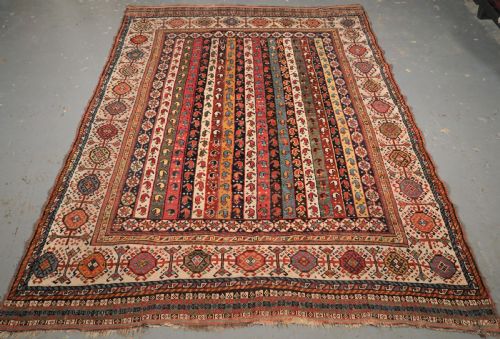
These red striped persian rug examples are distinctive tribal textiles woven across nineteenth and early twentieth century Persia, bringing rich colour and pattern into a room.
Red Striped Persian Rug
When you search for a red striped persian rug, you encounter traditional flat weaves, runners, storage bags and animal trappings originating from tribal groups such as the Qashqai, Kurdish, Baluch and Shahsavan peoples. These woven textiles serve both practical domestic functions and artistic expression within nomadic and village communities.
The objects on this page range from nineteenth century examples to early twentieth century pieces, including banded kilims, jajims, Sofreh dining spreads and grain sacks. Each format represents a specific utilitarian purpose adapted into decorative folk art through centuries of traditional craftsmanship.
How they were made
The construction relies primarily on wool, hand-spun wool and cotton, occasionally incorporating silk, goat hair, leather and metal elements for structural strength and detail. Artisans utilise flat weave techniques, pile knotting and tapestry weaving to build durable textiles designed for daily use.
Dye methods and fibre selection dictate the character of each weave, with natural materials creating the foundational texture of these rugs and flat weaves. The interplay of wool and cotton provides the robust handle characteristic of genuine tribal nomadic work.
Red Striped Persian Rug Retail Price Guide 2026
Typical asking prices for red striped persian rug among the pieces listed under this phrase on Sellingantiques today, from the lower quarter to the upper quarter. They describe what is for sale here now, not the wider market.
Several items on this page began life as wheat sacks, grain containers or dining spreads before finding a second career as wall art.
What varies in quality
Quality rests in the tightness of the weave, the crispness of the geometric bands and the integrity of the original selvages and ends. Finer execution shows in the precision of the stripes and the complexity of supplementary weft float work.
The depth and nuance of the wool dictate the visual impact of the piece, distinguishing standard utility items from masterwork tribal textiles. Preservation of structural corners and original dimensions further elevates the standing of an individual textile.
The Red Striped Persian Rug Glossary
- Kilim
- A flat-woven carpet or rug produced in countries of the former Persian Empire. These textiles lack a pile, making them lighter and thinner than traditional knotted carpets.
- Sofreh
- A plain or patterned spread used for dining or food preparation in Persian households. These textiles often feature bold linear and banded designs.
- Jajim
- A heavy, durable flat-woven textile traditionally used as a cover, blanket or floor spread. They are typically constructed in narrow strips stitched together.
- Selvage
- The self-edge of a rug formed by wrapping the weft threads around the outermost warp cords. Proper construction prevents the sides from fraying.
- Warp
- The vertical foundation threads stretched lengthwise on the loom before weaving begins. The weft threads are passed across and under these stationary cords.
Red Striped Persian Rug: Frequently Asked Questions
How do I clean an old tribal rug?
Professional specialist cleaning is essential for nineteenth century wool and cotton textiles to prevent dye migration and fibre degradation. Vacuum gently without a rotating brush bar to remove surface dust.
Avoid household detergents and water soaking, which weaken natural hand-spun wool and structural foundations.
Can I place these textiles on the floor?
Many flat weaves and runners function well as floor coverings in areas with moderate foot traffic. Using a quality underlay protects the wool and prevents slipping.
Finer wall hangings or fragile silk pieces benefit from display away from direct pressure and heavy traffic.
What indicates a tribal attribution?
Distinctive geometric motifs, banded stripe patterns and specific structural weaves point directly to nomadic groups like the Qashqai and Kurds. The use of regional materials such as goat hair and hand-spun wool reinforces tribal origin.
Village workshops and nomadic camps developed unique colour palettes that separate them from city-made Persian carpets.