


Antique Stick Stand Umbrella Holder
An antique stick stand umbrella holder keeps hallways tidy while bringing structural character to an entrance.
Antique Stick Stand Umbrella Holder
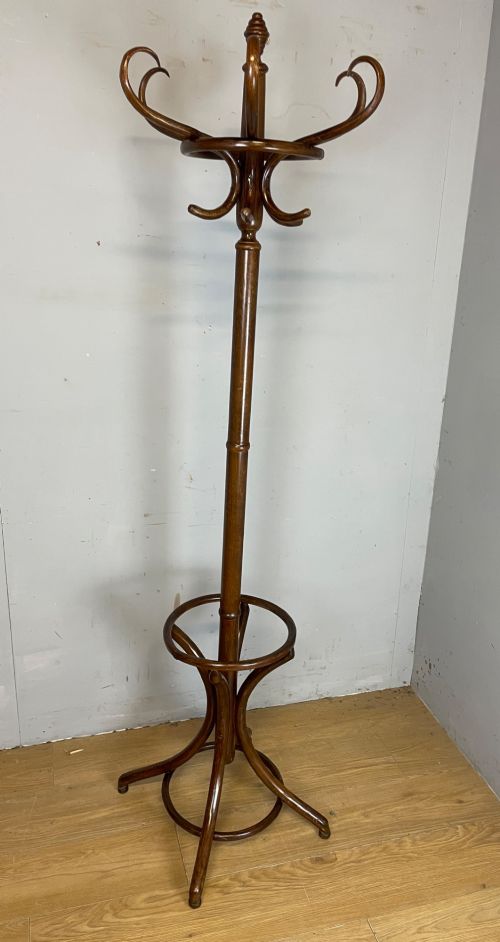
When buyers search for an antique stick stand umbrella holder, they encounter practical hall furniture designed to corral walking sticks, umbrellas, and occasionally coats. The selections span umbrella stands, stick stands, and combined hall stands originating across the Victorian, Edwardian, and mid-twentieth-century periods.
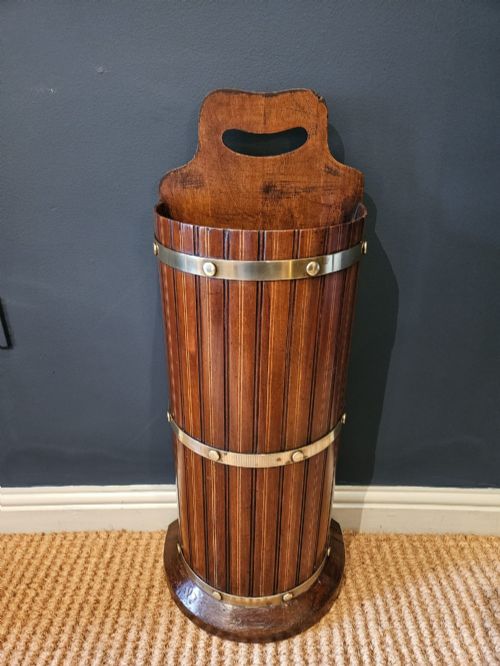
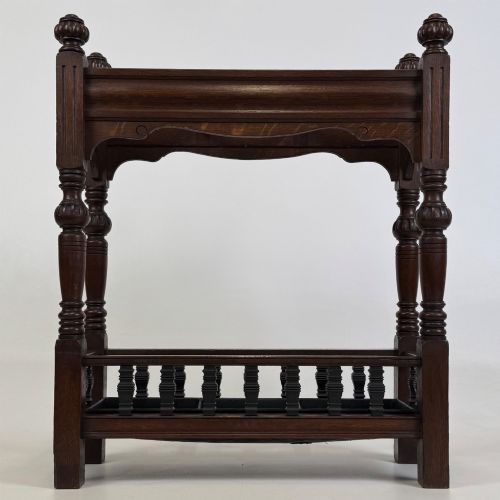
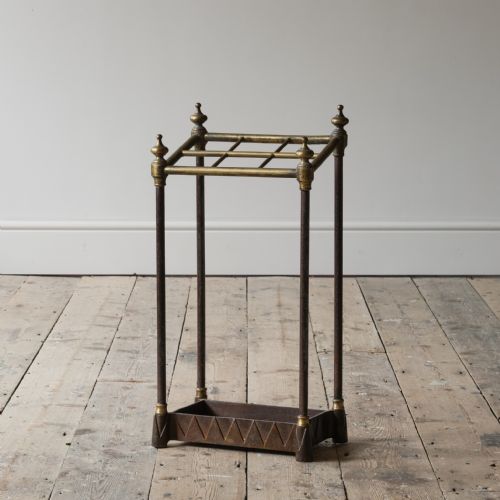
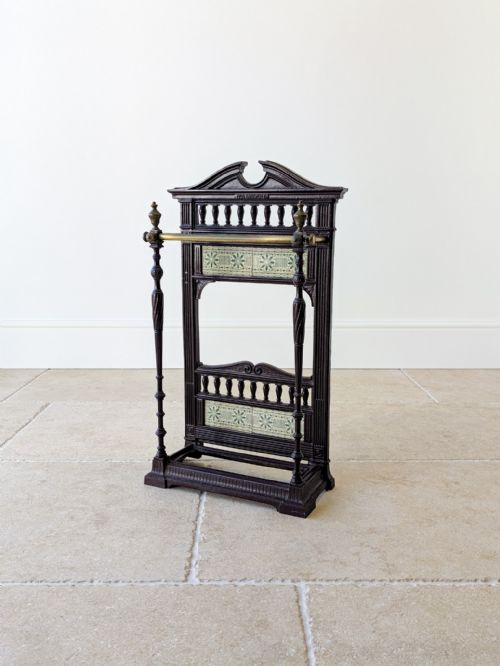
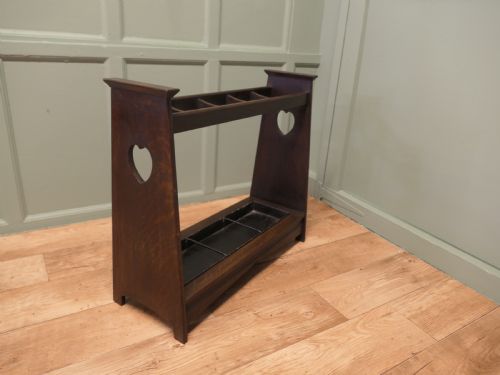
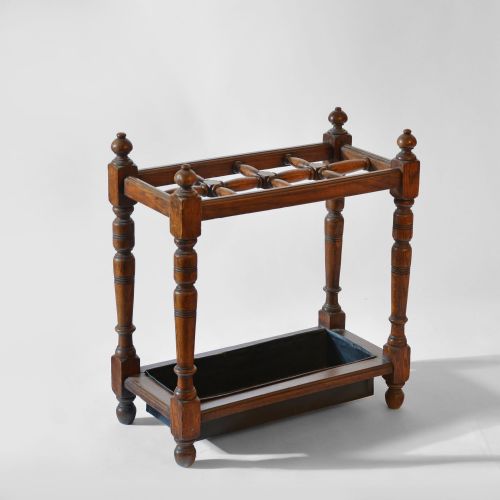
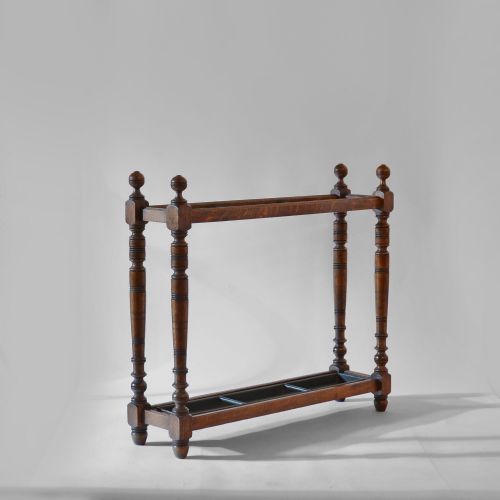
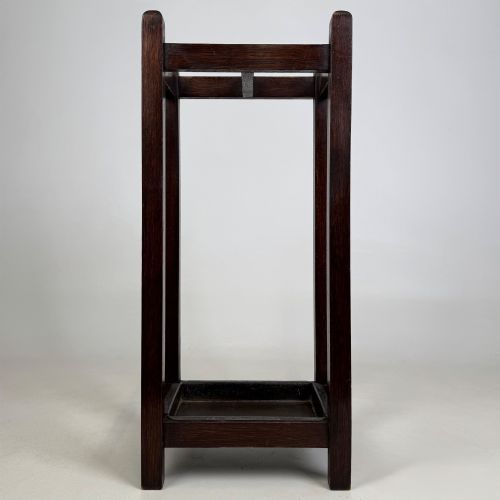
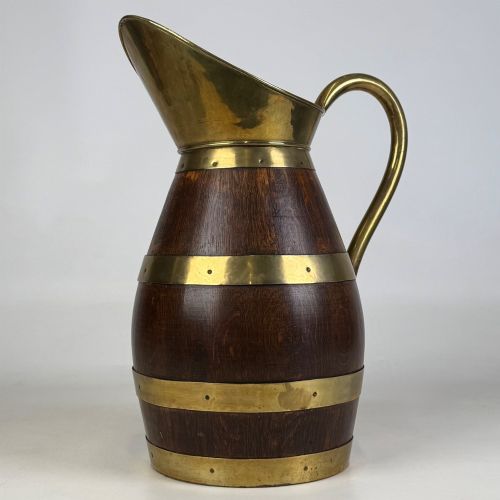
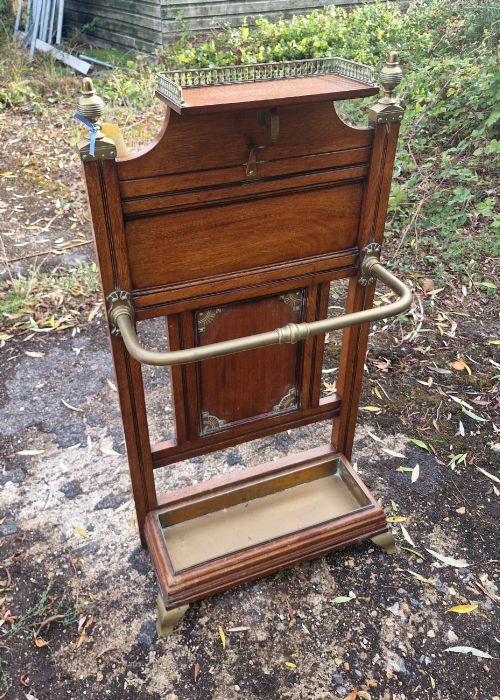
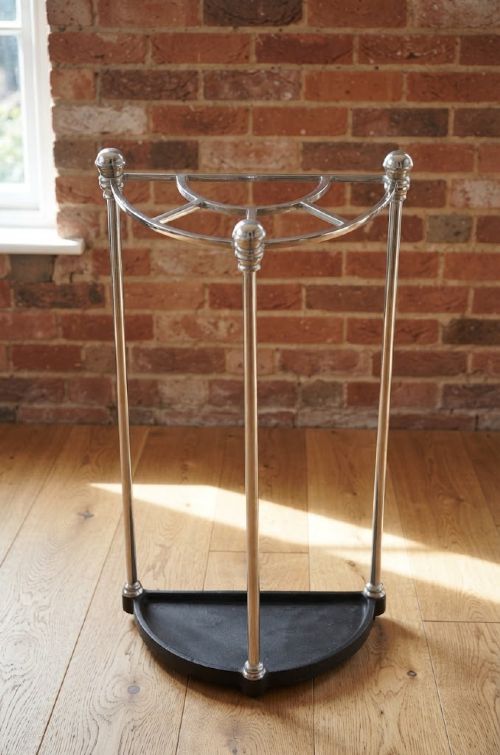
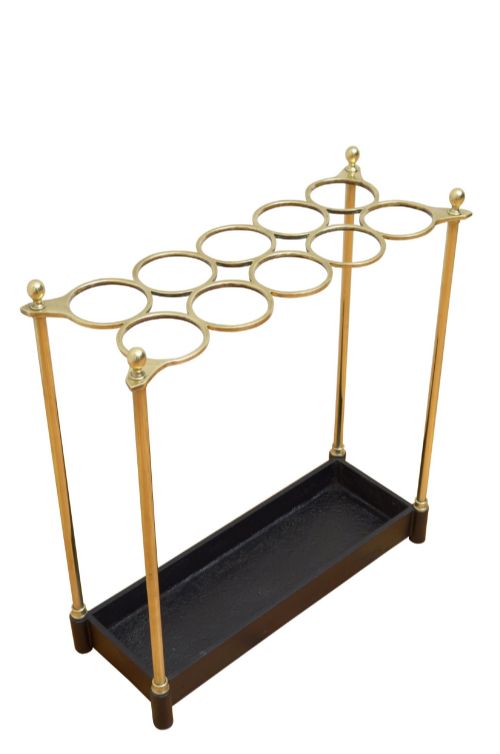
The prevailing forms on this page include sturdy oak barrels with brass bands, half-moon cast iron frames, and upright wooden hall furniture fitted with metal drip trays. These items served households by receiving wet weather gear upon entry.
Origins range from English country workshops to French foundries, encompassing distinct aesthetic movements from the nineteenth century through the nineteen-thirties.
How they were made
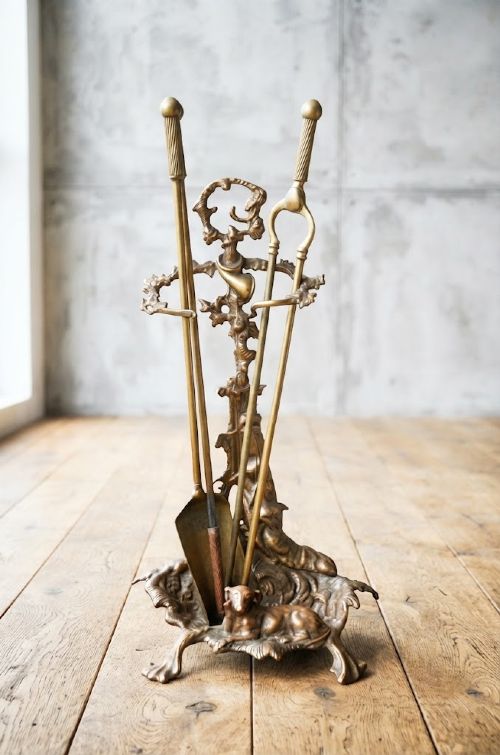
Makers utilised cast iron, brass, copper, and nickel plating for metal frames, often combining heavy iron bases with decorative ball finials or white enamel finishes. Woodwork relies on solid oak, mahogany, and pine, frequently built using coopered staves bound by brass hoops.
Designers applied stylistic vocabularies from the Aesthetic Movement, Arts and Crafts, Art Nouveau, and Chinoiserie, integrating relief patterns, faux bois bamboo motifs, and japanned surfaces into functional hall pieces.
Listings feature oak, cast iron, brass, and mahogany across Victorian, Edwardian, and Art Deco periods.
What varies in quality
The distinction between standard utility items and finer examples rests on the ambition of the design and the integrity of the materials. Cast iron stands cast with crisp relief patterns and marked by established foundries sit apart from plain commercial castings.
Coopered oak vessels showing tight joinery, substantial brass bindings, and original internal metal drip trays demonstrate superior original manufacture compared to altered or replacement components.
Coalbrookdale·Théodore Deck·Liberty Design
The Antique Stick Stand Umbrella Holder Glossary
- Drip tray
- A removable metal basin positioned at the base to catch water from wet umbrellas. These trays protect flooring and prevent moisture damage to the bottom of the stand.
- Coopered
- Constructed from wooden staves joined edge-to-edge and bound with metal hoops, much like a barrel. This technique provides stability for cylindrical wooden umbrella holders.
- Demi-lune
- A half-moon shape designed to sit flush against a hallway wall. This profile saves floor space in narrow corridors.
- Japanned
- A European imitation of East Asian lacquerwork using dark resinous finishes. The technique creates a glossy, hard-wearing decorative surface on wooden frames.
- Faux bois
- An artistic imitation of wood grain applied to other materials such as cast iron. This style appears frequently on Art Nouveau stands shaped to mimic bamboo.
Antique Stick Stand Umbrella Holder: Frequently Asked Questions
What periods do these stands come from?
The pieces span the nineteenth and twentieth centuries, with a strong representation of Victorian and Edwardian examples. Makers also produced designs through the Art Deco and mid-century eras.
Dates range from the mid-nineteenth century up to nineteen-fifty, reflecting changing domestic fashions in hallway storage.
How were these stands used originally?
Households placed them near front doors to hold walking sticks, umbrellas, and parasols. The integrated metal trays caught rainwater from wet items to protect entrance flooring.
Larger hall variants often incorporated coat hooks and mirror panels alongside the stick compartments.
Are original drip trays common?
Many surviving examples retain their original metal drip trays, which sit at the base to contain moisture. Finding a stand with its factory tray preserves the utility and completeness of the piece.
Replacement trays appear frequently on pieces that saw heavy daily use over decades.
What materials predominate in these designs?
Foundries used cast iron and brass for heavy, stable umbrella frames, occasionally applying nickel plating or enamel finishes. Woodworkers relied on oak, mahogany, and pine for coopered barrels and upright hall stands.
Combinations of oak and brass bindings recur across nineteenth-century examples.