
Marble Top Hall Console Table
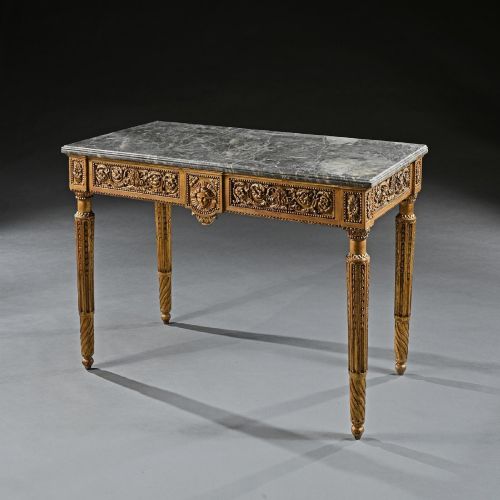
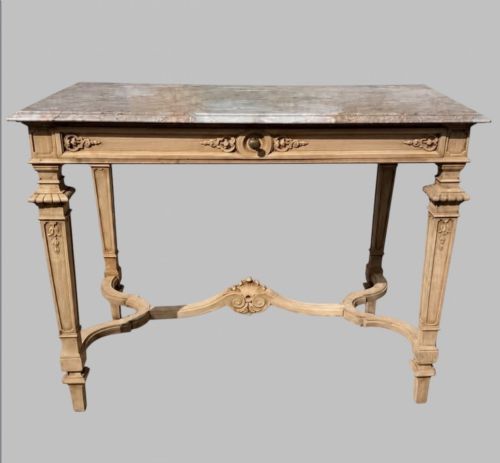
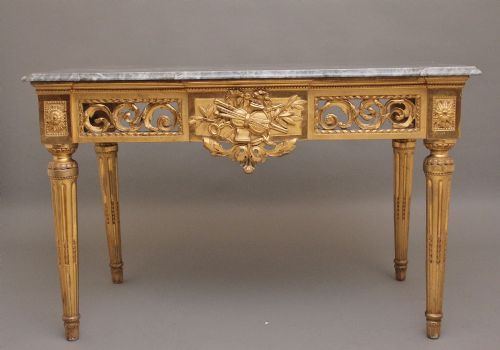
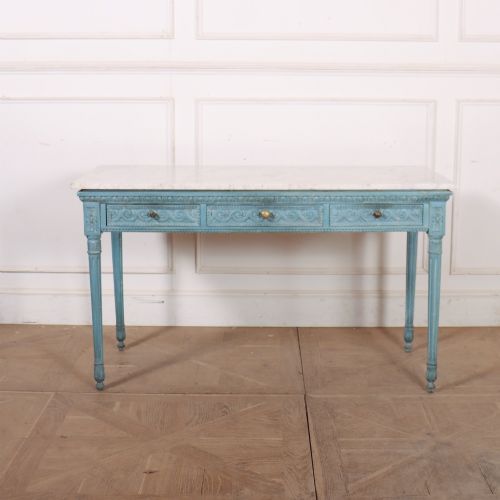
A marble top hall console table delivers grand architectural presence and a cool stone surface to an entrance hall.
Marble Top Hall Console Table
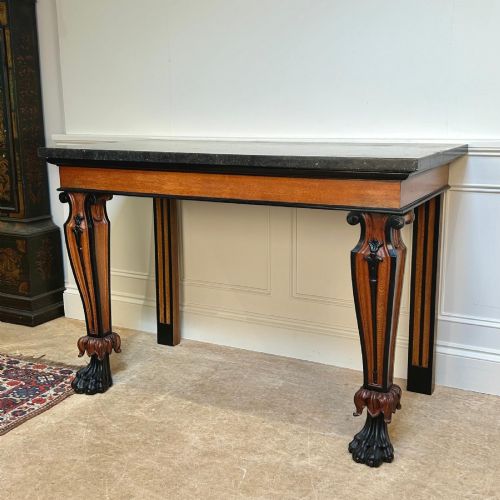
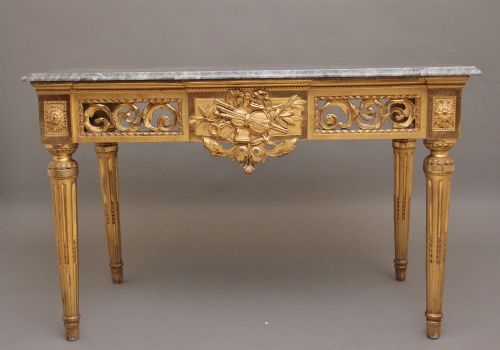
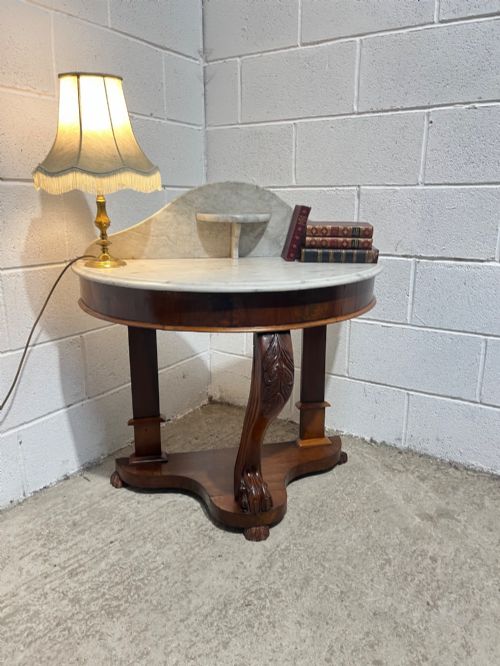
A marble top hall console table combines a heavy stone slab with a timber or gilt frame, designed to stand flat against an entrance wall. These pieces function as display surfaces for lamps, clocks, and correspondence, often anchoring a hallway with a mirror mounted directly above.
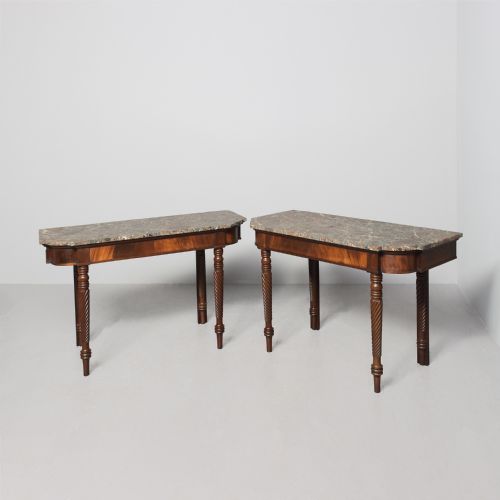
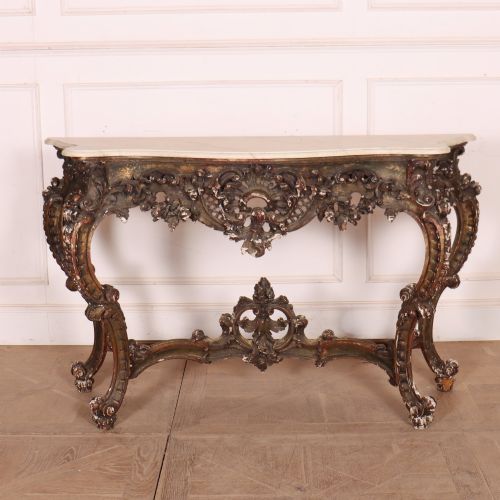
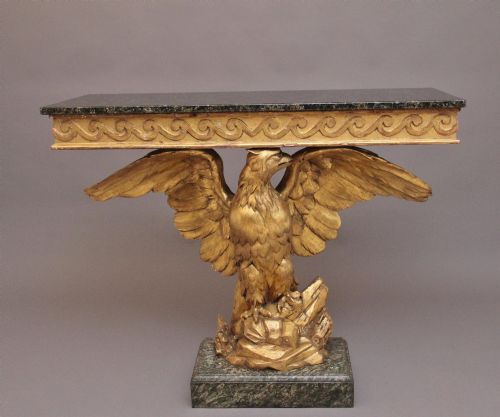
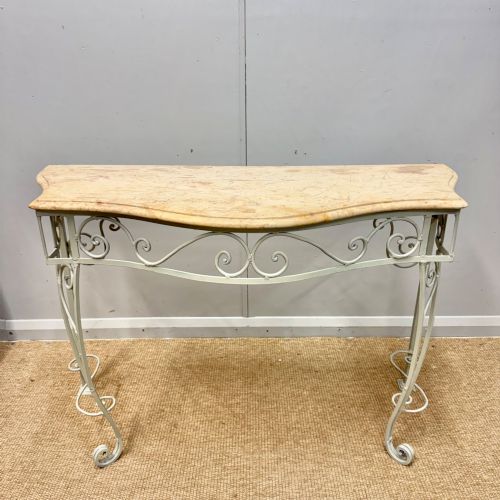
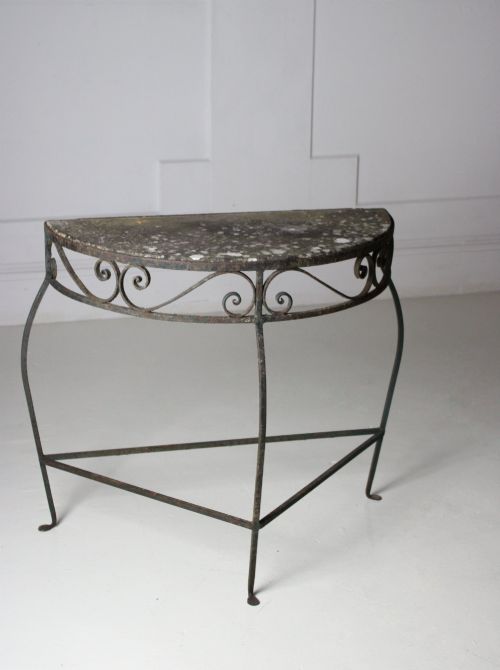
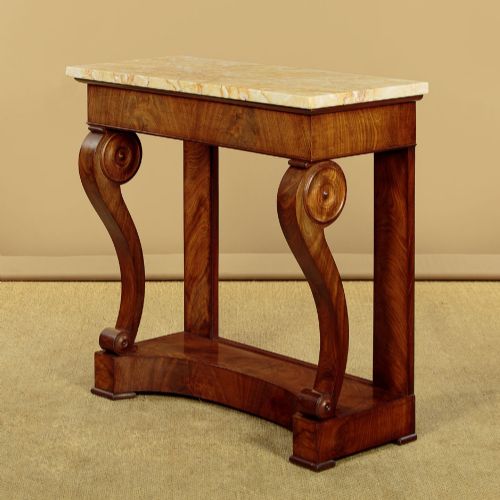
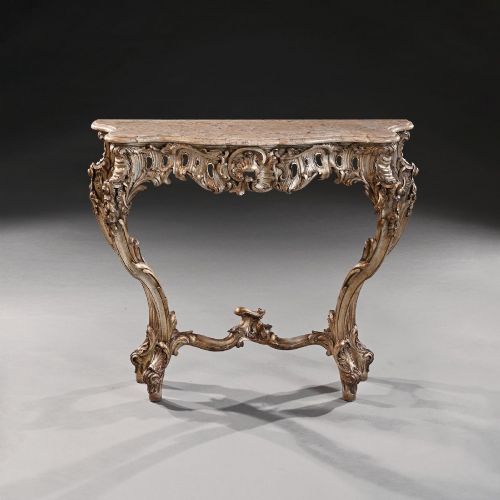
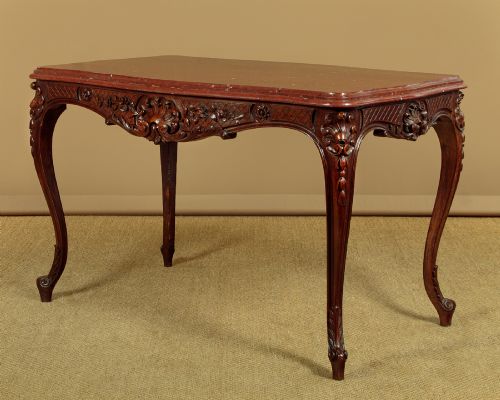
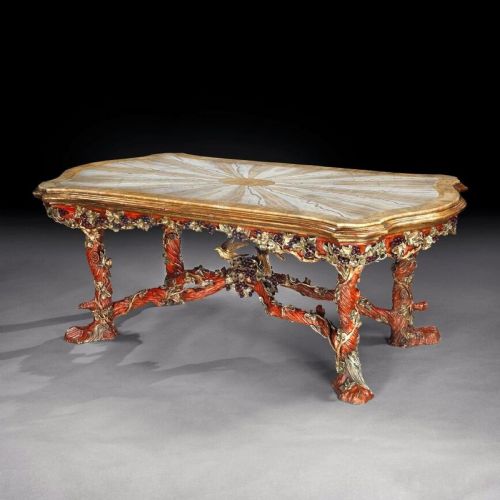
The selection ranges from restrained Regency mahogany designs and rustic French wrought iron frames to ornate 18th-century Italian giltwood and carved walnut constructions. French serpentine forms and Neoclassical styles appear frequently alongside simpler oak and painted country house pieces.
How they were made
Makers constructed the timber bases using solid mahogany, walnut, oak, and rosewood, applying gesso and gold leaf to elaborate giltwood frames. Wrought iron served alternative French and Edwardian domestic settings.
Slabs of marble, onyx, and Siena stone were shaped to fit serpentine or rectangular frames, resting unattached or pinned lightly to the timber structure beneath.
Makers occasionally paired heavy stone slabs with light bistro ironwork, creating tables sturdy enough to outlive the dining rooms they originally served.
What varies in quality
The depth and crispness of the hand-carving on the wooden or gilt frames separate standard joinery from exceptional craftsmanship. Carved giltwood and detailed neoclassical motifs reflect higher workshop standards than simpler turned supports.
The quality of the stone slab dictates the visual weight of the piece, with thicker, richly veined marble or Siena stone commanding greater presence than plain slate or thin replacement tops.
Amleto Bertoni
The Marble Top Hall Console Table Glossary
- Giltwood
- Timber, usually lime or pine, coated in gesso and covered with thin sheets of gold leaf. This technique creates a bright, reflective surface common on formal Italian and French console tables.
- Serpentine
- A gently undulating curved line forming the front edge of a table top or frame. It requires skilled shaping of both the timber skirt and the heavy stone slab.
- Demi-lune
- A half-moon shape used for console tables designed to sit flush against a wall. This format saves floor space in narrow hallways.
- Neoclassical
- A late 18th-century style drawing inspiration from classical antiquity, featuring symmetry, urn motifs, and fluted legs. It dominates formal Italian and French designs.
- Gesso
- A plaster mixture applied to wood frames to provide a smooth base for gilding. Skilled artisans carve intricate details directly into this hardened layer.
Marble Top Hall Console Table: Frequently Asked Questions
How do I secure a marble top console table?
Because the stone slab usually rests by its own weight upon the wooden or iron base, position the piece on a flat floor so the heavy top remains stable.
For added security in busy hallways, apply small dots of museum wax between the underside of the stone and the frame to prevent accidental sliding.
Were these tables meant for hallways?
These tables served primarily in grand entrance halls, formal reception rooms, and corridors to receive callers and display decorative objects.
Their narrow profile allowed them to occupy circulation spaces without blocking pathways.
How do I clean a marble top?
Wipe the stone surface regularly with a soft damp cloth and mild neutral soap, avoiding acidic cleaning products that etch polished marble.
Dry the stone immediately with a soft towel to maintain the natural sheen of the surface.
How do I tell Regency from Victorian pieces?
Regency pieces often display restrained neoclassical lines, rosewood veneers, or bright giltwood frames reflecting early 19th-century taste.
Victorian versions tend to feature heavier proportions, darker mahogany, and more exuberant revival carving.