

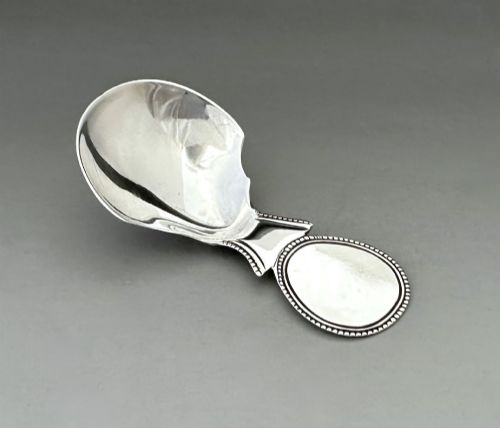
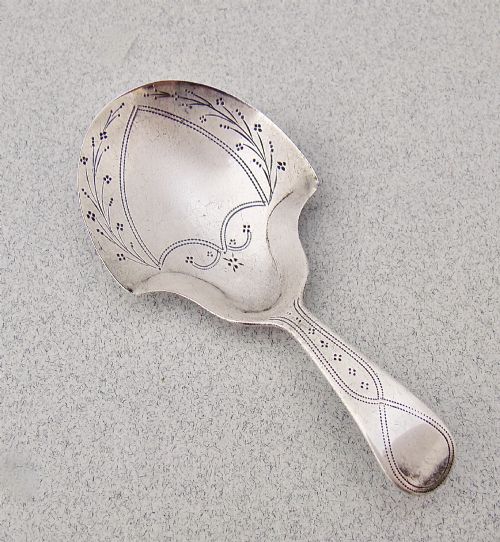
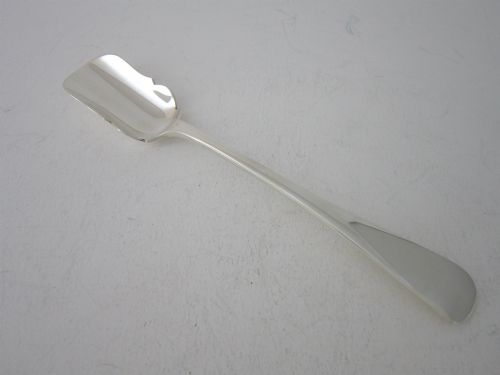
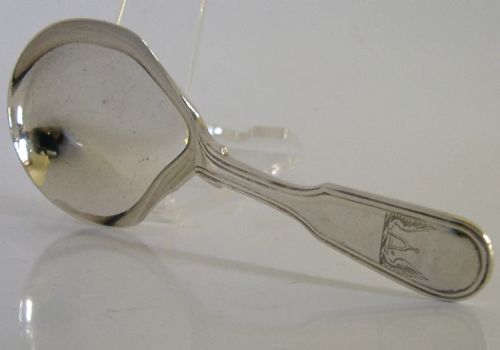


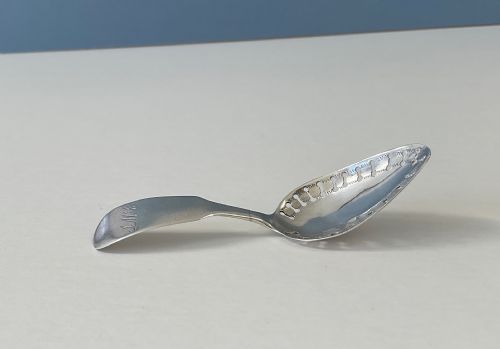


Antique Sterling Silver Shovel
An antique sterling silver shovel offers functional grace for the tea table or sideboard, spanning Georgian craftsmanship to Danish Modern design.
Antique Sterling Silver Shovel
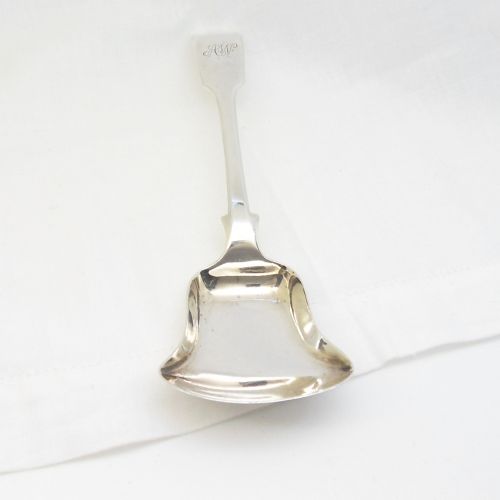
The material record spans traditional periods including the Georgian era, Victorian period, and 1930s. These pieces emerge in styles ranging from plain Georgian and George V patterns to decorative Arts and Crafts, Art Deco, and Scottish Provincial designs.
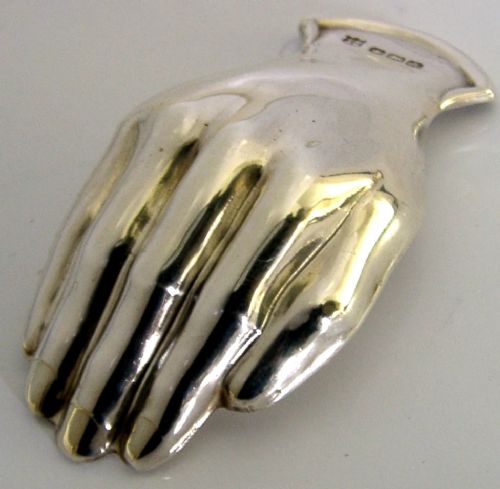
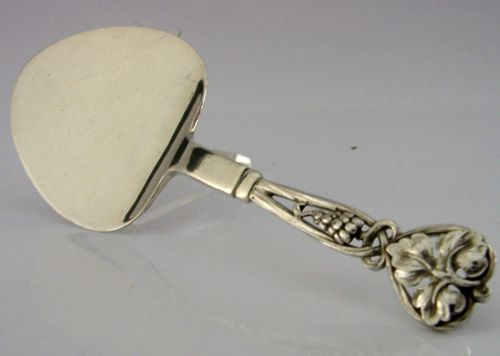
Forms vary from standard tea caddy spoons to novelty hand shapes and large pastry cake servers. Most examples connect directly to tea service traditions, fulfilling a specific ritual role within historical domestic dining.
Materials and construction
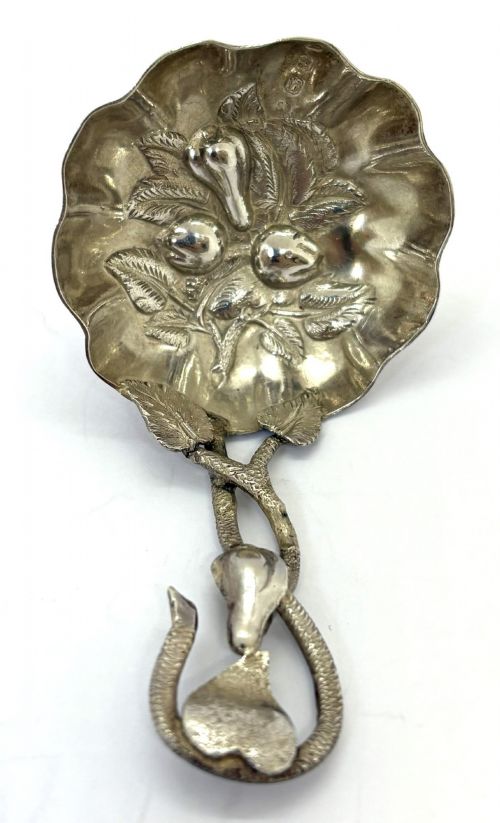
Makers fashioned these pieces primarily from solid sterling silver, occasionally incorporating parcel-gilt or silver-gilt highlights to accentuate bowls and decorative motifs. Smithing techniques involved hammering, stamping, and piercing sheet silver into shovel-shaped bowls.
Handles were cast, formed, or soldered separately, displaying engraved family crests, patterned borders, or hand motifs. Hallmarks stamped directly onto the metal record the assay office, city, and date of manufacture.
Antique Sterling Silver Shovel Retail Price Guide 2026
Typical asking prices for sterling silver shovel among the pieces listed under this phrase on Sellingantiques today, from the lower quarter to the upper quarter. They describe what is for sale here now, not the wider market.
Listings span from the Georgian period through Victorian, 1900, 1920, 1930, and 1940.
Assessing quality and distinction
Quality separates through the crispness of the engraved details, the weight of the sterling silver, and the balance of the shovel bowl against the handle. Maker involvement by known silversmiths elevates a piece.
The clarity of the stamped hallmarks and the preservation of original gilding provide clear indicators of superior execution. Simpler provincial examples contrast with intricate London or Birmingham craftsmanship.
Joseph Taylor·John Walton·Mappin & Webb·Georg Jensen·George Wintle
The Antique Sterling Silver Shovel Glossary
- Sterling silver
- A silver alloy containing 92.5 percent pure silver and 7.5 percent other metals, usually copper, ensuring durability for functional tableware.
- Caddy spoon
- A short-handled spoon specifically designed for measuring loose tea leaves from a caddy into a teapot.
- Hallmark
- A series of official marks stamped on precious metals showing the standard of purity, assay office, and year of making.
- Parcel-gilt
- Silver objects that are partially gilded with gold on specific areas, such as the interior of a shovel bowl, while the rest remains silver.
- Stilton scoop
- A long, half-cylindrical utensil designed for cutting and serving hard cheeses like Stilton.
Antique Sterling Silver Shovel: Frequently Asked Questions
What is an antique silver shovel used for?
These pieces served primarily as caddy spoons for measuring tea leaves or as small servers for sugar and pastry.
They belonged to formal tea service rituals in affluent households throughout the Georgian and Victorian eras.
How do I date an antique silver shovel?
Dating relies on reading the stamped hallmarks, which indicate the assay office and specific year letter.
Stylistic markers like Georgian fiddle patterns or Arts and Crafts motifs also point to particular manufacturing decades.
What styles are available for these items?
The inventory encompasses classic Georgian and Victorian designs alongside George V, Art Deco, and Arts and Crafts pieces.
Regional variations include Scottish Provincial work and Danish Modern interpretations.
Are these items made of solid silver?
The pieces consist of solid sterling silver, occasionally enhanced with parcel-gilt or silver-gilt surfaces.
Hallmarks stamped into the metal verify the silver standard used by the maker.