
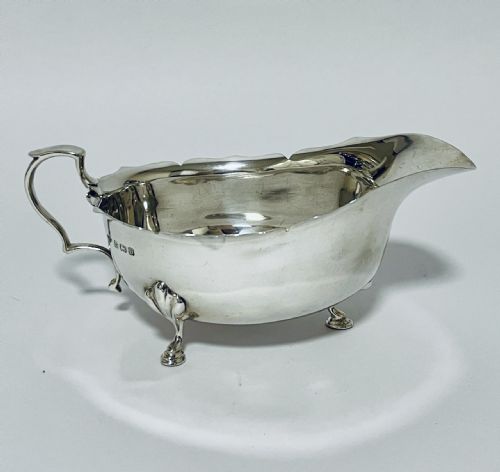
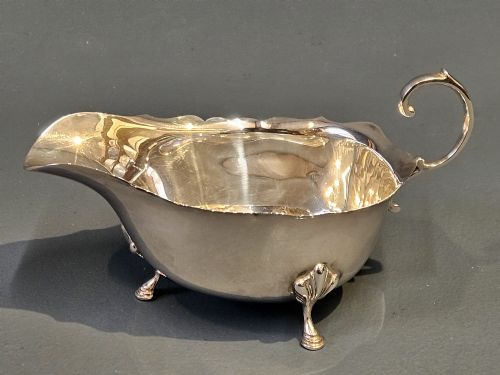


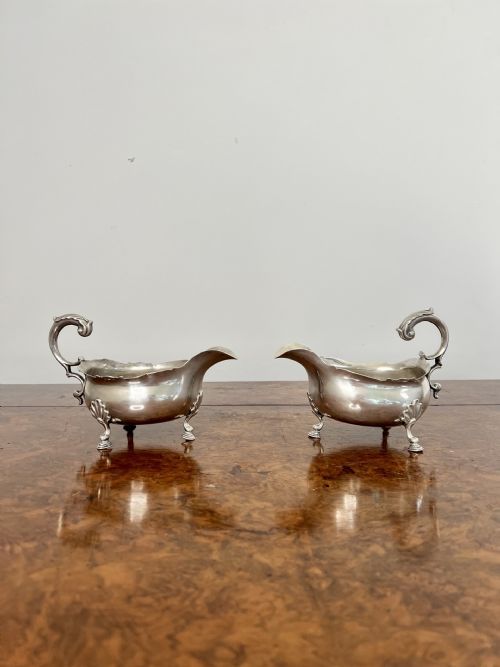


Antique Sterling Sauce Boats
Antique sterling sauce boats bring weight and form to the table, and finding the right pair transforms how a dining room serves its gravies and sauces.
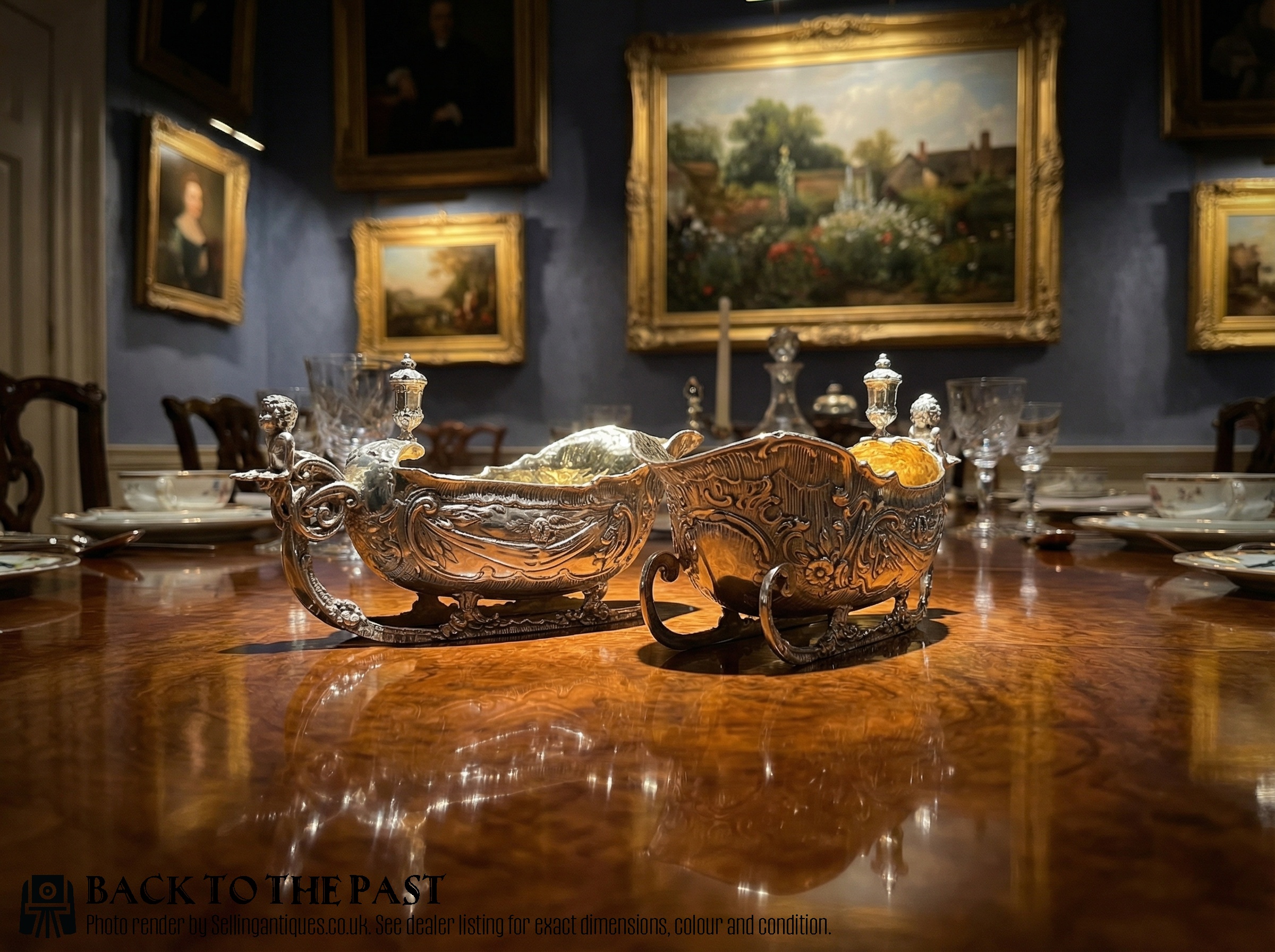
Antique Sterling Sauce Boats
When you search for antique sterling sauce boats, you are looking at hollowware designed to hold gravies, melted butter, and culinary sauces at the table. These pieces span centuries of dining customs, appearing as single vessels or matched pairs.
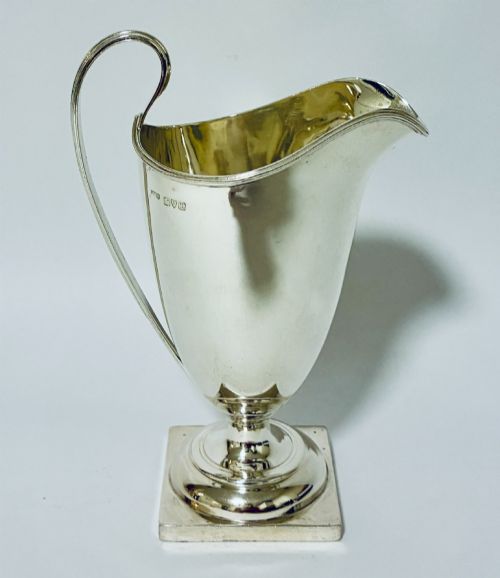
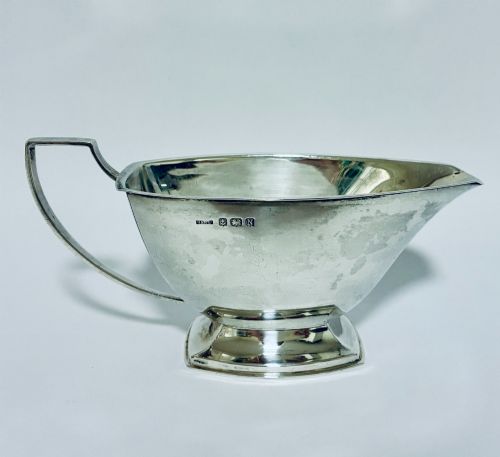
The versions you are most likely to meet on this page range from heavy Georgian pedestals to Victorian naturalistic designs and clean-lined Art Deco examples. They take the form of open boats, sometimes paired with matching ladles or fitted with lids.
Makers shaped these vessels from solid sterling silver or silver-gilt, drawing on styles from Neoclassical restraint to elaborate Victorian embossing. They serve both practical pouring functions and formal display.
How they were made
Silversmiths formed these vessels primarily through hammering and raising flat sheets of sterling silver into hollowware bodies. They soldered cast handles and feet onto the main body to create balanced, durable serving pieces.
Decoration relied on chasing, embossing, and engraving techniques directly into the silver surface. Makers also utilised silver-gilt interiors to protect the metal from acidic contents like drawn butter or fruit sauces.
Listings feature sterling silver and silver-gilt pieces spanning Georgian, Victorian, and Art Deco styles, alongside Irish and Scottish provincial works.
What varies in quality
The distinction between ordinary and exceptional pieces lies in the gauge of the silver and the crispness of the hand-chased ornamentation. Thicker metal provides a substantial heft in the hand, while sharp, deep relief work indicates skilled silversmithing rather than hasty production.
Proportion and balance define the higher tiers of the range, where handles, bodies, and feet integrate harmoniously. Maker marks with clear provincial or metropolitan provenance also elevate the standing of a vessel.
Tiffany & Co·Theodore B Starr·William Comyns·Walker and Hall·James Welch·William Grundy
The Antique Sterling Sauce Boats Glossary
- Sterling silver
- An alloy containing 92.5 percent silver by mass, with the remaining 7.5 percent typically consisting of copper. This standard ensures the durability required for functional tableware.
- Silver-gilt
- Silver that has been plated with a thin layer of gold on its interior or exterior surfaces. This technique adds a warm golden glow and prevents food acids from tarnishing the metal.
- Pedestal
- A raised foot or column supporting the main body of the sauce boat above the tabletop. Georgian and Victorian makers frequently used this form to add height and elegance.
- Naturalistic
- A design style inspired by organic forms such as leaves, branches, or acorns. Victorian silversmiths utilised this approach to give rigid metal a lifelike, botanical texture.
- Sauce tureen
- A larger, covered vessel designed to keep gravies warm at the table. These pieces often feature fixed stands and matching ladles for formal dining.
Antique Sterling Sauce Boats: Frequently Asked Questions
How do I clean antique silver sauce boats?
Wash them gently in warm soapy water using a soft cloth, then dry them thoroughly with a lint-free towel. Avoid abrasive dips or harsh scrubbing that can wear away historic hallmarks and fine engraving.
Store them in tarnish-resistant cloths or bags when not in use. Regular, gentle dusting keeps the silver bright without requiring aggressive polishing sessions.
Were sauce boats always made in pairs?
Many formal dining settings required two sauce boats to serve different accompaniments or to place at opposite ends of a long table. Surviving examples often appear as matched pairs from the Victorian and Georgian periods.
Single vessels are equally common, particularly from earlier eighteenth-century workshops or domestic settings. Both single pieces and pairs fulfil the same practical serving role.
What is the difference between a sauce boat and a cream jug?
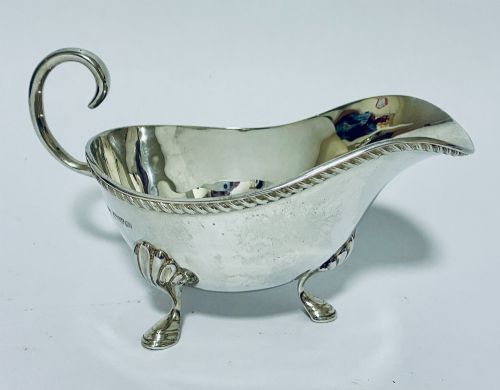
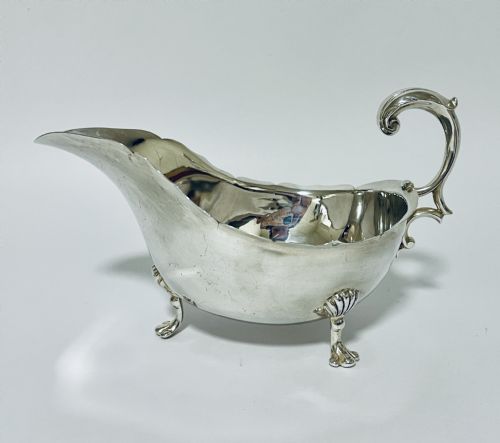
Sauce boats generally feature wider, shallower bodies and heavier bases designed for savoury gravies and butter. They often include integrated pedestals or three-foot supports.
Cream jugs possess taller, narrower profiles intended for pouring dairy into tea or coffee. While makers occasionally used similar forms, their capacities and spouts reflect different table uses.
Can I use antique silver sauce boats today?
These vessels remain entirely functional for serving warm gravies, melted butter, and sauces at modern dining tables. Solid silver conducts heat well, keeping contents warm during a meal.
Wash the pieces immediately after use to prevent acidic foods from lingering on the silver surface. Hand washing preserves the finish better than modern dishwashers.