

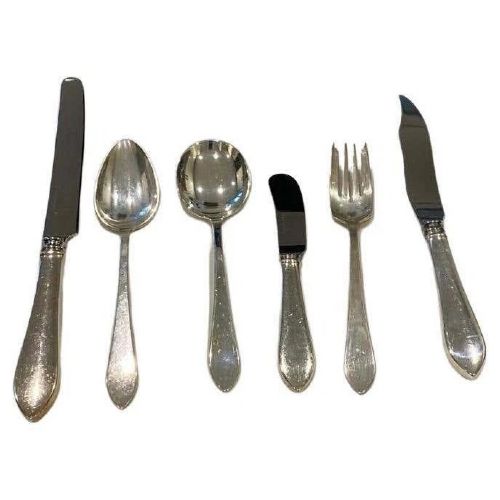


Antique Sterling Dessert Spoons
Antique sterling dessert spoons are solid silver table pieces from the Georgian and Victorian eras, chosen for dining room elegance and historical weight.
Antique Sterling Dessert Spoons
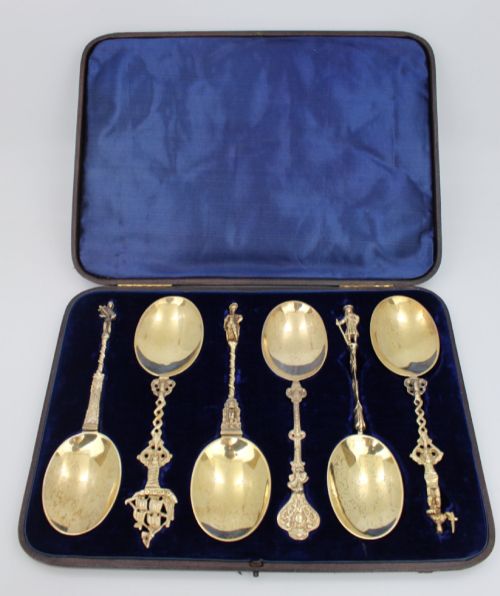
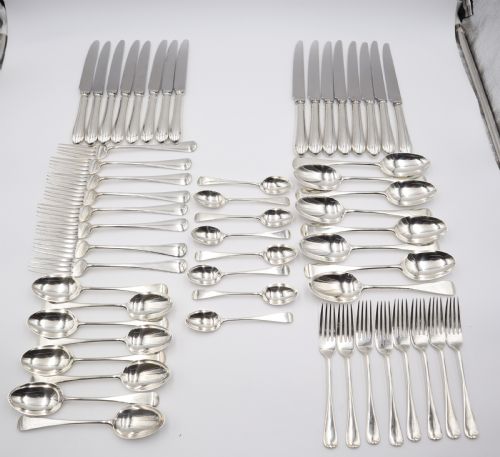
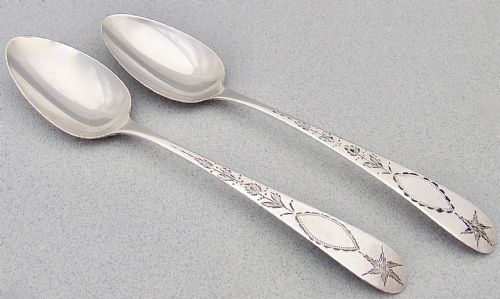
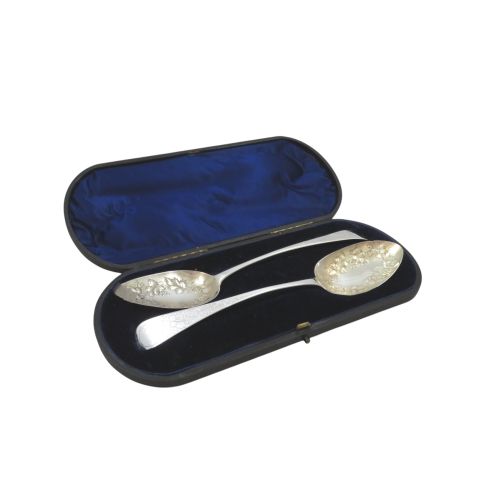
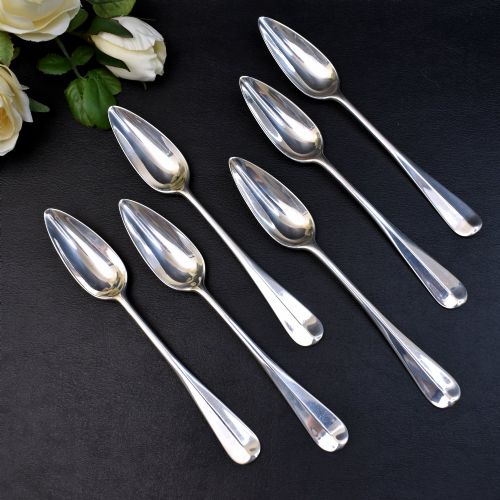
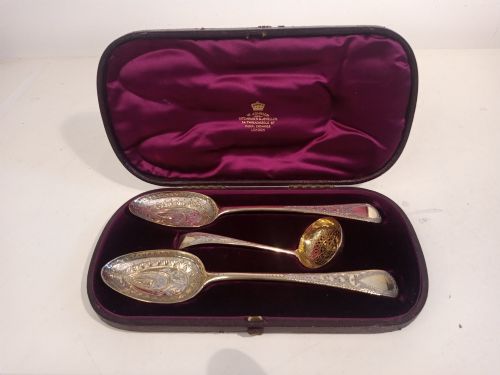
Antique sterling dessert spoons are silver eating utensils designed for the middle course of a formal meal, encompassing individual spoons as well as pairs and larger cased sets. When you search for antique sterling dessert spoons, you encounter items ranging from plain Georgian fiddle pattern silver to ornate Victorian gilt berry spoons.
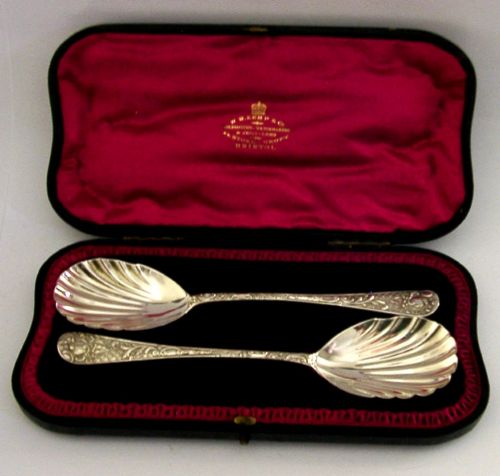
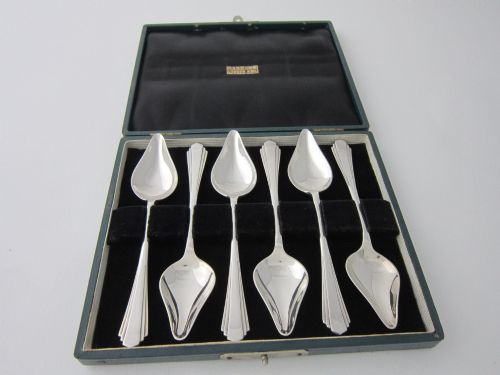
The pieces on this page span the Georgian, Victorian, and later periods, featuring regional British and Irish hallmarking alongside fitted presentation boxes lined in velvet or silk. Many survive as matched pairs or small sets intended for specific dining functions like serving fruit, pudding, or ice cream.
How they were made
Silversmiths forged these spoons from sterling silver, shaping the bowls and stems by hand before applying punch work or engraving. Makers often added surface gilding to the bowl interiors or embossed fruit and leaf motifs onto plain Georgian blanks during later Victorian conversions.
Handles incorporate distinct patterns such as Celtic Point, Fiddle, Palm, and Faneuil, reflecting traditional styles or Art Deco design principles. Fitted cases lined with leatherette, satin, and fabric protected these silver items during storage and transport.
Some Victorian silversmiths took plain Georgian spoons and hammered them into elaborate berry displays centuries later.
What varies in quality
Quality rests in the crispness of the maker's mark, the depth of the chased or engraved decoration, and the preservation of the original silver surface. Crisp handles and sharp bowl edges indicate minimal wear from use and polishing over the centuries.
The presence of original fitted presentation cases lined with velvet, silk, or leatherette elevates the context of a set. Pieces that retain their balanced weight in the hand and clear hallmarks demonstrate superior craftsmanship from established workshops.
John Pittar·Hamilton & Inches·William Chawner II·Georg Jensen·Sebastian Crespell
The Antique Sterling Dessert Spoons Glossary
- Sterling silver
- A silver alloy containing 92.5 percent pure silver and 7.5 percent other metals, usually copper, ensuring structural durability for tableware.
- Hallmark
- A series of stamped official marks applied to precious metal items indicating the maker, assay office, standard of purity, and date of manufacture.
- Berry spoon
- A large serving spoon, often Georgian, featuring fruit repoussé or chased work added to the bowl, frequently created later in the nineteenth century.
- Fiddle pattern
- A nineteenth-century cutlery handle style featuring a narrow stem that broadens near the end into a shape resembling a violin.
- Gilt
- A thin layer of gold applied to the surface of the silver, frequently seen inside the bowls of dessert and fruit spoons.
Antique Sterling Dessert Spoons: Frequently Asked Questions
How do I use antique dessert spoons today?
These spoons suit modern dining tables for serving puddings, fruit, and ice cream, or for display within a fitted presentation case.
Their solid silver construction makes them durable for regular domestic use provided they receive gentle hand washing.
Are these spoons made of solid silver?
The listings comprise sterling silver, solid silver, and silver-gilt items bearing traditional British and Irish hallmarks.
These stamps confirm the silver standard and provide the active assay year for each piece.
What is the difference between Georgian and Victorian spoons?
Georgian spoons typically display simpler lines such as Celtic Point and Fiddle patterns, reflecting eighteenth and early nineteenth-century tastes.
Victorian examples frequently introduce naturalistic leaf motifs, engraved handles, or heavy parcel-gilt berry decorations.
Why do some spoons come in fitted boxes?
Fitted cases lined with silk, velvet, or satin protected delicate silver flatware sets during storage and highlighted their presentation as gifts.
These original boxes often contain velvet slots shaped precisely to hold pairs or sets of spoons securely.
How do I identify the maker?
Makers stamped their initials or full names into the metal alongside the assay office mark and date letter.
Consulting standard silver reference books allows you to match these punch marks to specific silversmiths and workshops.