
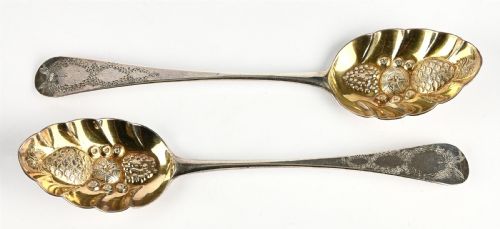


Repousse Silver Berry Spoons
Repousse silver berry spoons are decorative serving pieces designed for fruit, most frequently found here in Georgian and Victorian pairs.
Repousse Silver Berry Spoons
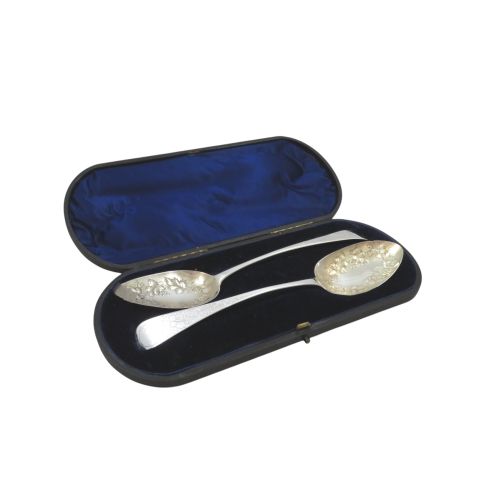
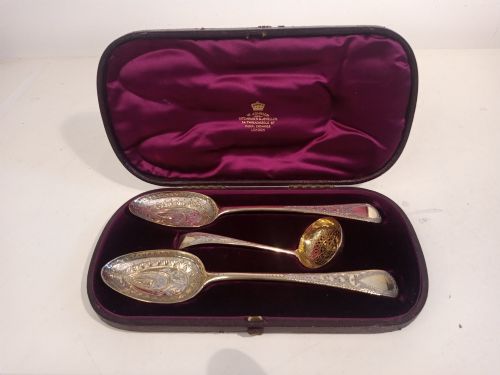
When you search for repousse silver berry spoons, you are looking at serving utensils, flatware, and cutlery intended for the dining table. These items appear as single spoons, pairs, sets, and combinations that sometimes include a sugar sifter or come housed in a fitted case.
The versions you are most likely to meet on this page hail from the Georgian and Victorian eras, spanning the eighteenth and nineteenth centuries. Makers from these periods adapted plain dining flatware or produced dedicated serving pieces with large bowls suited to berries and fruit.
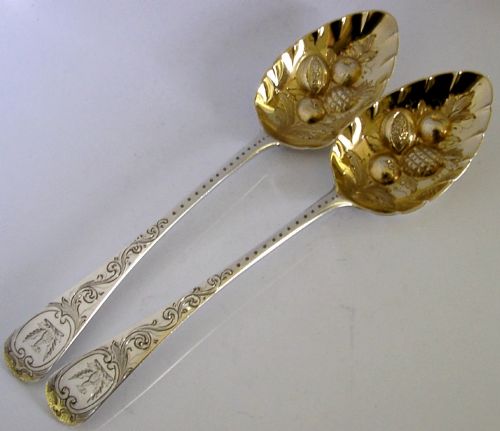
Many examples feature familial crests, engraved handles, or parcel-gilt interiors known as silver gilt or gilt. They emerge in configurations that include boxed pairs and small sets originating from English and Irish workshops.
How they were made
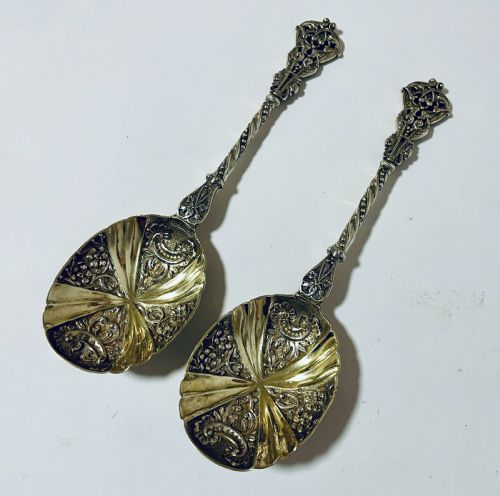
These items are fashioned from sterling silver, utilising the repousse technique to hammer and push the metal from the reverse side into high-relief fruit and floral motifs across the bowl. This method creates tactile, three-dimensional designs that catch the light along the contours of the fruit.
Makers often applied a secondary layer of gold wash, described as silver-gilt or gilt, to the interior of the bowls to protect the silver from the acidic juices of fresh fruit. Handles were frequently shaped, engraved, or crested to match the ornamentation of the bowls.
Some spoons arrive complete with their original leatherette boxes, ensuring the fruit motifs rest undisturbed in velvet darkness.
What varies in quality
The distinction between standard examples and the finest pieces lies in the crispness of the repousse hammering and the depth of the chased details within the bowl. Crisp, sharply defined fruit and leaf motifs indicate skilled handwork rather than a softened surface.
Condition and presentation also set items apart, particularly where original fitted cases lined with velvet, silk, or leatherette are preserved alongside matched pairs or sets with clear hallmarks.
Peter and Anne Bateman·William Chawner II
The Repousse Silver Berry Spoons Glossary
- Repousse
- A metalworking technique where the design is hammered into relief from the reverse side. This creates raised ornamental patterns on the surface of the silver.
- Silver-Gilt
- Sterling silver that has been coated with a thin layer of gold on the surface. This finish is frequently seen inside the bowls of fruit serving spoons.
- Hallmarked
- An official stamp or series of marks applied to precious metals indicating standard of purity, maker, and year of assay. These marks help verify the period of manufacture.
- Crested
- Bearing an engraved or applied family crest or heraldic symbol. This personal touch often appears on the terminal of the handle.
- Sifter
- A spoon with perforations in the bowl designed to drain liquid from fruit. They are occasionally found paired with serving spoons in boxed sets.
Repousse Silver Berry Spoons: Frequently Asked Questions
What are repousse silver berry spoons?
These are ornamental serving spoons featuring raised fruit and floral designs hammered into the silver bowls. They were traditionally used at the dining table for serving fresh berries and soft fruits.
Most examples found here date from the Georgian and Victorian periods, often appearing in matched pairs or fitted presentation cases.
How were berry spoons used?
They were utilised during dessert courses to serve fruits like strawberries and raspberries from large bowls onto individual plates. The wide bowls and gilded interiors helped manage acidic juices.
Some sets also incorporate a sugar sifter for dusting fruit with sugar at the table.
Are these spoons made of solid silver?
Yes, listings consist of sterling silver, with several examples featuring an additional layer of gold wash known as silver-gilt or gilt inside the bowl. This protects the metal from fruit acids.
They are frequently marked with hallmarks that confirm their sterling standard and date of production.
How can I tell Georgian from Victorian spoons?
Georgian pieces generally date from the eighteenth century up to the eighteen-twenties, showing classic handling and crested designs. Victorian examples date from the later nineteenth century, such as eighteen-ninety-six.
Hallmarks stamped on the metal provide the exact year of assay to distinguish between the two eras.