


Embossed Silver Serving Spoons
These embossed silver serving spoons are substantial silver tableware items from the Georgian and Victorian eras, prized for ornate bowls and fitted cases.
Embossed Silver Serving Spoons
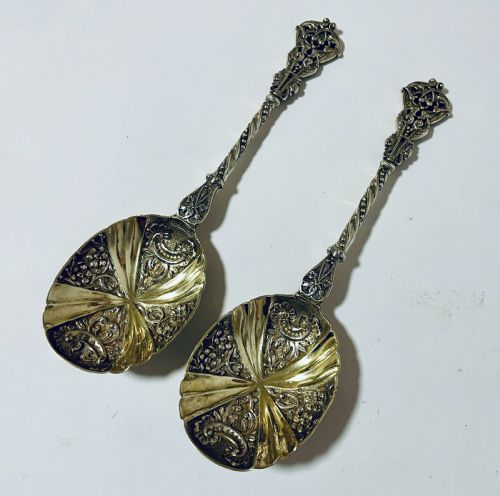
When you search for embossed silver serving spoons, you are looking at decorative and functional tableware designed for serving fruit, desserts, berries, and salads during formal meals. The examples on this page span the Georgian and Victorian periods, with origins including English workshops and continental makers working in Dutch and Flemish styles.
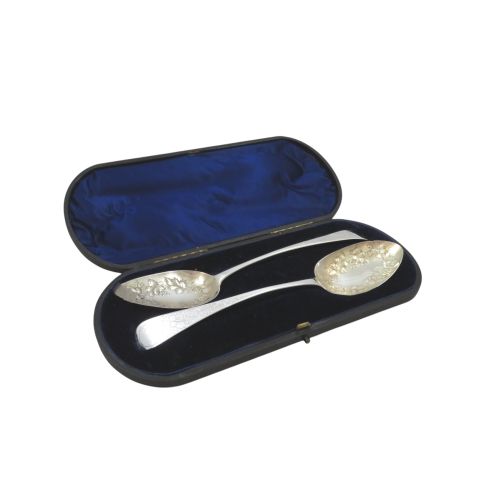
You are most likely to encounter pairs of berry spoons, often housed in velvet- or silk-lined presentation cases, alongside individual serving utensils and salad servers. These pieces typically feature heavily chased or embossed bowls paired with finely engraved or crested handles, reflecting the dining customs of the eighteenth and nineteenth centuries.
How they were made
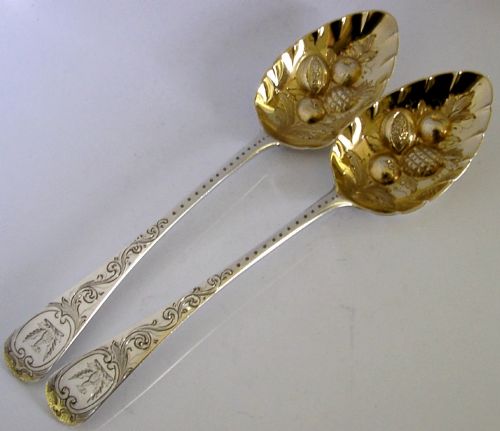
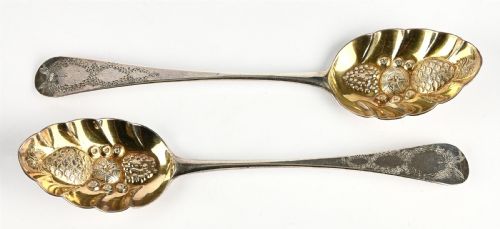
The makers of these spoons utilised sterling silver and silver gilt, applying hammer and punch techniques to shape the heavy metal before chasing and embossing intricate fruit and floral designs directly onto the bowl surfaces. Selected pieces also received a secondary layer of gold gilt over the silver to create a two-tone finish.
Craftsmen finished the handles through hand engraving, occasionally adding family crests or detailed linear patterns to match the embossed work on the bowls. Many of these spoons were then paired and placed into custom-fitted presentation cases lined with silk and velvet.
What varies in quality
The crispness and depth of the embossed and chased detailing on the bowl separate standard examples from finer works, as skilled silversmiths achieved sharper relief and more naturalistic fruit motifs. The presence of clear hallmarks indicating date, town, and maker also distinguishes the origin and pedigree of each spoon.
The inclusion of original fitted cases lined with silk or velvet alters the character of a set, as does matched pairing by notable makers such as Peter and Anne Bateman or William Chawner II. Engraved family crests on the handles add a layer of provenance that elevates the individual character of the silverware.
Peter and Anne Bateman·William Chawner II
The Embossed Silver Serving Spoons Glossary
- Berry spoon
- A large serving spoon with an embossed and chased bowl depicting fruit, typically produced during the Georgian period and later retrofitted or created specifically for serving berries.
- Silver gilt
- Sterling silver that has been coated with a thin layer of gold, creating a warm golden finish over the silver base. This technique was frequently applied to dessert and fruit serving spoons.
- Hallmark
- An official stamp applied to silver items to indicate the standard of purity, the assay office, the year of production, and the maker's mark. These marks provide definitive evidence of age and origin.
- Chasing
- A metalworking technique where the silversmith hammers metal from the front to push and shape intricate designs into relief, commonly seen on the bowls of these serving spoons.
- Sifter
- A specialised serving spoon with a perforated bowl designed for dusting sugar over fruit or desserts. These often appear alongside berry spoons within fitted presentation cases.
Embossed Silver Serving Spoons: Frequently Asked Questions
What were embossed silver serving spoons used for?
These spoons were designed for serving large portions of fruit, berries, desserts, or salads at formal dining tables during the Georgian and Victorian eras. Their ornate, embossed bowls made them specifically suited for table service rather than individual dining.
Many of these pieces were kept in dedicated presentation cases lined with silk and velvet, indicating they were reserved for special occasions or displayed as part of a formal dining service.
How can I tell Georgian spoons from Victorian ones?
Georgian spoons typically display cleaner lines and simpler handle engraving from the late eighteenth or early nineteenth century, whilst Victorian examples often lean towards heavier, more ornate decoration and deeper embossing. Examining the hallmarks provides the exact year and assay office for definitive dating.
Stylistic influences also help distinguish the periods, with Georgian pieces frequently showing neoclassical restraint or early berry conversions, and Victorian pieces showcasing elaborate floral motifs or Flemish Baroque revivals.
What is a berry spoon?
A berry spoon is a large serving spoon featuring a deeply embossed and chased bowl decorated with fruit and foliage. While many date from the Victorian era, a significant number are Georgian spoons that received later nineteenth-century embossing to transform them into dedicated berry servers.
These spoons are frequently found as matched pairs inside fitted cases, often accompanied by matching sifters for dusting powdered sugar over the fruit.