


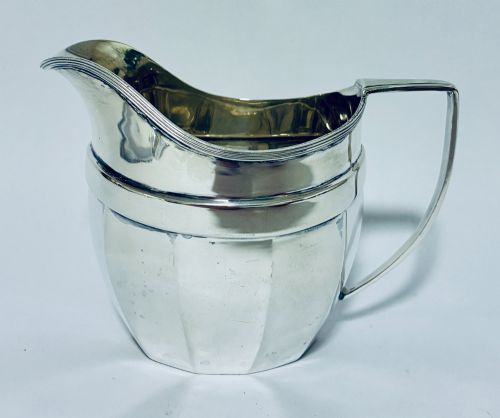
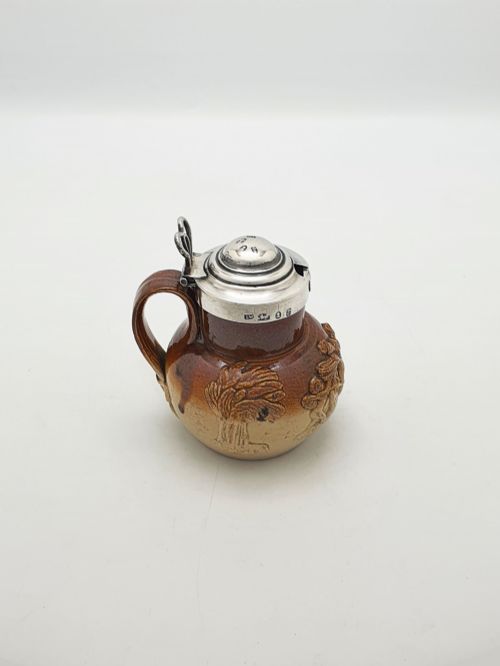


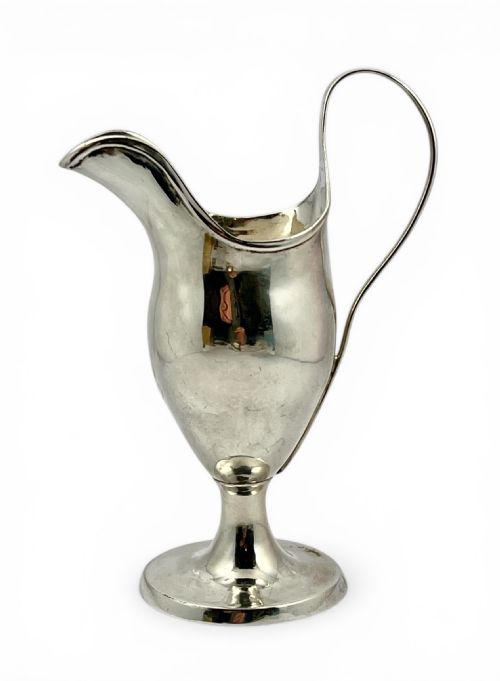
Antique Sterling Cream Pitcher
An antique sterling cream pitcher brings Georgian and Victorian silver right to the table, ready to pour cream with period grace.
Antique Sterling Cream Pitcher
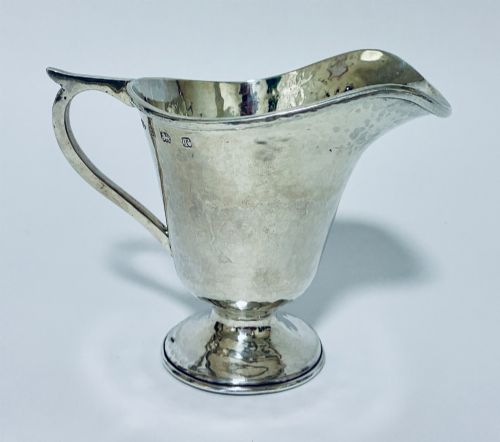
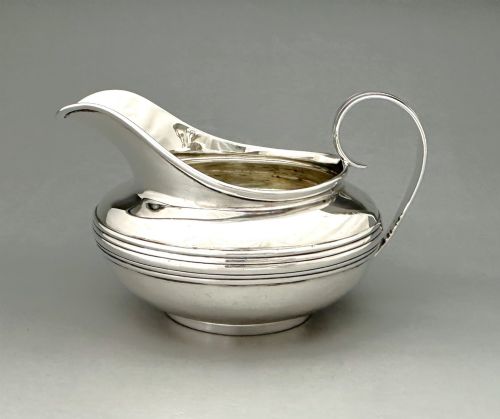
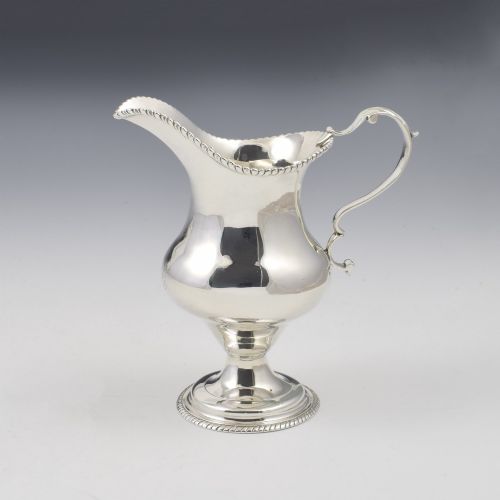
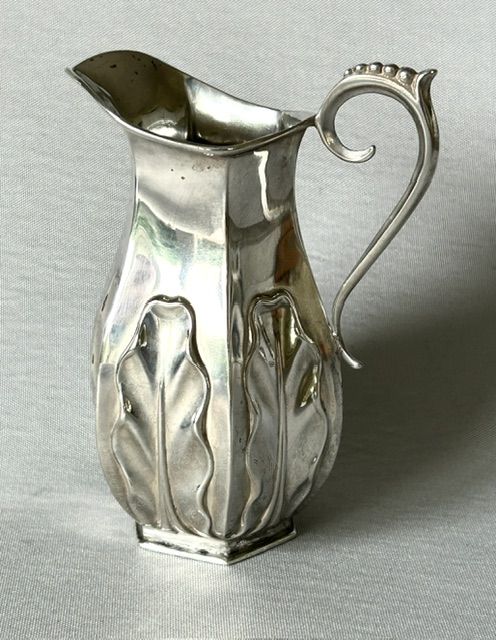
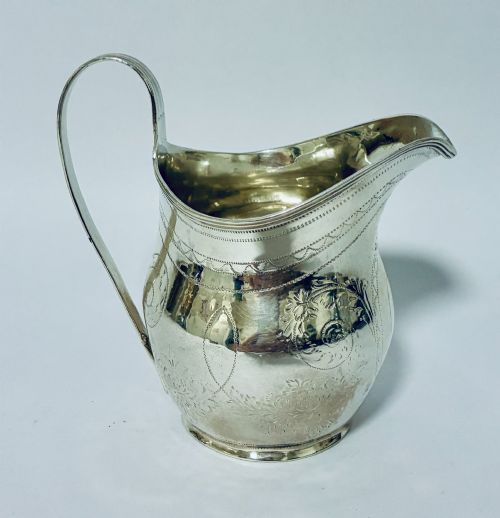
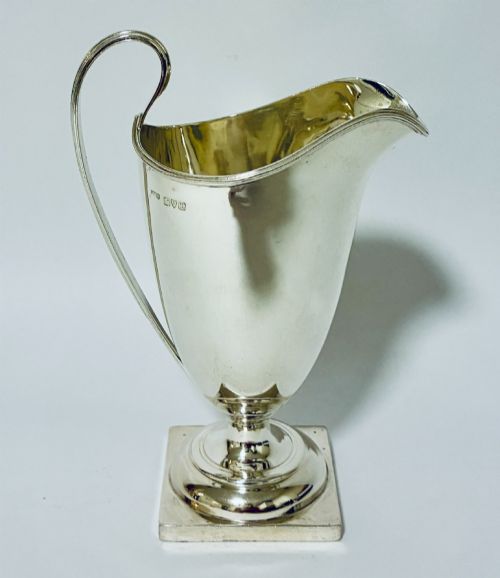
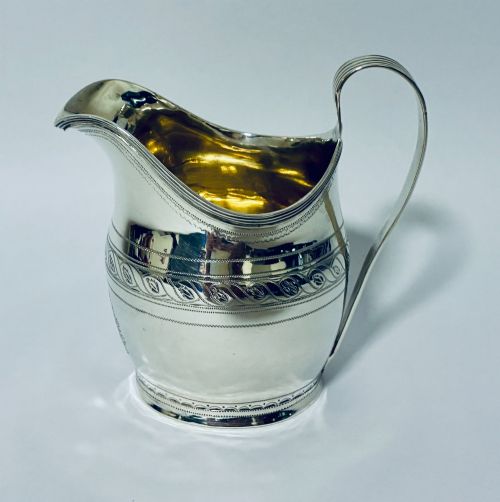
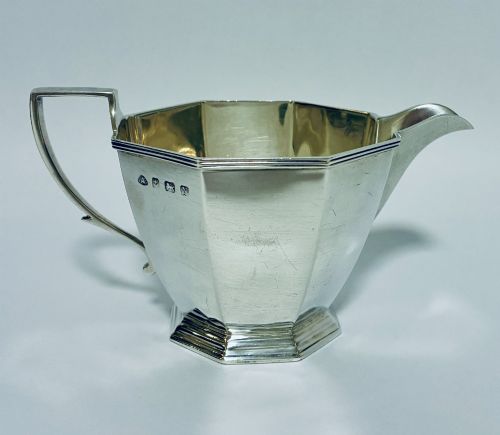
An antique sterling cream pitcher serves cream or milk at the table, appearing across domestic settings from the eighteenth century into the twentieth century. These small vessels take forms such as helmet jugs, sparrow beak profiles, and pedestal bodies.
Georgian and Victorian examples dominate the selection, alongside items from the George V and Arts and Crafts periods. Buyers frequently encounter forms designated simply as cream jugs, milk jugs, and creamers.
Origins range across London, provincial workshops, and international makers, showcasing diverse domestic silver traditions. Stoneware bodies with sterling collars also appear within the available range.
Assessing craftsmanship and condition
Quality rests upon the crispness of the silversmith's chasing and engraving, alongside the structural integrity of handles and spouts. Finer examples maintain distinct hallmarks and balanced proportions without distortion from heavy polishing.
The weight of the silver and the precision of the soldering separate standard domestic items from pieces produced by notable makers.
Periods represented span from the eighteenth century through Georgian, Victorian, and Edwardian eras into the 1930s.
Stalker and Mitchison·James Gordon·John Emes·Peter and Ann Bateman·George Unite·Robert Pringle and Sons
The Antique Sterling Cream Pitcher Glossary
- Sterling silver
- A silver alloy containing 92.5 percent pure silver and 7.5 percent other metals, usually copper. This standard composition provides durability for functional tableware.
- Sparrow beak
- An early eighteenth-century jug form characterised by a small, pinched spout resembling a bird's beak. These diminutive vessels typically feature pear-shaped bodies.
- Helmet jug
- A cream pitcher featuring a flared, curving rim and a footed base that evokes the shape of a classical helmet. This neoclassical silhouette gained popularity during the Georgian period.
- Bright cut
- An engraving technique utilising faceted cuts made with a sharp V-shaped graving tool. This method produces sparkling geometric and floral patterns that reflect light.
- Gold wash
- A thin layer of gold applied to the interior surface of a silver jug, also known as vermeil. This coating protects the silver from the corrosive acids found in dairy cream.
Antique Sterling Cream Pitcher: Frequently Asked Questions
How were these cream pitchers used?
These vessels served a functional role at the tea and breakfast table, transferring cream into cups. They were handled daily within domestic households.
Over generations, many transitioned from active dining table use to display pieces or collection items, accompanied by matching sugar bowls and tongs.
How do I date a silver cream pitcher?
Dating relies heavily upon the maker's marks and hallmarks stamped into the silver, which record the assay office and year of production. Provincial pieces often carry specific maker signatures.
Stylistic cues such as helmet shapes, sparrow beak profiles, or bright cut engraving further narrow the period of manufacture between the eighteenth and early twentieth centuries.
How do I care for antique silver?
Care involves gentle washing with warm water and mild soap, followed by thorough drying with a soft cloth to preserve the surface. Avoid abrasive cleaners that wear down engravings and hallmarks.
Regular, cautious polishing with a dedicated silver cloth maintains the metal without harming the patina built up over centuries of existence.