
Antique Sterling Condiment Pot
An antique sterling condiment pot brings refined silver and glass craftsmanship to the dining table, offering both decorative charm and practical service for dining essentials.
Antique Sterling Condiment Pot
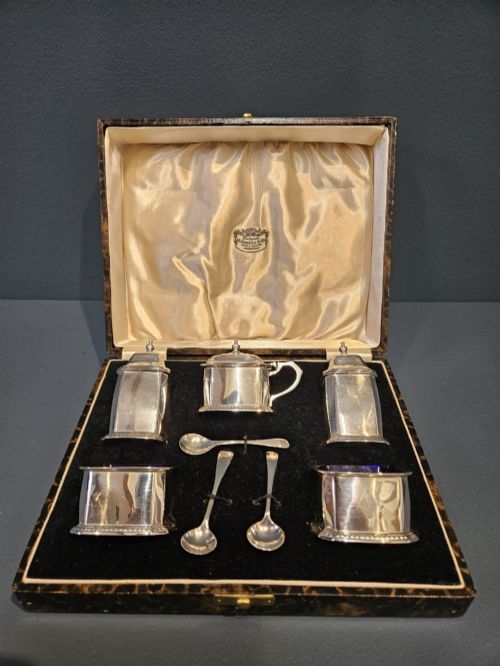
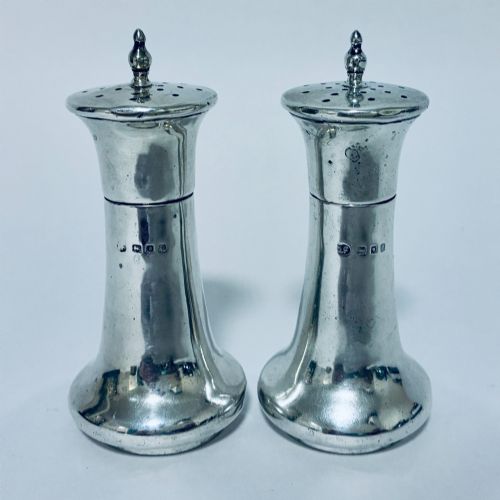
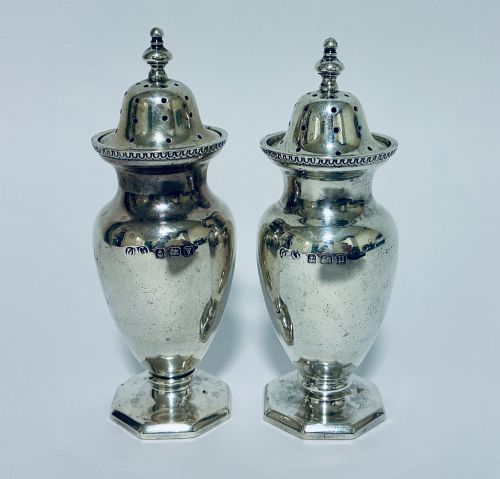
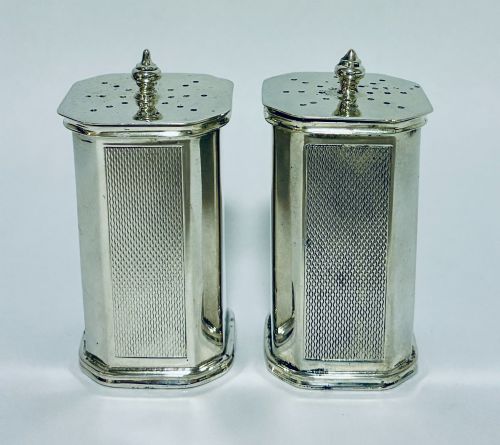
An antique sterling condiment pot serves individual table seasonings like mustard, salt, and pepper within structured tableware settings. These vessels appear in forms such as mustard pots, pepper pots, salt cellars, and multi-piece cruet sets.
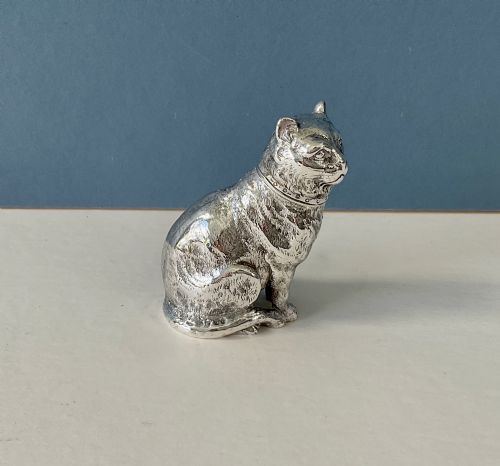
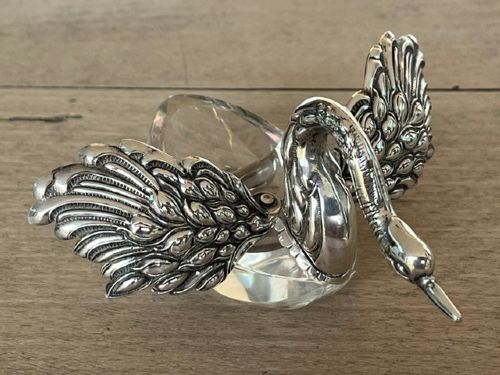
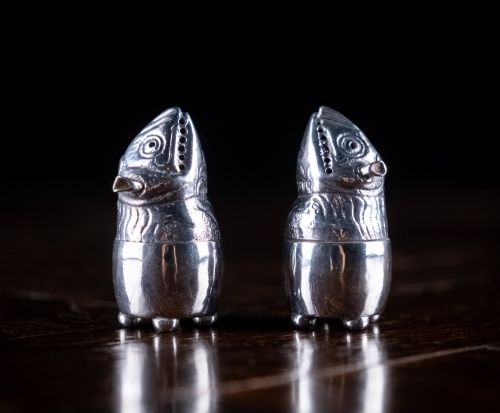
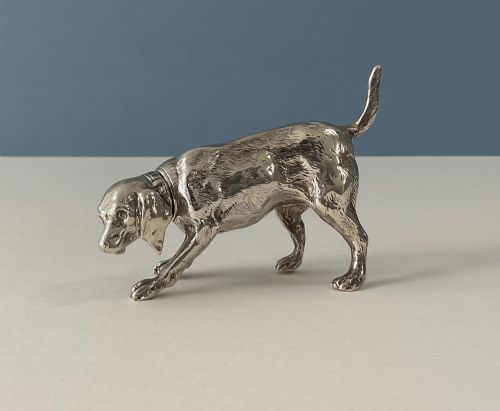
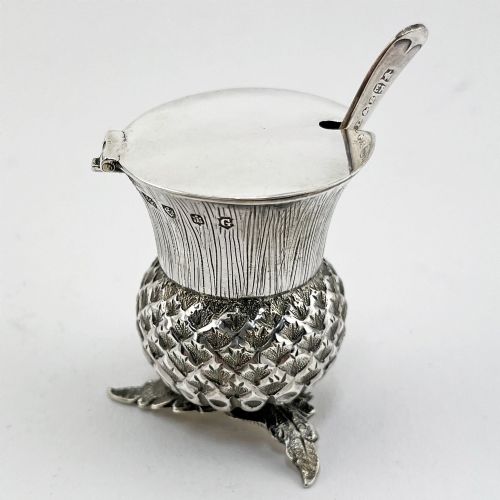
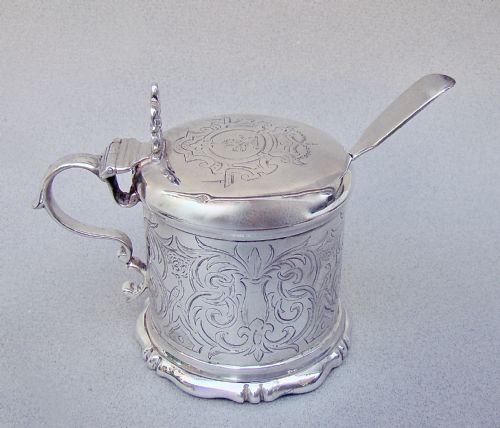
The pieces on this page span Victorian, Edwardian, and Georgian periods, alongside Art Deco and Georgian Revival styles. Buyers frequently encounter drum-shaped mustard pots, pierced silver designs, and novelty animal shapes like cats, dogs, and owls.
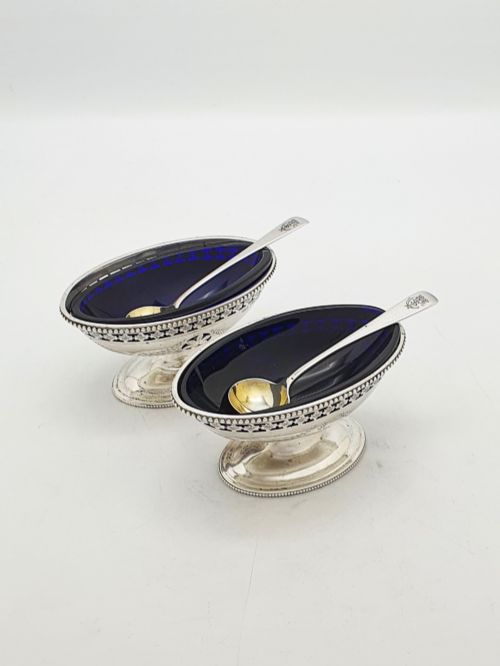
Origins range across English, French, and local provincial silversmithing traditions, incorporating glass liners in cobalt blue or clear cut glass. This variety reflects the changing tastes of dining room presentation across successive generations.
How they were made
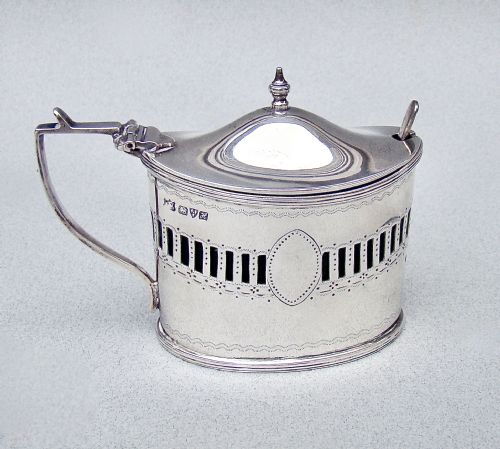
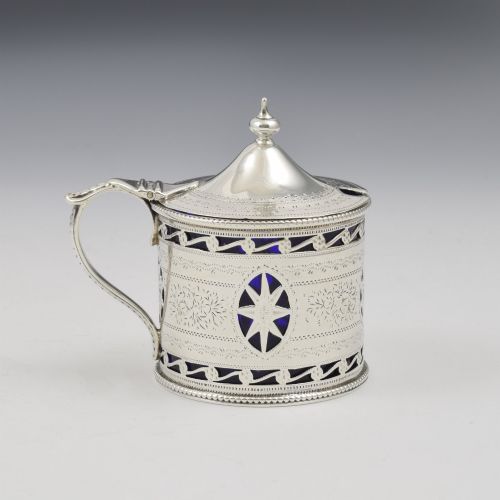
Silversmiths shaped sterling silver sheet and wire through hammering, piercing, and soldering to create hollowware bodies and intricate frames. Pierced drum mustard pots and wirework condiment tubs demonstrate skilled hand-piercing techniques.
Glass liners in cobalt, blue, or satin finish were blown or moulded to fit snugly inside silver frames, protecting the metal from corrosive condiments. Cut glass and crystal components add texture and weight to jars and cruet bottles.
Object forms span mustard pots, salt cellars, pepper pots, and complete cruet sets.
What varies in quality
The calibre of an antique sterling condiment pot rests on the crispness of its hand-piercing, the weight of the silver, and the preservation of its interior glass liner. Pieces with fully marked components, including matching lids and liners, show greater original integrity.
Alfred Marston·Frederick Brasted·Charles and George Fox·William Neale·Robert Hennell I·Matthew Boulton·Nathan and Hayes
The Antique Sterling Condiment Pot Glossary
- Sterling silver
- A silver alloy containing 92.5 percent pure silver and 7.5 percent other metals, traditionally copper, chosen for durability in tableware. This standard has governed British silver production for centuries.
- Cruet set
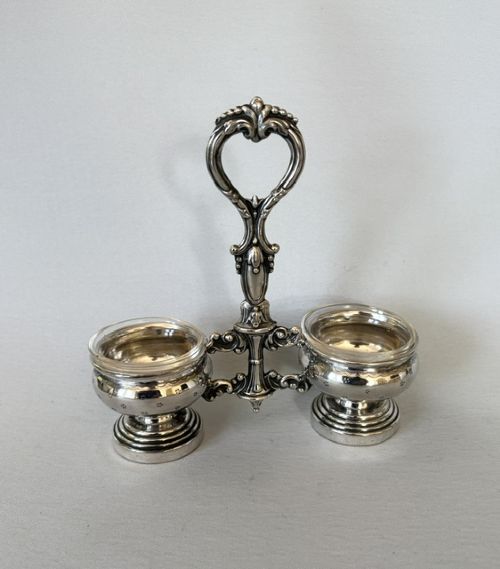
- A matched collection of bottles, jars, or pots designed to hold condiments together on a dining table. These sets often rest in a dedicated silver stand or frame.
- Salt cellar
- A small open bowl or vessel used to hold loose salt at the table before the invention of the shaker. They frequently feature cobalt blue glass liners to protect the silver interior.
- Mustard pot
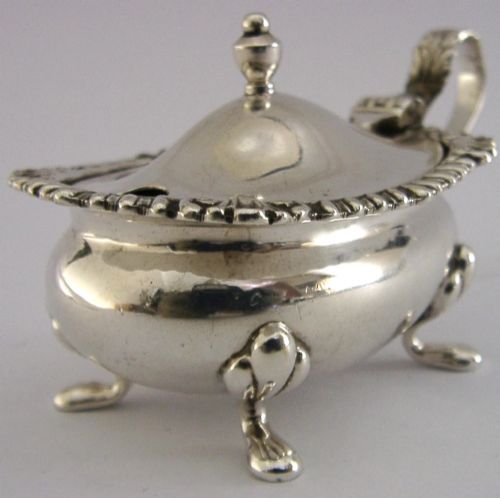
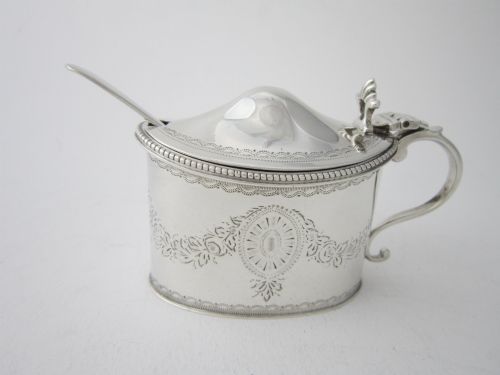
- A small covered jar equipped with a handle and a cutout in the lid for a spoon. They are commonly lined with glass to contain prepared mustard.
- Pierced work
- A decorative technique where metal is pierced and cut away to form openwork patterns such as lattice or foliage. This reduces the weight of the piece while adding visual lightness.
Antique Sterling Condiment Pot: Frequently Asked Questions
What is an antique sterling condiment pot used for?
These vessels held table seasonings like mustard, salt, and pepper during formal dining.
They allowed guests to serve themselves from small, decorative containers placed along the dining table.
How do I clean an antique silver condiment pot?
Use a soft cloth and a gentle, non-abrasive silver polish formulated for antique metalwork.
Avoid submerging pieces with fitted glass liners or delicate hinges in harsh cleaning solutions.
Why do some pots have blue glass inserts?
Cobalt glass liners protected the sterling silver from the corrosive effects of mustard and salt.
They also provided a striking visual contrast against pierced or openwork silver frames.
How can I tell a Victorian pot from a Georgian one?
Victorian pieces often showcase heavier ornamentation, novelty animal shapes, and elaborate pierced patterns.
Georgian examples typically favour cleaner lines, classical forms, and plain drum or vase silhouettes.