

Antique Sterling Card Stands
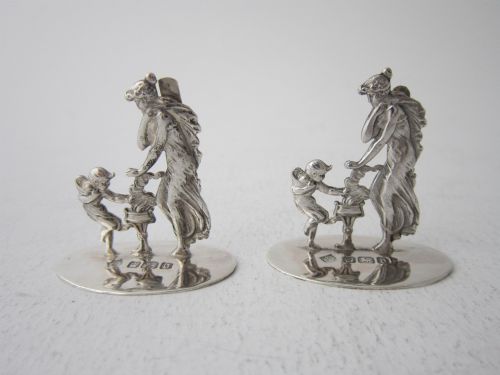
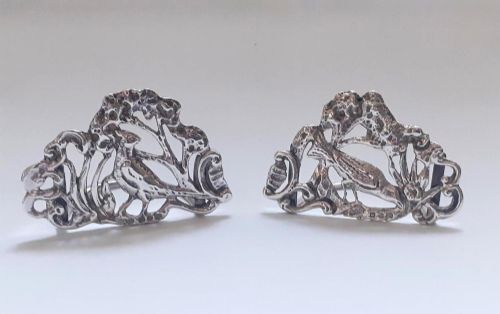
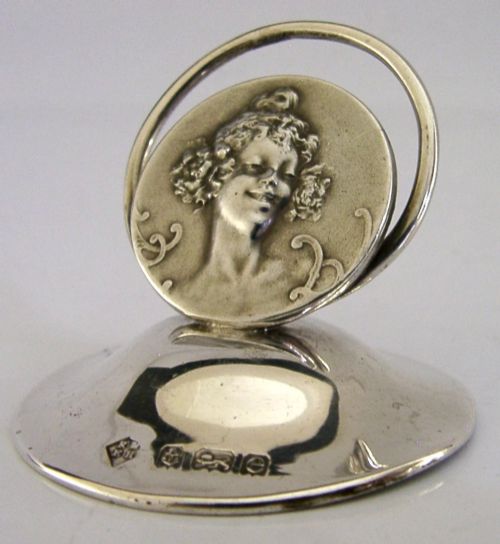
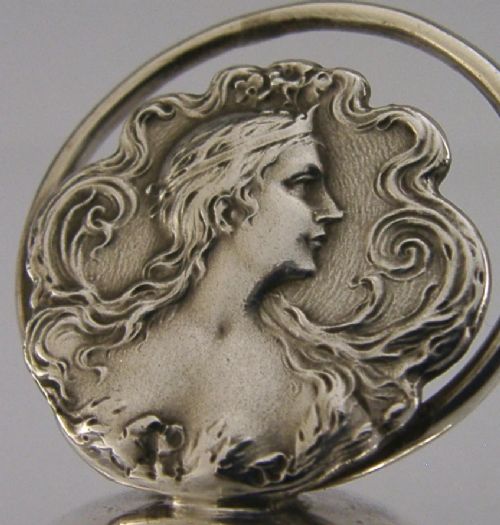
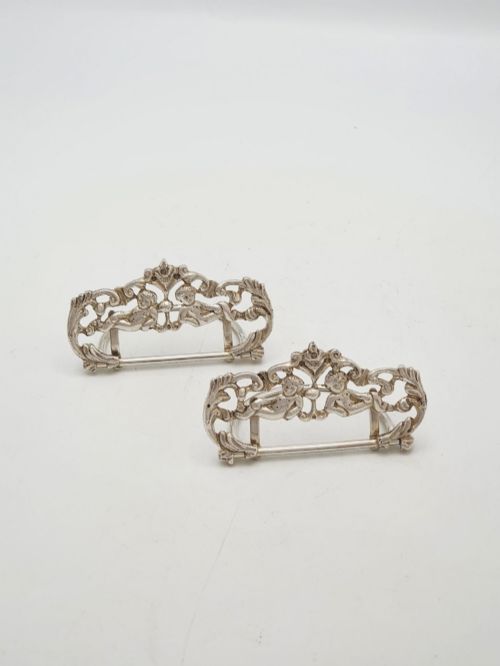
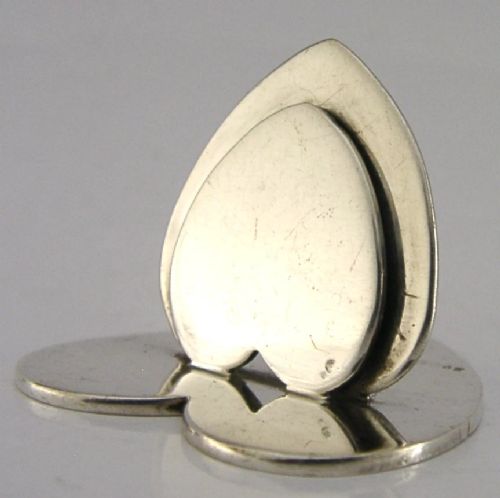
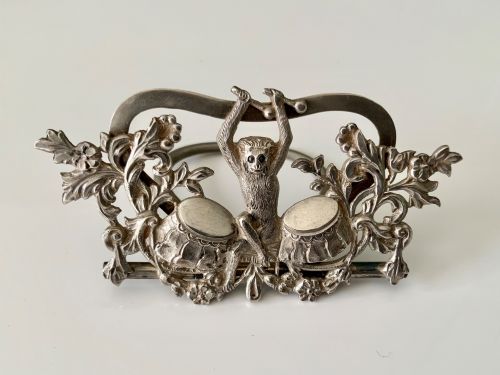
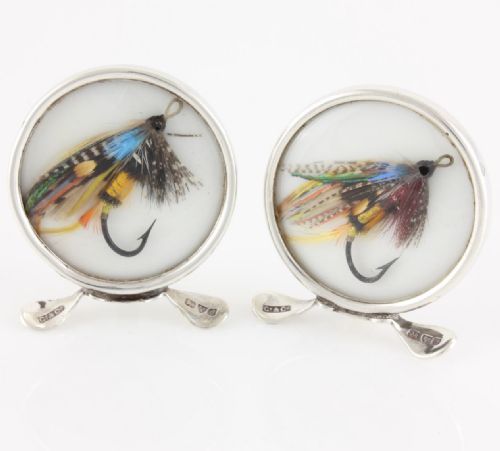
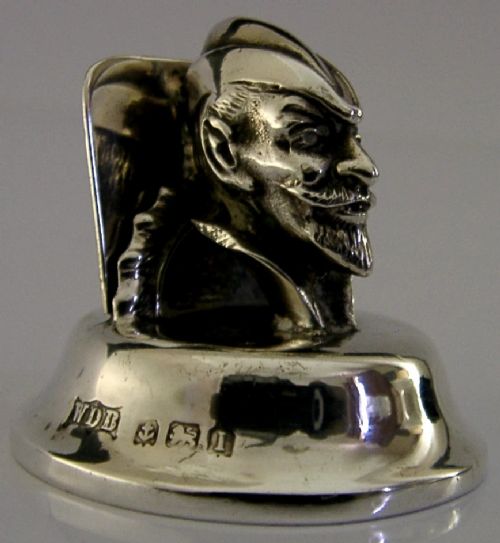
These antique sterling card stands, taking the form of menu and place card holders, bring whimsical silver detail to a dining table.
Antique Sterling Card Stands
When you search for antique sterling card stands, you find small table accessories designed to hold menus and place cards during formal meals. Most examples on this page date from the Edwardian period through to the 1930s, encompassing George V and George VI reigns.
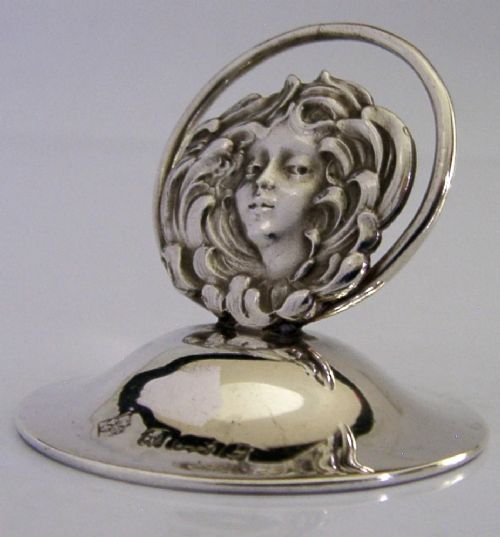
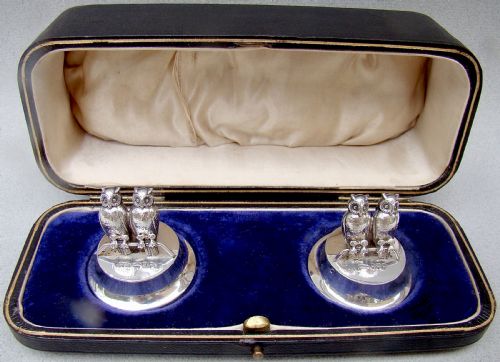
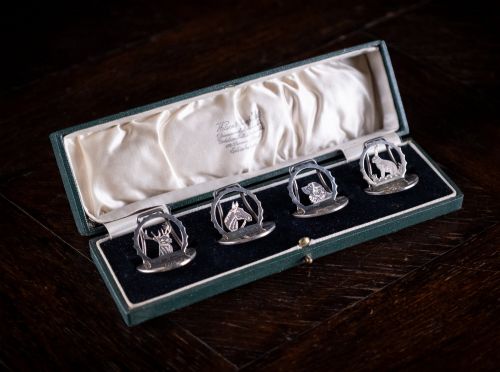
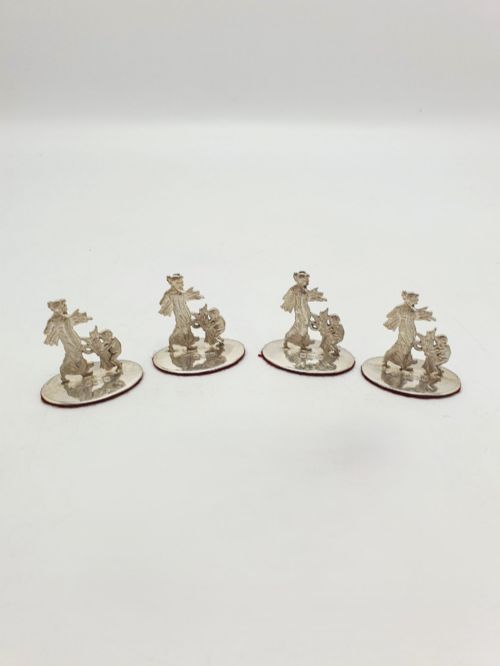
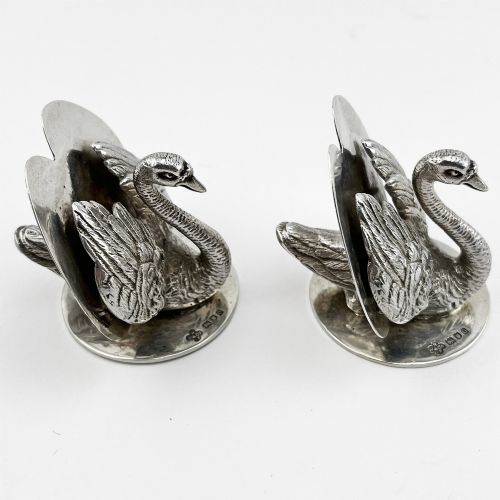
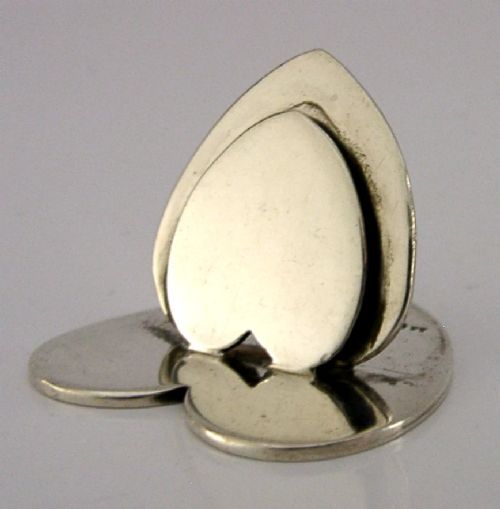
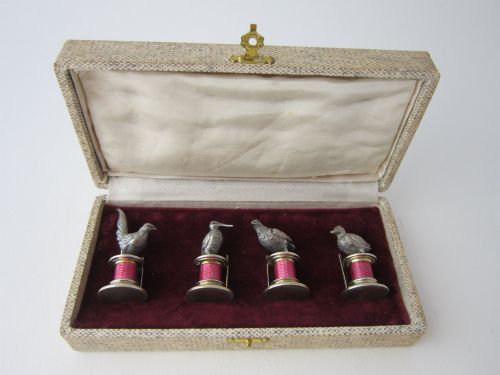
The forms vary widely, ranging from simple architectural clips to detailed figural representations. You will frequently encounter animal and bird designs, including owls, swans, foxes, grouse, and monkeys, alongside literary or character subjects like Alice in Wonderland and Robin Hood.
How they were made
Silversmiths constructed these pieces primarily from sterling silver, often utilising casting techniques to shape intricate figures of animals, maidens, and birds. Enamel work, specifically guilloche enamel, appears on select pieces to add colour and texture to the silver surface.
Supporting elements occasionally incorporate materials such as velvet, silk, glass, leather, and feathers to back the stands or mount the card clips securely. Hallmarks stamped into the silver record the assay office, maker's mark, and date of manufacture.
Antique Sterling Card Stands Retail Price Guide 2026
Typical asking prices for sterling card stands among the pieces listed under this phrase on Sellingantiques today, from the lower quarter to the upper quarter. They describe what is for sale here now, not the wider market.
Listings feature Edwardian, Art Nouveau, Art Deco, and Victorian styles, spanning the Edwardian period through to the nineteen-thirties.
What varies in quality
The standard of craftsmanship depends largely on the crispness of the casting and the level of hand-finishing on figural subjects. Animal and character stands with finely chased feather, fur, or facial details distinguish the finer workshops from standard production pieces.
Completeness also dictates standing within the range, as matched sets of four or more command greater interest than single examples or later assembled groups. Furthermore, the presence of original fitted boxes and clear, legible hallmarks elevates the desirability of a set.
Levi & Salaman·A. Wilcox·Grey & Co.·Sampson Mordan·Asprey·Liberty
The Antique Sterling Card Stands Glossary
- Menu holder
- A small desk or tabletop stand designed to support a printed menu card upright during a meal. They often match smaller place card holders used for seating guests.
- Place card holder
- A miniature stand that grips a small card bearing a guest's name, placed beside the cutlery or glassware. These share the same figural and architectural styles as menu holders.
- Guilloche enamel
- A decorative technique where precise geometric patterns are mechanically engraved beneath a translucent layer of coloured enamel. It provides depth and vibrant colour to the silver surface.
- Assay office
- An official body that tests the purity of precious metals and stamps the corresponding hallmark onto the item. Common towns include London, Birmingham, and Chester.
- Sterling silver
- An alloy consisting of silver and other metals, usually copper, standardised for purity at ninety-two and a half percent. Most British pieces carry the lion passant mark to denote this standard.
Antique Sterling Card Stands: Frequently Asked Questions
What were antique sterling card stands used for?
These stands graced formal dining tables to hold printed menus and guest name cards upright. They helped diners identify courses and locate their designated seats.
Beyond their utility, they served as decorative conversation pieces that reflected the host's taste and the theme of the dinner party.
How do I identify the date of a card stand?
You look for the hallmarks stamped directly onto the silver surface by the silversmith. These marks include a date letter indicating the exact year of assay, alongside the maker's mark and town symbol.
Stylistic cues such as Art Nouveau curves or Art Deco geometric lines also help assign pieces to broad periods like the Edwardian era.
Are these pieces usually found as sets?
They appear both as individual items and in matched sets of two, three, four, or even twelve. Complete sets of figural animals or birds are particularly sought after by collectors.
Single pieces often turn up independently, reflecting the dispersal of larger original dining services over time.
How should I display or store them?
You can display them safely in a glass-fronted cabinet or on a flat surface away from direct sunlight and moisture. Handling them gently by the base preserves the delicate clips and figural details.
If they retain original fitted presentation boxes, storing them inside protects the velvet or silk linings from dust and wear.