




Antique Staffordshire Lions
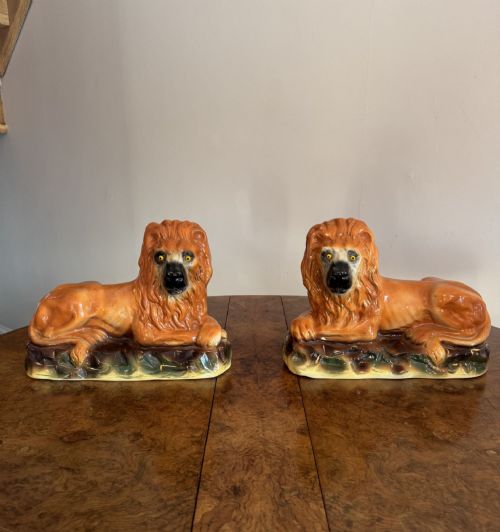
Antique staffordshire lions bring fierce Victorian character into a room, fashioned from earthenware and creamware to guard mantelpieces.
Antique Staffordshire Lions
When hunting for antique staffordshire lions, a buyer encounters a distinct lineage of ceramic figures stretching across the nineteenth century. The listings on this page span the 19th Century, Victorian period, and specific decades such as 1850, 1860, 1880, and 1920, showing how potters rendered these beasts in earthenware, pearlware, and creamware.
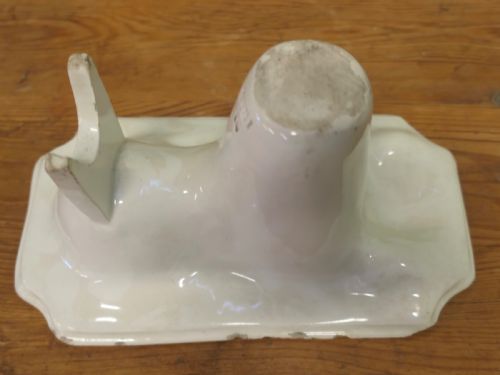
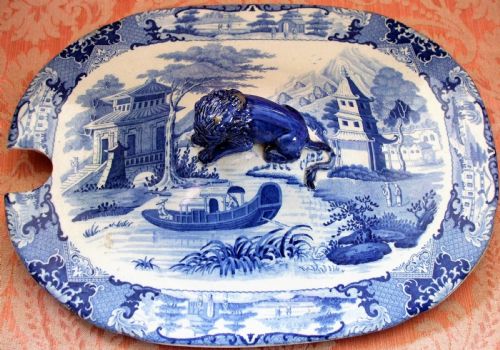
The most common forms are pairs of standing or recumbent beasts, often modelled after the classical Medici lions. Beyond standard mantel ornaments, the evidence includes related wares sharing the motif, such as jelly moulds, bookends, sugar bowls with lion mask handles, and tureen covers bearing lion heads.
The aesthetic shifts between Georgian roots and full Victorian decorative styles, sometimes incorporating narrative scenes like the death of the lion queen or heraldic pairings with unicorns. Collectors meet both crisp pearlware versions from earlier decades and robust glazed earthenware examples from the later Victorian era.
How they were made
Potters shaped these figures using earthenware, creamware, and pearlware bodies, which provided the porous base necessary for holding liquid glazes. Lead glaze and standard glazes were applied over the ceramic bodies to seal the porous clay and impart a glossy finish.
Colour and pattern came via different firing methods, seen in the blue and white transfer printed pieces alongside monochrome lead glazes and treacle glazes. Makers utilised press moulding to form the hollow bodies of the lions, jelly moulds, and tureen covers before hand-finishing details.
Antique Staffordshire Lions Retail Price Guide 2026
Typical asking prices for staffordshire lions among the pieces listed under this phrase on Sellingantiques today, from the lower quarter to the upper quarter. They describe what is for sale here now, not the wider market.
Listings demonstrate materials spanning earthenware, pearlware, and creamware alongside lead glazes.
What varies in quality
The sophistication of the form also dictates the standing of a piece, separating utilitarian items like jelly moulds and sugar bowls from sculptural mantel figures and detailed historical subjects.
Robert Hamilton·Rockingham Pottery·Lancaster and Sons of Hanley·Rogers
The Antique Staffordshire Lions Glossary
- Earthenware
- Porous ceramic pottery fired at relatively low temperatures and glazed to hold liquids. It forms the primary body material for the majority of nineteenth-century figures.
- Pearlware
- A refined, pale-bodied earthenware developed in the late eighteenth century featuring a bluish lead glaze that pooled in recesses. It bridges the gap between creamware and later Victorian ceramics.
- Creamware
- A fine, light-coloured earthenware with a warm yellowish lead glaze, perfected by Staffordshire potters. It provides a smooth surface suited to both table wares and decorative figures.
- Treacle Glaze
- A dark, rich brown lead glaze that produced a glossy, treacle-like appearance on pottery. It was favoured by potteries such as Rockingham for giving depth to animal figures.
- Transfer Print
- A decorative technique where an engraved copper plate transfers a design onto paper, which is then stamped onto the ceramic body before glazing. It allowed for intricate blue and white patterns on utilitarian wares and covers.
Antique Staffordshire Lions: Frequently Asked Questions
Where did these lions sit?
These figures typically stood upon mantelpieces in pairs, facing inward toward the fireplace to frame the hearth.
Potters also produced functional items incorporating the design, allowing the motif to appear on dining tables through jelly moulds and sugar bowls.
How do I spot a pair?
True pairs were modelled as mirror images to sit symmetrically at either end of a shelf or sideboard. Matching stances and shared glazing characteristics confirm they belong together.
Single figures often turn up alone due to accidental separation over the decades.
What is a Medici lion?
Medici lions derive from the famous classical marble sculptures guarding the Loggia dei Lanzi in Florence. Staffordshire potters copied these powerful crouching beasts with paws resting on spheres.
Versions range from pearlware interpretations to later Victorian earthenware bookends.
Are they all figures?
Not every piece functions merely as an ornament, as Staffordshire potteries applied the lion motif to practical household items. Examples include kitchen jelly moulds, sugar bowls with mask handles, and decorative tureen covers.
These utilitarian pieces combined domestic use with fashionable nineteenth-century styling.