






Victorian Recumbent Lion Ornaments
Victorian recumbent lion ornaments bring quiet strength to a hearth, doorstep or garden wall, modelled in iron, ceramic and terracotta.
Victorian Recumbent Lion Ornaments
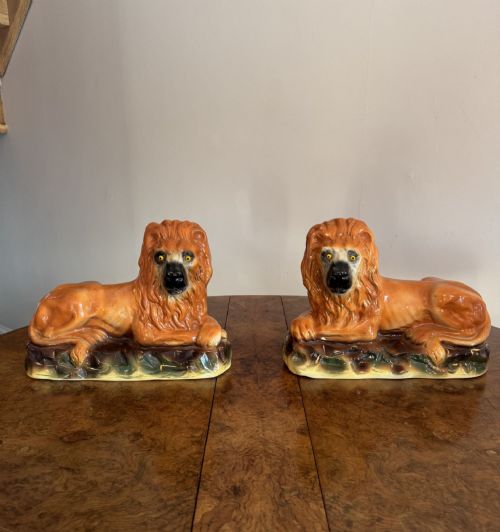
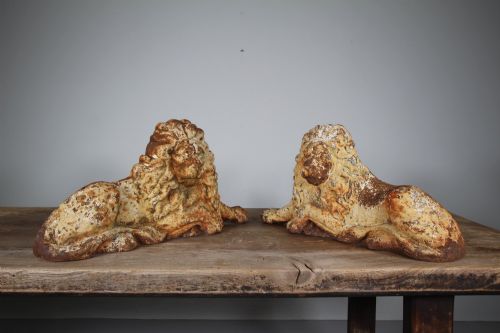
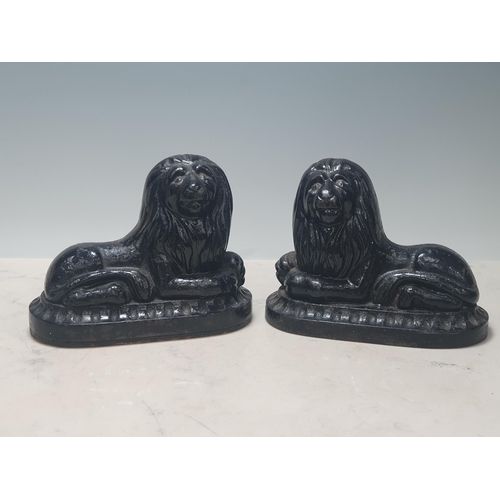
Victorian recumbent lion ornaments encompass heavy cast iron boot scrapers, doorstops, bookends, and large garden statues or gate guardians resting in profile. You meet pairs of Staffordshire pottery figures alongside robust cast iron and terracotta examples shaped during the nineteenth century.
The domestic versions serve practical roles as door keepers and bookends, while the larger terracotta and ceramic beasts mount garden walls or flank entrances. Most pieces date from the mid to late nineteenth century, reflecting classical revival tastes through a distinctly Victorian lens.
How they were made
Foundries cast iron into moulds to produce durable boot scrapers, doorstops, and gate ornaments finished with black paint or left in their natural metallic state. Potteries shaped earthenware and terracotta into large garden lions, often applying glazes such as copper lustre or salt glaze before firing.
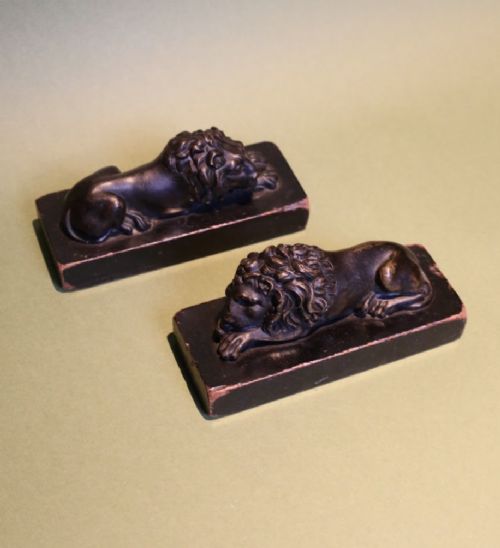
Makers utilised traditional press-moulding techniques for ceramic figures, resulting in hollow bodies that could scale up to impressive proportions for outdoor display. Bronze casting also appears in classical revival models, capturing finer musculature and detail.
Victorian Recumbent Lion Ornaments Retail Price Guide 2026
Typical asking prices for victorian recumbent lion ornaments among the pieces listed under this phrase on Sellingantiques today, from the lower quarter to the upper quarter. They describe what is for sale here now, not the wider market.
The nineteenth century periods represented span from mid-century neoclassical revival pieces up to late Victorian Staffordshire pottery.
What varies in quality
Surface finish separates ordinary castings from finer ones, whether through an even copper lustre glaze, crisp iron definition, or well-preserved paintwork that survives from the nineteenth century.
Hurlford Kilmarnock
The Victorian Recumbent Lion Ornaments Glossary
- Recumbent
- Lying down or resting with the head raised, which is the standard posture for these protective lion sculptures. This pose allowed them to fit neatly beside hearths, gates, and bookshelves.
- Terracotta
- Fired unglazed clay of a brownish-red colour, frequently utilised for large garden statues and architectural ornaments. It weathers outdoors over decades.
- Staffordshire
- Pottery manufactured in the English county of Staffordshire, known for decorative mantel figures and earthenware animals. These pairs often feature painted details and glazes.
- Boot scraper
- An iron blade mounted near an entrance, often flanked by recumbent animals, used for scraping mud from footwear. They became common fixtures outside nineteenth-century houses.
- Salt glaze
- A vitreous glaze formed by throwing common salt into the kiln during high-temperature firing, producing a pitted texture resembling orange peel. It protects stoneware from moisture.
Victorian Recumbent Lion Ornaments: Frequently Asked Questions
Where should I place a heavy iron lion?
Cast iron lions suit outdoor doorsteps, porches or interior hearths where their weight keeps them stable.
They withstand weather well when painted, making them practical guardians for an entrance.
How do I clean antique terracotta lions?
Brush away loose dirt with a soft dry bristle brush rather than using harsh chemical cleaners.
Terracotta is porous, so excessive moisture can damage the historic material during freezing weather.
Are Staffordshire lions always found in pairs?
Most ceramic and iron recumbent lions were modelled as left and right facing pairs to flank a gate, fireplace or shelf.
Single pieces do appear occasionally due to the separation of sets over the nineteenth century.
What is the difference between doorstops and garden statues?
Doorstops are smaller, heavier iron or ceramic figures designed to hold interior doors open against drafts.
Garden statues are substantially larger terracotta or glazed pottery pieces built to anchor gate piers and garden walls.