





Antique Pottery Lion Figures
These antique pottery lion figures are robust ceramic beasts from British, European, and Asian kilns that bring character and presence to a mantelpiece.
Antique Pottery Lion Figures
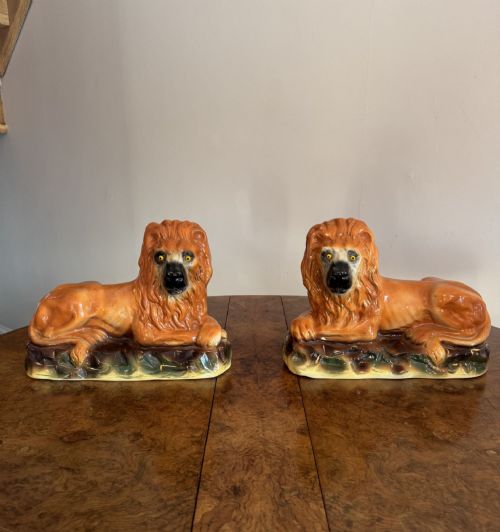
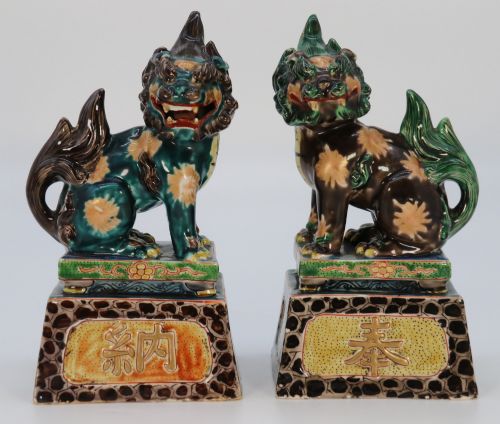
When you search for antique pottery lion figures, you encounter a varied menagerie ranging from British Staffordshire earthenware pairs to Chinese porcelain Foo dogs and Japanese Meiji period shishi figures. The Staffordshire examples often draw upon classical models like the Medici lions, recast in regional potteries with spirited glazes and confident modelling.
You will find these pieces taking several distinct forms, from traditional mantel pairs and bookends to elaborate spill vases and sculptural figures with ball accessories. The English pieces frequently date from the Victorian era and the mid-nineteenth century, while the Asian counterparts span the Qing Dynasty and the Japanese Meiji period.
The selection here encompasses both domestic earthenware traditions and imported porcelain or stoneware, reflecting how different cultures interpreted the guardian beast. Whether configured as a matched pair or standing alone as a single sculpture, each figure captures the distinct aesthetic of its origin and period.
How they were made
Potters shaped these figures using earthenware, pearlware, or porcelain, often utilising moulds to achieve consistent forms for paired Staffordshire models and Chinese production alike. The surfaces were then treated with lead glaze, enamel, copper lustre, or pale green glaze to seal the ceramic body and impart colour.
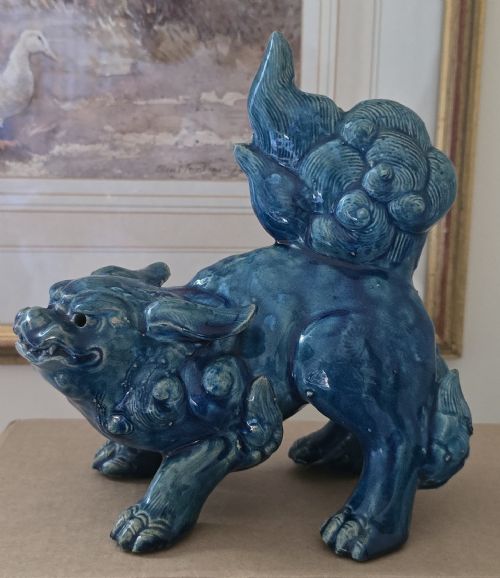
Glazing techniques varied considerably between the Staffordshire kilns, which favoured rich treacle glazes and enamelled details, and Asian workshops employing turquoise or polychrome enamel schemes. Tin glazing appears on continental European pieces, showing how diverse regional firing methods shaped the final appearance of the pottery.
Antique Pottery Lion Figures Retail Price Guide 2026
Typical asking prices for pottery lion figures among the pieces listed under this phrase on Sellingantiques today, from the lower quarter to the upper quarter. They describe what is for sale here now, not the wider market.
Listings include earthenware, porcelain, and ceramic figures finished with lead glaze, copper lustre, and enamel from the eighteenth, nineteenth, and early twentieth centuries.
What varies in quality
The application and richness of the glaze also dictate the distinction between ordinary and exceptional items, with deep treacle glazes, copper lustre, and vibrant turquoise coatings showing greater depth on higher-tier objects. Consistency in the firing and the preservation of hand-painted enamel details further distinguish the most desirable pieces.
Lancaster and Sons of Hanley·Rockingham Pottery
The Antique Pottery Lion Figures Glossary
- Staffordshire
- A term for pottery manufactured in the potteries region of Staffordshire, England, encompassing numerous regional works that produced earthenware figures.
- Pearlware
- A refined earthenware developed in the late eighteenth century featuring a subtle bluish glaze over a fine white body.
- Treacle glaze
- A rich, dark brown translucent lead glaze heavily used on nineteenth-century British pottery to create a glossy, lustrous finish.
- Spill vase
- A hollow ceramic figure incorporating a small cylindrical holder designed to store wooden spills used for lighting pipes and fires.
- Foo dog
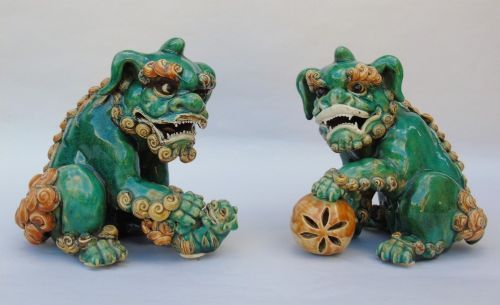
- A traditional Chinese guardian lion sculpture, also known as a Buddhist lion or shishi, typically depicted protecting sacred spaces.
Antique Pottery Lion Figures: Frequently Asked Questions
How do I spot fake Staffordshire lions?
Examine the weight, clay body, and glaze crazing closely to understand the age of the piece. Genuine nineteenth-century earthenware shows appropriate wear and age-related characteristics beneath the glaze.
Compare the modelling and painting style against known period examples. Modern reproductions often lack the spontaneous hand-painted details and natural crazing found on authentic Victorian figures.
What is the difference between Foo dogs and Staffordshire lions?
Foo dogs originate from Chinese and Japanese traditions, depicting mythical guardian lions with stylized curls, brocade balls, or open mouths. They reflect Eastern religious and architectural symbolism.
Staffordshire lions draw from Western classical sculpture, such as the Medici lions in Florence, and were modelled as domestic mantel ornaments for British homes.
Why are most Staffordshire lions found in pairs?
Potters manufactured these figures in matched pairs to flank the centre of a fireplace mantelpiece or sideboard according to Victorian interior decorating conventions. Each lion faces the opposite direction to create a balanced composition.
Finding a single survivor is common due to accidental breakage over the decades, which makes complete pairs particularly sought after by collectors.
How should I clean antique pottery figures?
Dust the surface gently with a soft, dry brush to remove accumulated dirt without disturbing the fragile overglaze enamels. Avoid using harsh chemical cleaners or submerging porous earthenware in water.
Keep the figures away from direct sunlight and areas of high humidity to protect the glaze and prevent further crazing of the ceramic body.