


Antique Square Dining Table
An antique square dining table brings proportion and intimacy to a room, offering a balanced surface shaped by centuries of dining traditions.
Antique Square Dining Table
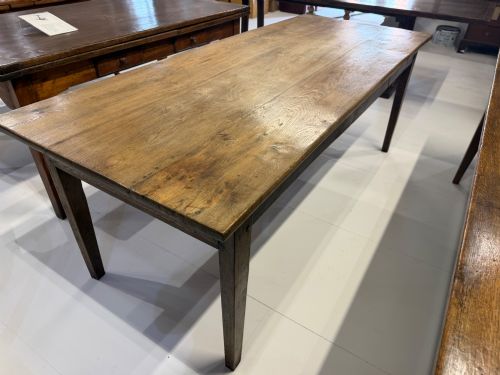
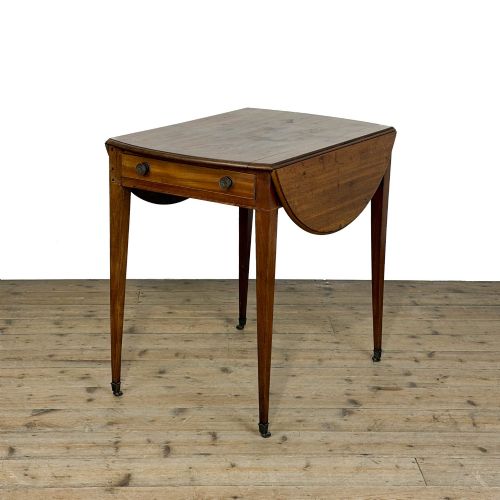
When you search for an antique square dining table, you encounter an array of forms spanning several centuries of British and continental woodworking. The selection ranges from robust oak farmhouse tables to refined mahogany pieces featuring satinwood banding and tilt-top mechanisms.
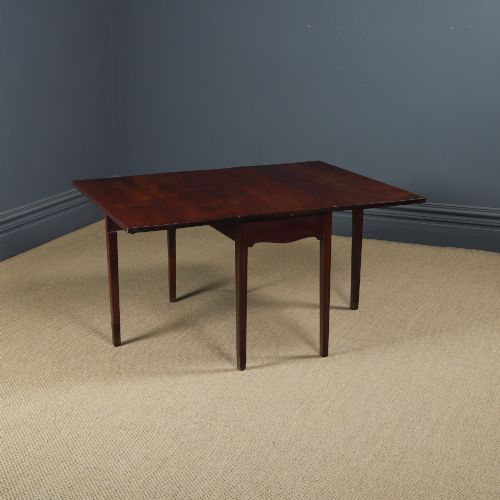
The version most likely to meet you on this page is a nineteenth-century oak or mahogany example designed for domestic dining. These pieces often incorporate practical mechanisms such as drop leaves or draw leafs to adjust the surface area for daily use.
Makers and designers from the Georgian, Victorian, and Edwardian periods utilised these formats to maximise space in smaller rooms while maintaining formal dignity. The proportions naturally seat four to eight diners comfortably around a balanced central axis.
How these tables were constructed
Cabinetmakers constructed these tables primarily from solid timber and veneers, selecting mahogany for formal reception rooms and pine or oak for functional kitchen environments. Brass hardware appeared regularly on drop-leaf joints and tilt-top pivots to ensure smooth mechanical operation.
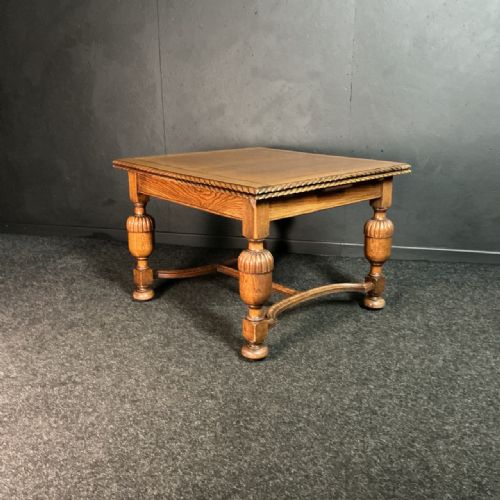
Surface decoration relied on natural grain patterns, enhanced through satinwood banding, fine inlay work, and polished wax finishes. Frame stability was achieved through sturdy square-section supports, pedestal bases, or turned baluster legs anchored securely to the apron.
The inventory combines formal dining formats with utilitarian kitchen tables and occasional drop-leaf designs.
What separates the best examples
Quality in an antique square dining table rests upon the selection of timber figures and the integrity of the original construction joints. Superior pieces display book-matched veneers, crisp inlay, and heavy-gauge solid timber that resists warping over generations of use.
The refinement of the mechanical elements, such as the hinges on a Pembroke drop-leaf or the tilt mechanism on a breakfast table, distinguishes standard workshop production from finer cabinet work. Original surface patination and minimal structural alteration preserve the historical integrity demanded by collectors.
Heals·George Hepplewhite·Robson and Sons
The Antique Square Dining Table Glossary
- Pembroke table
- A small occasional or dining table featuring two hinged drop leaves on opposing sides. It often includes a single drawer and slender square-section supports.
- Tilt-top table
- A table designed with a hinged top that pivots vertically to allow compact storage against a wall when not in use.
- Satinwood banding
- A decorative inlay technique using narrow strips of pale exotic timber set into the primary dark mahogany surface to frame the perimeter.
- Draw leaf table
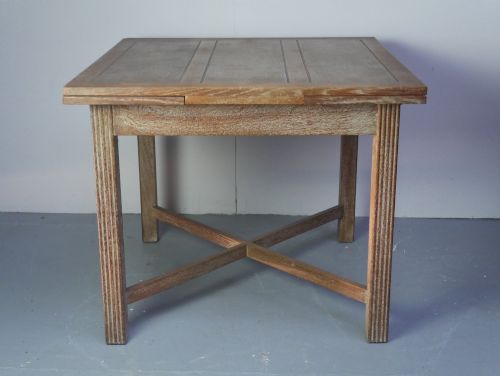
- An extending table equipped with hidden underleaves that pull out from beneath the main top to increase the seating capacity.
- Square-section supports
- Straight table legs formed with a uniform square profile rather than a rounded or turned shape, common in Georgian and country furniture.
Antique Square Dining Table: Frequently Asked Questions
How many people fit at a square table?
A standard square dining table typically accommodates four diners comfortably on each side, though larger formats or expandable drop-leaf versions can seat up to eight.
The equal dimensions create a balanced seating arrangement that encourages conversation without the distance found in elongated rectangular formats.
How do I identify a Georgian table?
Georgian tables are characterised by dense mahogany timber, restrained proportions, and fine details such as satinwood banding or square-section tapered legs. Construction methods rely on traditional joinery without modern metal fasteners.
Looking underneath reveals hand-cut tenons and older tool marks that distinguish eighteenth-century craftsmanship from later revival periods.
Are pine tables suitable for everyday dining?
Scrubbed pine kitchen tables offer a robust, practical surface designed for daily family use. Their softer timber absorbs the marks of history, developing a rich patina over decades of service.
Routine maintenance involves simple soap and water cleaning to preserve the pale, scrubbed finish characteristic of country farmhouse furniture.