


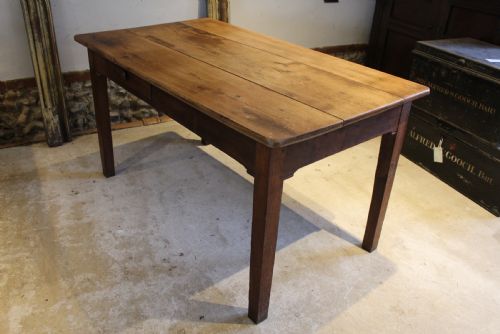


Victorian Oak Kitchen Table
A victorian oak kitchen table brings durable timber and honest joinery straight from nineteenth-century working spaces into modern rooms.
Victorian Oak Kitchen Table
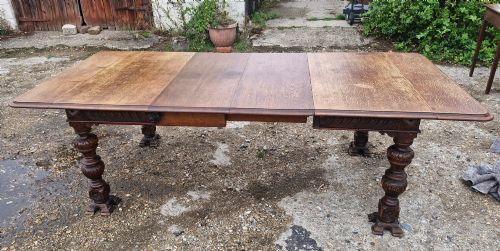
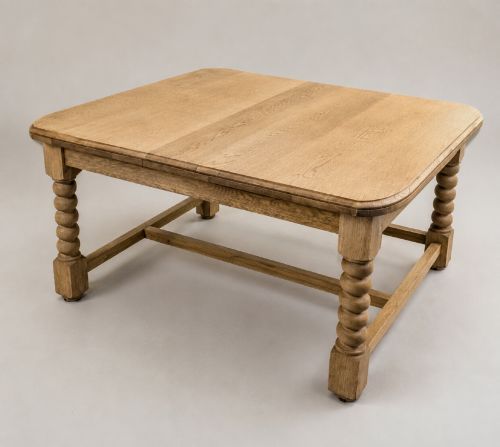
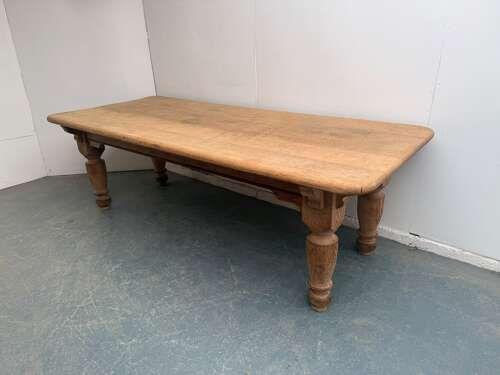
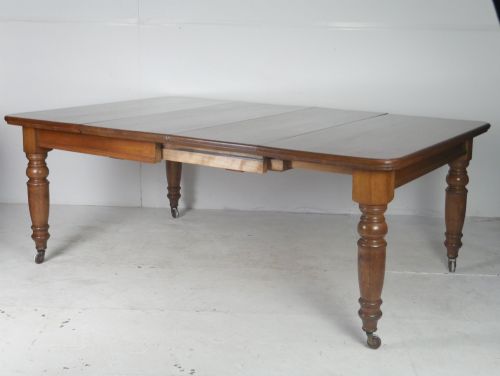
A victorian oak kitchen table is a heavy, utilitarian surface designed for daily domestic use during the nineteenth century. These pieces encompass sturdy refectory formats, farmhouse styles, and extending models built to seat large households.
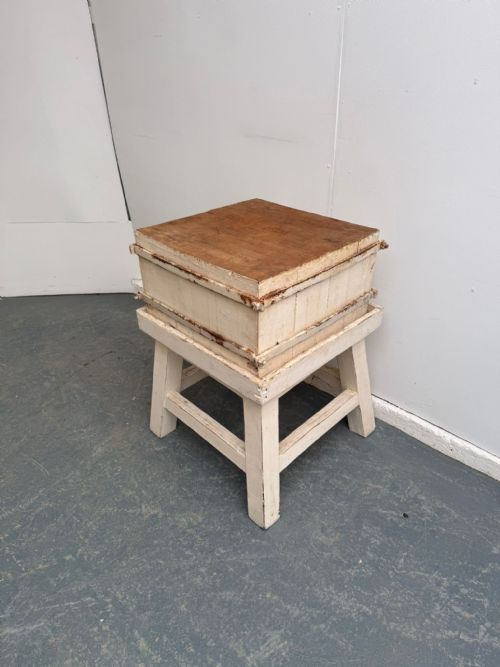
Most examples found here date from the mid to late nineteenth century, appearing alongside related forms such as prep tables and butchers blocks. They reflect the robust carpentry of their era, intended for preparation and communal dining.
How they were made
Construction relies primarily on solid oak, frequently paired with secondary timbers like pine and pitch pine for internal framing or secondary surfaces. Workshops utilised traditional pegged mortise and tenon joints to withstand heavy daily wear.
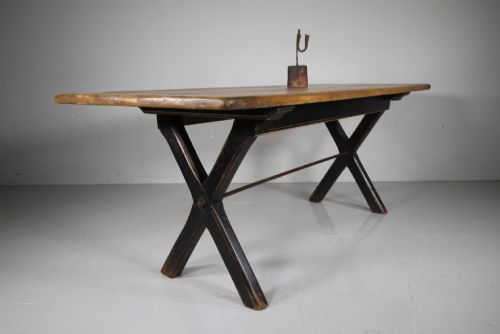
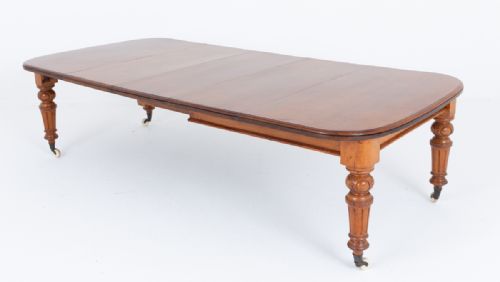
Surfaces often feature thick plank tops supported by refectory stretchers, turned legs, or cruciform bases. Iron and brass fittings occasionally appear on extending mechanisms, drawers, or drop-leaf hinges.
Listings feature nineteenth-century oak alongside pine, pitch pine, and brass hardware across refectory and extending table formats.
What varies in quality
Quality rests in the selection of the timber and the integrity of the original construction rather than surface embellishment. Planks cut from quarter-sawn golden oak with minimal warping represent superior craftsmanship.
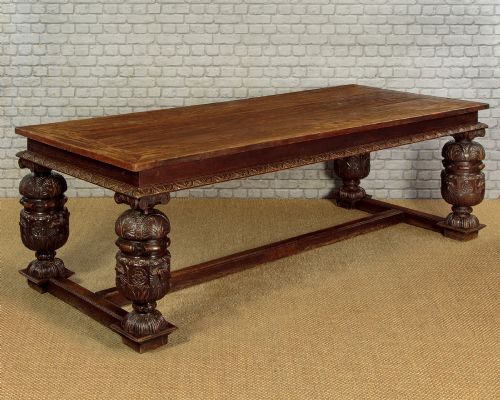
Subtleties in hand-carved detailing, such as Gothic revival motifs or Green Man reliefs, distinguish standard utility pieces from higher-status commission work. The thickness of the top planks and the retention of original hardware also mark the upper tier.
The Victorian Oak Kitchen Table Glossary
- Refectory table
- A long, narrow dining table traditionally used in communal halls and adapted for domestic kitchens. These forms typically feature heavy legs united by central floor stretchers.
- Plank top
- A surface constructed from individual boards of timber running the length of the table. Single-plank surfaces command particular attention from collectors.
- Gothic Revival
- An architectural and decorative style popular during the nineteenth century that revived medieval structural motifs. Pieces display pointed arches, tracery, and heavy carved ornamentation.
- Gateleg table
- A table with hinged drop leaves supported by legs that swing outward like gates. This design allows the footprint to expand or contract depending on space.
- Quarter-sawn oak
- Timber cut radially through the growth rings to produce distinct decorative grain patterns. This method yields boards that resist warping over centuries of use.
Victorian Oak Kitchen Table: Frequently Asked Questions
How do I clean a victorian oak kitchen table?
Wipe surfaces gently using a damp cloth and mild soap, avoiding harsh chemical sprays that strip historic finishes. Dry the timber immediately to prevent moisture rings.
Nourish the wood periodically with traditional beeswax to maintain the natural lustre without building up heavy synthetic layers.
Can I use daily polish on these tables?
Silicone-based commercial polishes leave residues that sink into historic grain and attract dust over time. Stick to natural beeswax applied sparingly.
Buff the surface with a soft lint-free cloth after application to protect the patina built up across the nineteenth century.
How do I distinguish refectory tables from farmhouse tables?
Refectory tables generally present a longer, narrower profile with structural stretchers running low between the legs for added rigidity. They derive directly from monastic dining halls.
Farmhouse tables often incorporate drawers for cutlery or linen storage, reflecting domestic utility rather than formal refectory seating arrangements.
Will central heating damage antique oak?
Dry heat from modern radiators causes old timber to lose moisture and potentially split along the grain lines. Position tables away from direct heat sources.
Maintain stable room humidity where possible to ensure the nineteenth-century planks settle comfortably in contemporary environments.