
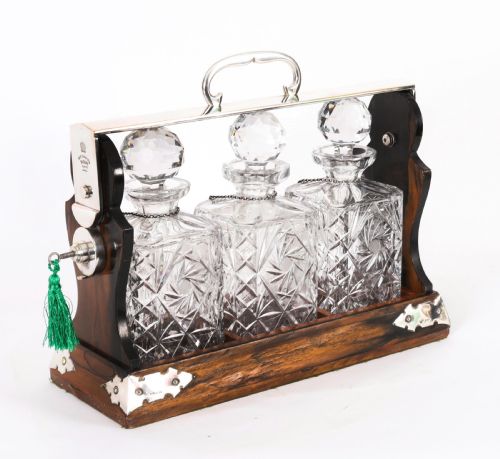


Antique Spirit Frame
An antique spirit frame secures fine crystal within metal framework, offering both display and locking discretion for hospitality.
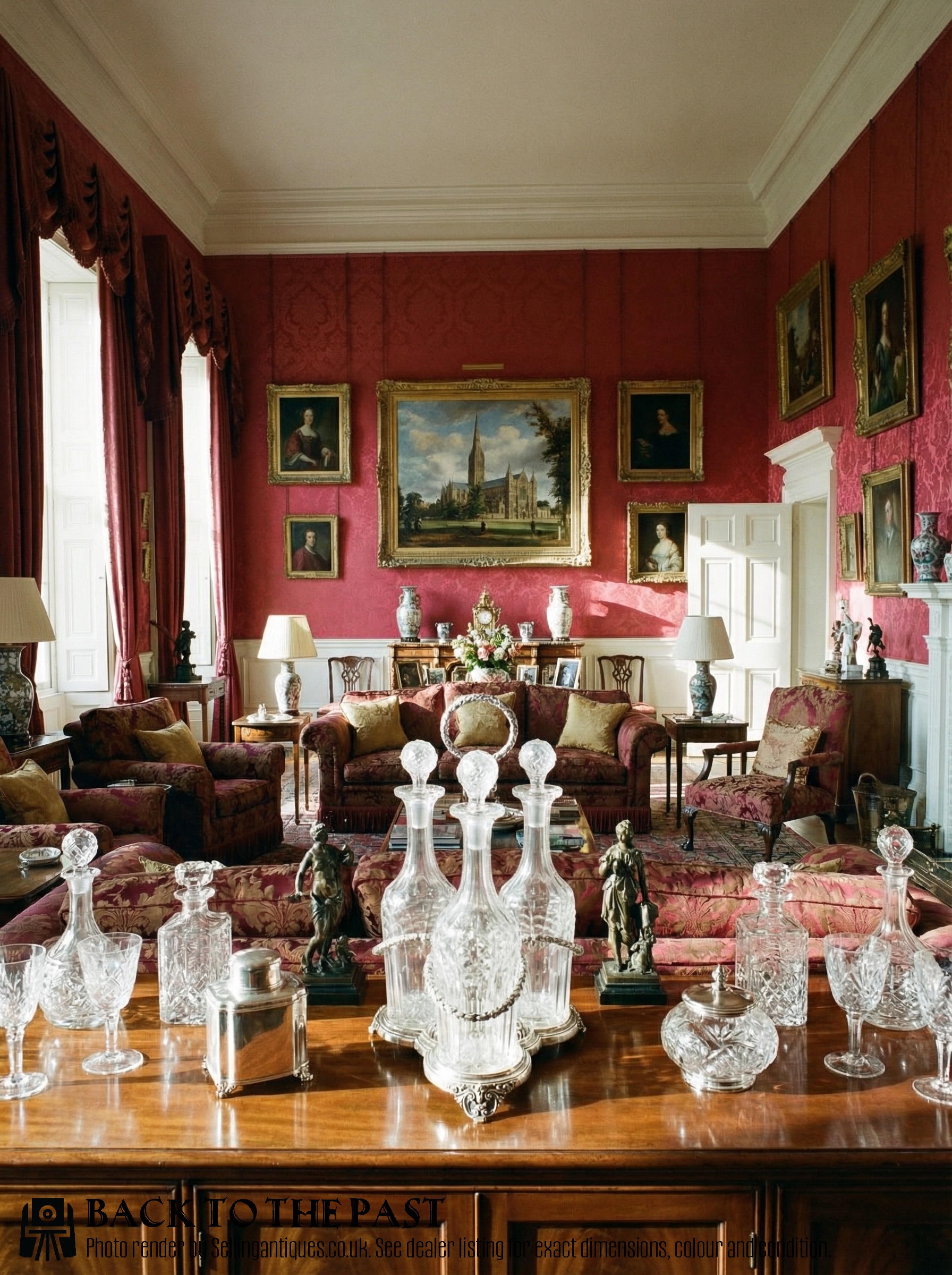
Antique Spirit Frame
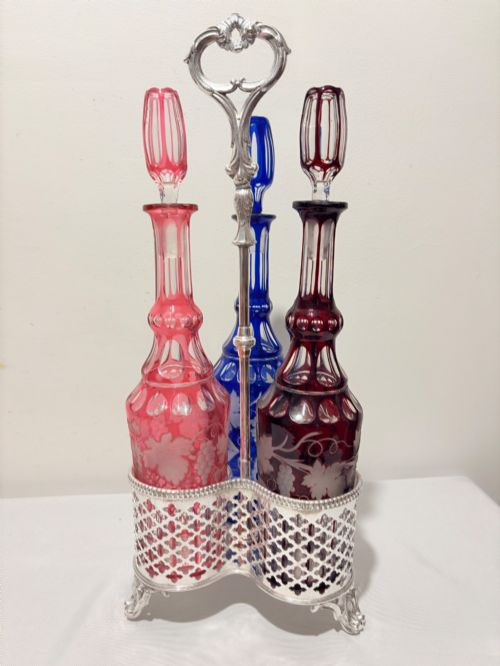
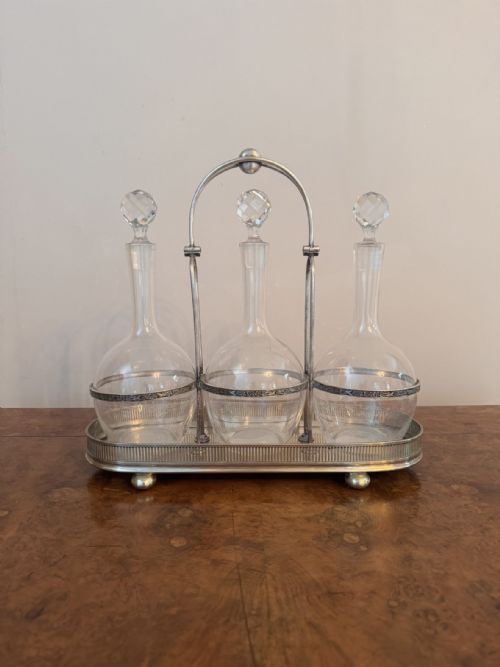
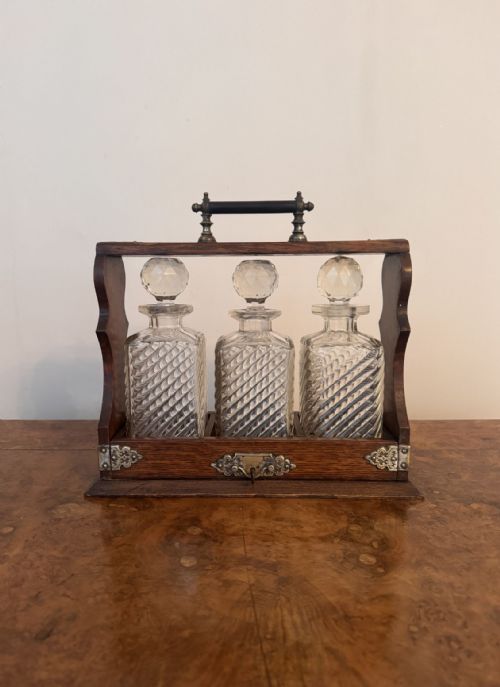
An antique spirit frame houses cut glass and crystal bottles within secure metal mountings, often taking the form of a locking tantalus or an open silver plated stand. These pieces date from the Victorian and Edwardian eras, spanning periods from the 1860s through to the 1930s.
The most common formats met here are three-bottle oak or walnut frames equipped with original decanters and working locks. Alongside these, open silver plated decanter stands and liqueur sets appear frequently across the inventory.
Materials and construction
Frameworks rely heavily on solid oak, walnut, and exotic timbers such as coromandel, combined with silver plating or Sheffield plate for the metal mounts and carrying handles. Wood is typically polished to a deep lustre, housing fitted interiors designed to cradle heavy bottles securely.
Vessels are formed from heavy cut glass or cut crystal, frequently paired with matching stoppers. Metal locking mechanisms incorporate spring-loaded bars or drop-down fronts that secure the bottle necks when engaged.
Invented to tease thirsty guests by locking the whisky away, the tantalus was named after a king punished with eternal thirst.
Judging build and finish
Superior examples distinguish themselves through the weight and clarity of the cut crystal bottles and the thickness of the silver plating over the base frame. Maker involvement also elevates a piece, particularly when patented locking designs or recognised silversmith marks are present.
The choice of cabinet timber creates distinction, with figured walnut and coromandel marking out high-status pieces above standard oak models. Original matching stoppers and fully operational locking mechanisms complete the finer specimens.
Betjemann·Elkington·Hukin and Heath·The Goldsmith Co·Philip Ashberry
The Antique Spirit Frame Glossary
- Tantalus
- A locking drink container frame that displays bottles while preventing access without a key. The term derives from the mythological figure who was kept just out of reach of water and food.
- Silver Plate
- A thin layer of silver fused to a base metal such as copper or nickel silver. It provides the appearance of solid silver at a sturdier weight for handling.
- Coromandel
- A dense, dark brown timber with dramatic black figuring imported from Asia. It was prized by nineteenth-century cabinet makers for luxury boxes and frames.
- Old Sheffield Plate
- An early fusing technique where a sheet of silver is fused to a copper core by heat and pressure. It exhibits a warm tone and distinct edge seams on close inspection.
- Cut Crystal
- Glass containing lead oxide that increases brilliance and weight, cut with geometric facets by wheel. This material catches candlelight and reflects illumination across the room.
Antique Spirit Frame: Frequently Asked Questions
How do spirit frames lock?
A metal bar passes over the stoppers of the decanters and fastens into a locking mechanism at the side of the wooden base. Turning the key releases the bar so the bottles can be lifted free.
Most mechanisms operate with a small brass key that secures the entire set in place.
Were these used in dining rooms?
These pieces sat on sideboards or partner's desks in Victorian and Edwardian homes to serve after-dinner drinks. The locking mechanism kept expensive spirits secure from household staff.
They served as both practical hospitality items and decorative ornaments for entertaining guests.
How do I date a frame?
Dating relies on the combination of wood types, silver marks, and the style of the cut glass decanters. Victorian pieces often feature heavy oak or walnut with ornate cast silver plating.
Edwardian and later examples tend toward simpler lines, while patent dates stamped on the metalwork provide exact manufacturing windows.
Are replacement decanters common?
Finding exact matches for broken cut crystal bottles is difficult because each frame was fitted individually by the maker. Many pieces survive with mixed or later replacement bottles.
Original sets retain matching cut patterns across all bottles and identical stoppers.