



Antique Spirit Burner
An antique spirit burner provides a portable flame for heating water or keeping dishes warm at the table.

Antique Spirit Burner
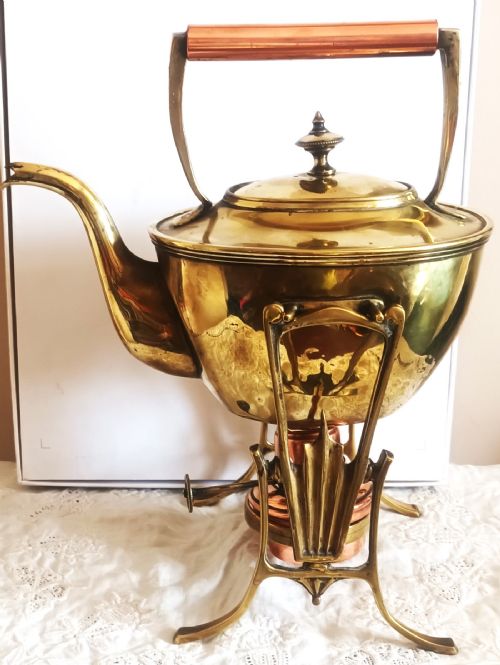
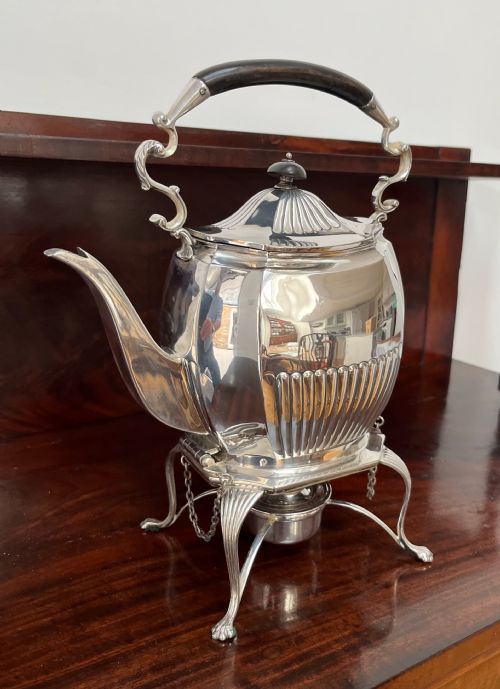
An antique spirit burner takes the form of a small, self-contained lamp designed to sit beneath a kettle, chafing dish or food warmer. These items form part of larger serving sets intended for the dining table or tea service.
The pieces on this page span the nineteenth and early twentieth centuries, covering periods from the Georgian era through to the Art Deco years. Victorian and Edwardian examples predominate, frequently incorporating matching stands and fuel reservoirs.
Forms range from hanging copper kettles to stationary silver-plated entree dishes and coffee biggins. Each design serves the practical purpose of maintaining beverage or food temperature during extended meals.
Materials and construction
Makers utilised metals such as brass, copper, and sterling silver alongside silver plate and electroplated nickel silver. Handles often incorporate insulating materials like bone and ebony to prevent heat transfer during use.
Manufacturing techniques combine hand-beaming, casting, and metal-spinning, particularly evident in the construction of stands and vessel bodies. Burner mechanisms screw together precisely to regulate the flow of vaporised spirit.
Object forms include hanging kettles, coffee biggins, and rotating dish rings alongside standard spirit kettles on stands.
Assessing quality and craftsmanship
Superior examples display crisp casting and substantial metal gauge, ensuring the stand supports the weight of a filled kettle without flex. Finishes range from polished brass to heavy silver plating that covers every joint cleanly.
Attention to detail in matching components distinguishes better workshops, where the burner collar, snuffer cap, and stand mountings form a cohesive suite. Mechanisms for rotating dishes or adjusting wick heights operate smoothly on higher-tier pieces.
William Soutter And Sons·Mappin And Webb·Paul Storr·Risler And Carré Paris·Fenton Brothers·Frederik Ellis Tim And Co
The Antique Spirit Burner Glossary
- Spirit burner
- A small container holding alcohol or methylated spirit, fitted with a wick to heat vessels placed above it. These burners provide a clean, adjustable flame for table service.
- Spirit kettle
- A water kettle mounted on a dedicated metal stand above a spirit burner. They are designed for making tea at the table.
- Silver plate
- A layer of pure silver fused to a base metal such as copper or nickel silver. This technique offered the appearance of solid silver at a lower cost.
- Chafing heat dish
- A table vessel designed to keep food warm using a heat source positioned underneath. They often feature ceramic liners and matching covers.
- Coffee biggin
- A tall coffee pot fitted with an internal strainer or bag for brewing. Stand-mounted versions frequently incorporate an under-burner to keep the contents hot.
Antique Spirit Burner: Frequently Asked Questions
How do spirit burners work?
A spirit burner functions by burning alcohol held within a sealed reservoir, drawing liquid up through a fabric wick to produce a steady flame. Users regulate the heat output by adjusting the wick height or placing a snuffer cap over the opening.
These burners sit securely within metal rings beneath kettles or food warmers, transferring heat directly to the base of the vessel above.
Were these burners used indoors?
Dining rooms and drawing rooms served as the primary locations for spirit burners during formal teas and dinner parties. Hosts used them to keep water boiling for continuous tea service or to maintain the temperature of entrees.
Because they burn clean alcohol, they produced minimal smoke, making them suitable for enclosed domestic spaces.
How do I clean tarnished brass?
Cleaning brass and copper requires a mild proprietary metal polish applied with a soft cloth to remove oxidation without scratching the surface. Care must be taken around engraved details and maker marks to preserve the original patina.
Silver-plated items need gentler treatment using specialised silver dips or foams to protect the thin plating layer from excessive wear.
Can I still use an antique burner?
Using an antique burner for its original purpose remains possible provided the fuel reservoir and wick assembly are checked for leaks and structural integrity. Modern denatured alcohol serves as a suitable fuel substitute for historical spirits.
Collectors generally treat these pieces as display items rather than functional kitchenware to preserve their historical condition.