





Table Kettle Burner
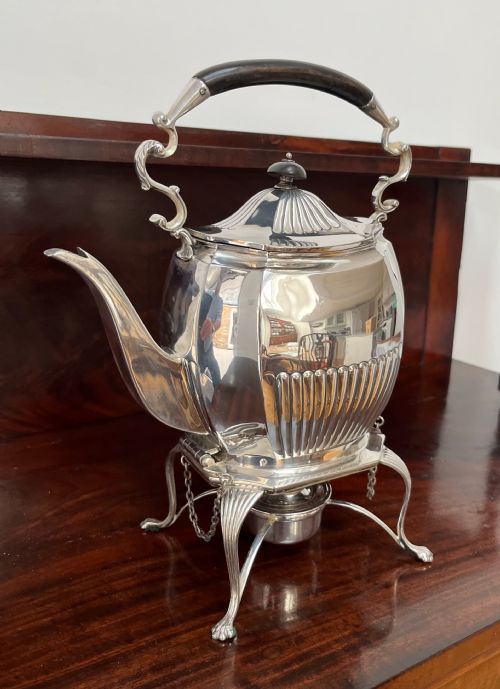
These table kettle burner assemblies are self-contained heating apparatuses designed to keep water hot at the tea table.
Table Kettle Burner
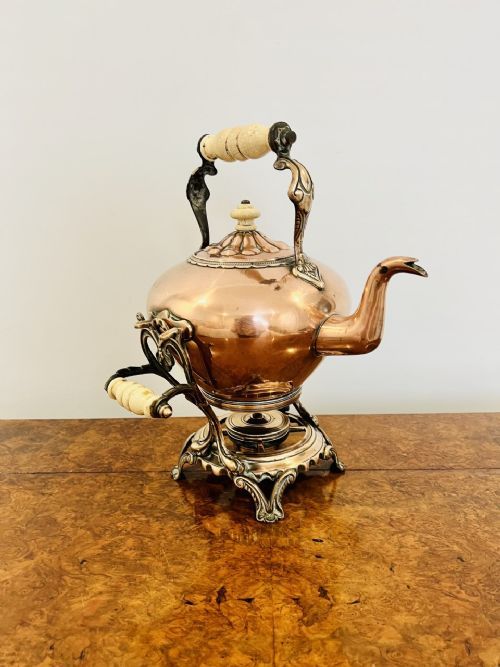
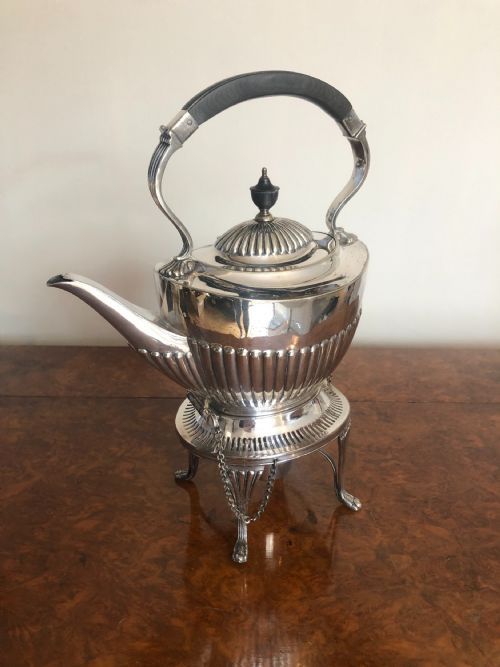
A table kettle burner typically comprises a suspended vessel mounted upon a metal frame with an integrated fuel chamber underneath. You encounter these most frequently in silver plate, brass, and copper forms dating from the Victorian and Edwardian eras.
The associated objects span spirit kettles, tea kettles, and hanging kettles paired with stands. Production spans from the mid nineteenth century through the early twentieth century, including Georgian Revival interpretations.
Examples often incorporate insulating materials on handles and knobs to protect the user's hand during operation. These include wood, ebony, bone, and ebonised wood elements attached to metal frames.
Materials and construction
Metalworking techniques dictate the construction of the kettle bodies and stands, utilising heavy gauge brass, sheet copper, and silver plating over base metals such as EPNS. Artisans hammered, spun, or cast these metals to form the vessels and their supporting frameworks.
Insulation components utilise turned wood, bone, and ebony fitted to handles and lid finials to interrupt heat transfer. These organic additions are pinned or socketed directly into the metal bodywork.
Listings feature items spanning the nineteenth century through the nineteen-thirties, with Edwardian and Victorian periods predominating.
Assessing quality
Subtleties in metal weight and the crispness of cast details distinguish standard production from superior work. Heavier gauge copper and brass provide structural rigidity to the stand, preventing wobble during use.
The integration of the burner mechanism within the stand reveals the maker's attention to mechanical function and aesthetic harmony. Finer pieces feature carefully fitted insulating spacers and substantial, well-balanced frames.
William Soutter & Sons·Frederik Ellis Tim & Co
The Table Kettle Burner Glossary
- Spirit kettle
- A water vessel mounted on a stand above a small alcohol-fuelled burner designed for tabletop use. This arrangement maintained water temperature during extended tea service.
- Silver plate
- A thin layer of silver bonded to a base metal substrate, commonly utilised on tea wares from the Victorian period onward. It provided the appearance of solid silver at a lower production cost.
- EPNS
- Electroplated nickel silver, a durable alloy base coated with silver via an electrolytic process. This material became standard for British tableware manufacture in the nineteenth century.
- Spirit burner
- The small reservoir beneath the kettle that held methylated spirit or alcohol fuel. It featured a regulating cap to control the flame height.
Table Kettle Burner: Frequently Asked Questions
What is a table kettle burner used for?
These assemblies kept water at a near boil during afternoon tea service without requiring trips back to the kitchen. The integrated burner sat directly beneath the suspended vessel on its stand.
Hostesses utilised them to replenish teapots over the course of a lengthy gathering. The setup served a practical function while acting as a focal point for the tea table.
How do I date a brass spirit kettle?
Dating relies on stylistic clues, manufacturing marks, and the materials used for handle insulators. Victorian examples often display heavier cast brass components and copper combinations.
Edwardian pieces tend to show lighter construction and frequently utilise silver plating or specific revival styles. Examining any maker's stamps on the base provides further chronological context.
What metals were used for these kettles?
Manufacturers relied primarily on brass, copper, and silver-plated metals including EPNS. Copper and brass appear frequently in nineteenth-century examples.
Silver plate gained widespread popularity by the Edwardian period, offering a bright reflective finish. Insulating details incorporate ebony, bone, and wood to handle heat.
How do the burner mechanisms work?
The burner holds a small quantity of liquid fuel, usually methylated spirits, fed through a wick. A sliding cap or snuffer extinguished the flame safely.
This self-contained heat source slid into a dedicated ring or platform beneath the suspended kettle. The distance between flame and vessel base was calibrated to maintain water temperature.