



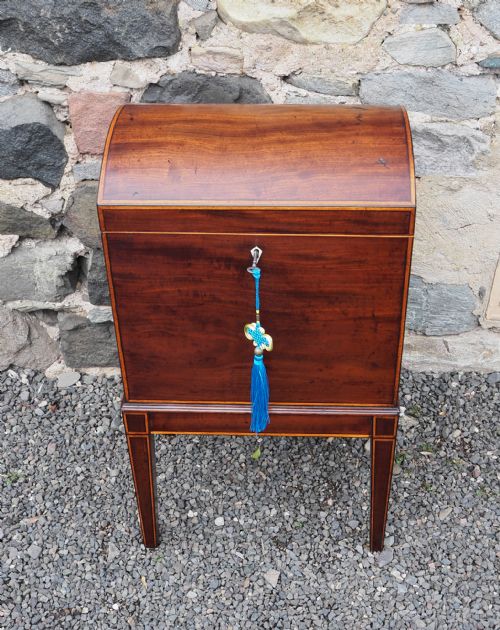

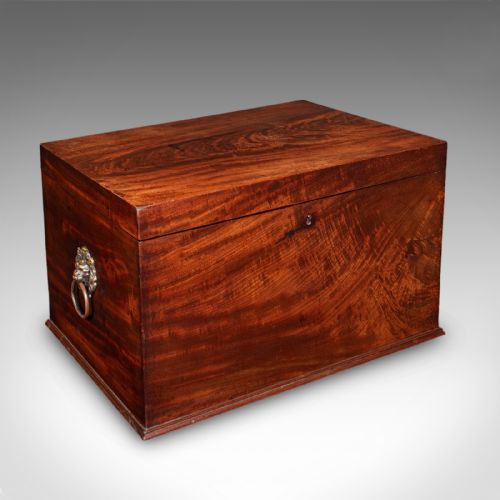
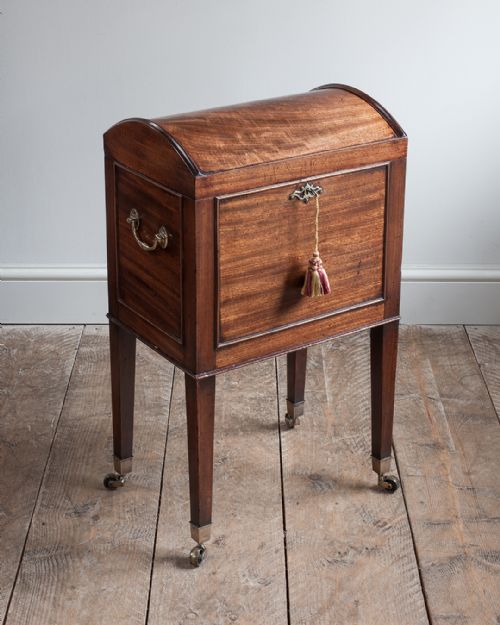

Antique Spirit Box
When you handle an antique spirit box, you touch a piece of historic drinking culture designed to keep fine liquors secure under lock and key.
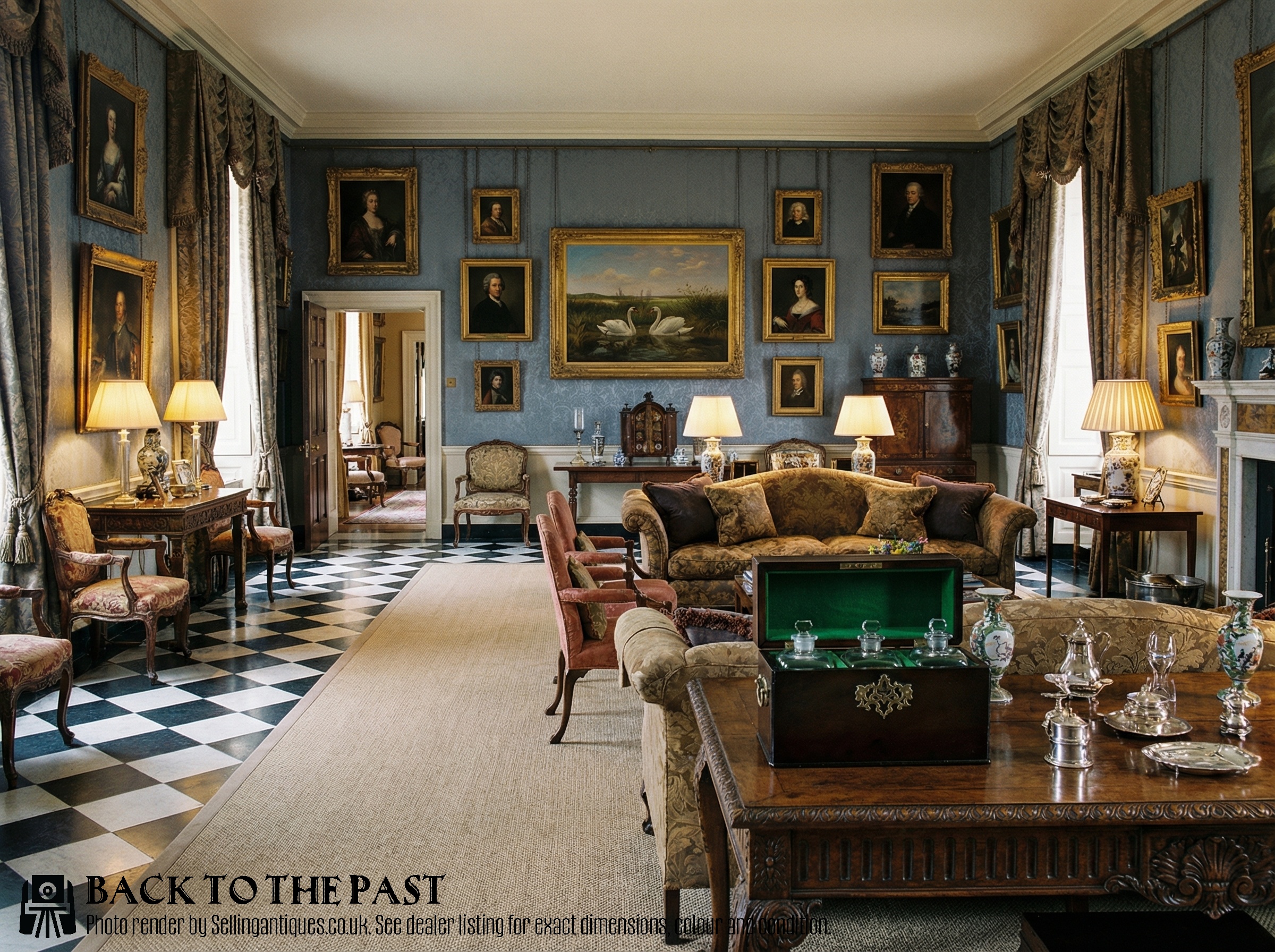
Antique Spirit Box
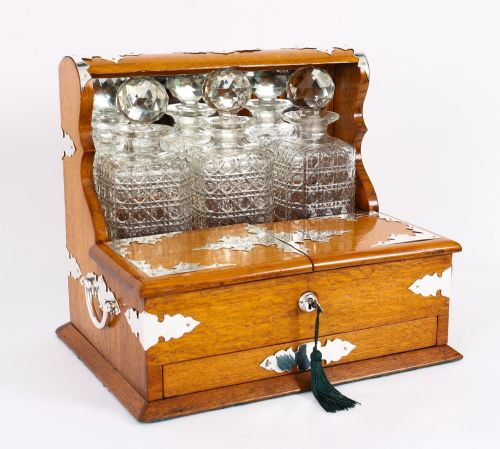
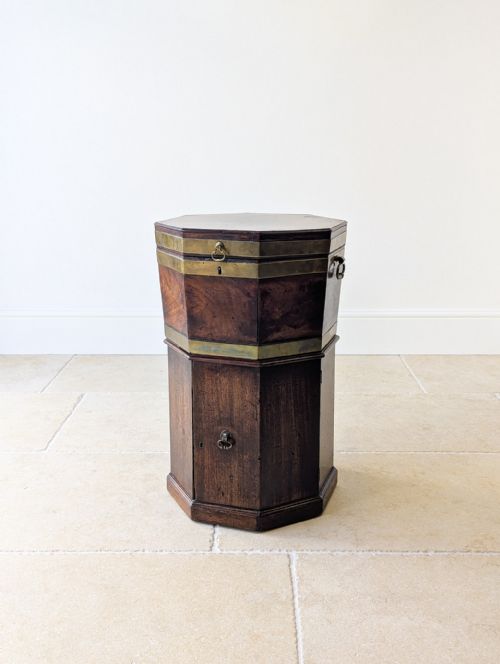
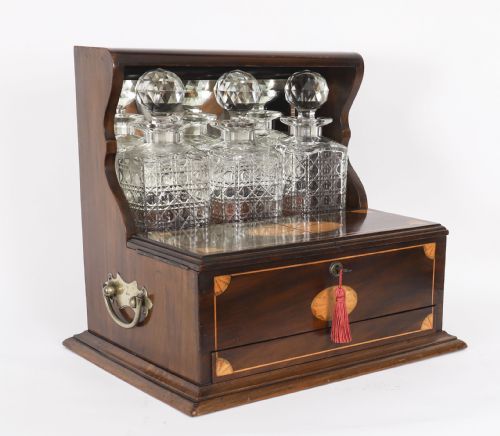
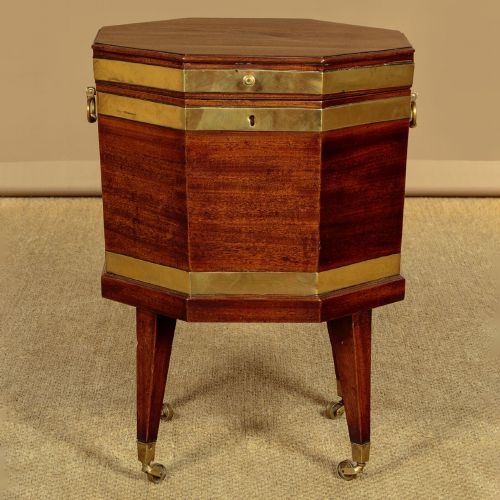
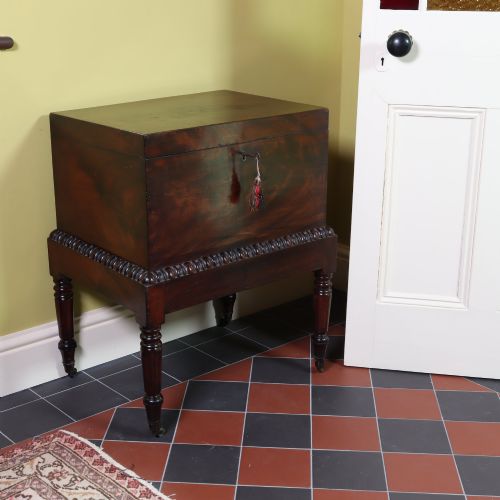
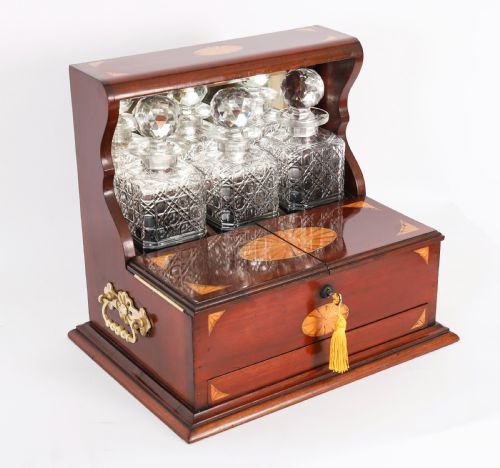
An antique spirit box encompasses secure storage containers for potable spirits, ranging from Georgian mahogany cellarettes to late Victorian tantalus units fitted with games compendiums.
The selections span several periods including George III, Regency, William IV, and Edwardian eras, predominantly taking the form of octagonal or rectangular wooden cases.
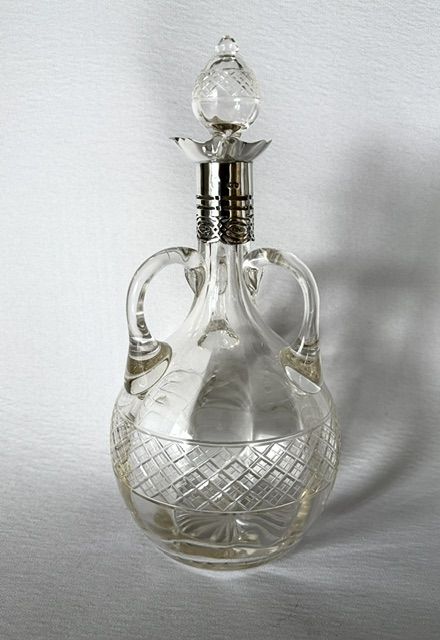
Buyers frequently encounter robust oak and mahogany constructions designed to house cut crystal decanters and drinking glasses securely.
How they were made
Cabinetmakers utilised dense timbers like mahogany, oak, satinwood, and coromandel, often framing the bodies with structural brass banding for added strength.
Interiors were precision-fitted to hold glass decanters tightly in place, sometimes incorporating complex mechanical locking mechanisms and silver-plated mounts.
Victorian ingenuity combined the desire for heavy drinking with board games by bolting entire chess and card compendiums straight onto the liquor cabinet.
What varies in quality
The standard of timber selection and complexity of the internal joinery dictate the pedigree of each box, alongside the clarity and cut of the original crystal decanters.
Superior examples combine fine marquetry or brass inlay with intact locking mechanisms and complete original glass sets rather than replacement bottles.
L Casella And Co·Cooke Troughton And Simms·Gillingtons
The Antique Spirit Box Glossary
- Cellarette
- A lockable container used for storing wine and spirits near the dining table. They frequently feature lead linings or fitted wooden dividers.
- Tantalus
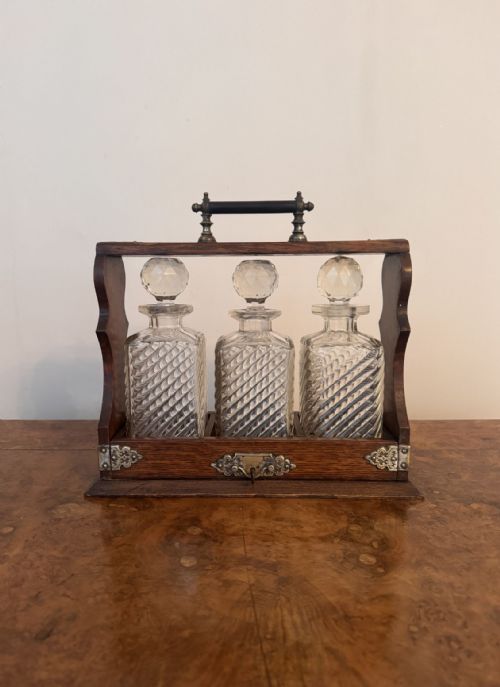
- A locking drink cabinet that displays decanters behind a wooden bar while keeping the stoppers locked in place. It prevents servants or guests from helping themselves without a key.
- Decanter Box
- A portable wooden case lined with velvet or leather, designed to carry multiple glass decanters safely during travel.
- Games Compendium
- A multi-use box containing equipment for various board and card games, frequently integrated into late Victorian spirit and tantalus cabinets.
- Hydrometer
- A scientific instrument used for measuring the specific gravity and alcohol strength of liquids, often found in fitted cases alongside spirit collections.
Antique Spirit Box: Frequently Asked Questions
How do I secure a tantalus?
Most tantalus units operate with a metal locking bar that drops over the necks of the decanter stoppers. Turning the key engages a mechanism at the side or top, preventing the bar from lifting.
Original keys are uncommon due to the passage of time, but period locks can often be attended to by a specialist locksmith without altering the timber housing.
Were these boxes meant for travel?
Certain forms like campaign decanter sets and officer cases were engineered for mobility, featuring flush brass carrying handles and robust outer shells. Other larger cellarettes and stationary tantalus units remained fixed in domestic dining rooms.
Portable examples use tight internal partitions to stop glass bottles from shifting during transit.
How do I date a mahogany cellarette?
Georgian examples from the eighteenth century typically display heavy brass banding, hand-cut dovetailing, and rich flame mahogany grain. Later Victorian versions often incorporate machine-cut veneers and more complex locking systems.
Examining the interior screws, hinges, and secondary timbers helps clarify the decade of production.
Can I replace missing decanters safely?
Finding exact replacement decanters requires matching the precise base dimensions and neck heights of the internal wooden apertures. Cut crystal standards varied significantly between the Georgian and Edwardian periods.
Measuring the aperture depth and width ensures new glass sits correctly without straining the restraining bars.