




Antique Spiral Turned Chair
An antique spiral turned chair brings extraordinary woodwork into a room, offering centuries of historic craftsmanship and distinctive twisting details.
Antique Spiral Turned Chair
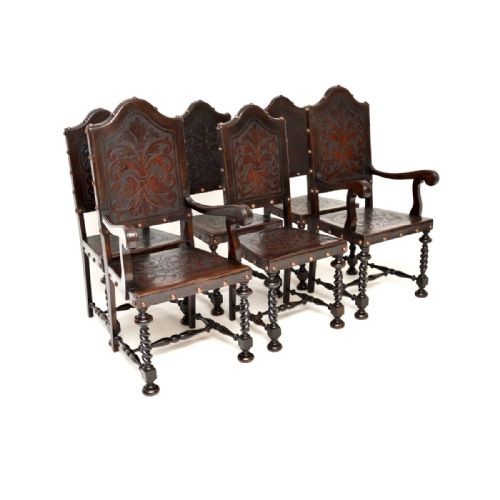
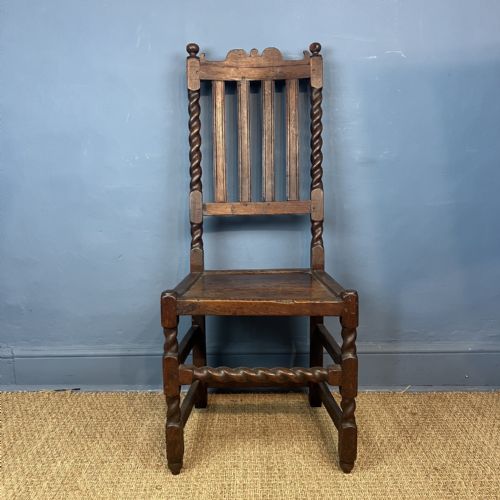
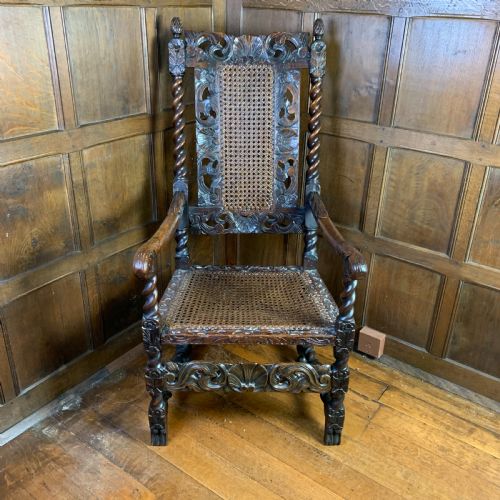
An antique spiral turned chair centres on the intricate twisting carved into its wooden framework, a defining feature seen across various historic forms. When searching for an antique spiral turned chair, collectors encounter armchairs, dining chairs, side chairs, and hall chairs dating from the seventeenth century through to the nineteenth century and the early twentieth century.
The selection ranges from early seventeenth-century Carolean and Charles II walnut and oak examples to later revivals, Portuguese Baroque seating, and nineteenth-century Regency and Georgian carvers. Buyers frequently meet pieces constructed from walnut, oak, laburnum, and mahogany, often paired with cane, leather, tapestry fabric, brass, or satinwood elements.
Regional variations appear across the inventory, including English, French, and Anglo-Indian Colonial interpretations of the form. These diverse origins and periods demonstrate how the distinctive turned twist endured across centuries of furniture design.
How they were made
The construction of these seats relies on solid hardwoods such as walnut, oak, mahogany, laburnum, and satinwood, shaped using traditional turning and carving techniques. Artisans fashioned the characteristic helical twist along the uprights, legs, and stretchers of the frame using specialised hand tools.
Upholstery methods varied according to the period and region, incorporating cane seating, embossed leather, silk cotton, and tapestry fabric fixed to the frames. Brass details and hand-carved ornamentation frequently complemented the turned wooden components.
Turned wooden twists were sometimes hand-carved by makers who spent hours ensuring every helix matched its neighbour.
What varies in quality
The standard of a piece depends on the crispness and depth of the hand-carved twist along the timber, alongside the quality of the primary wood used, whether walnut, oak, laburnum, or satinwood. Superior examples maintain structural integrity and display harmonious proportions across the legs, stretchers, and back supports.
The integration of secondary materials such as embossed leather, cane work, and tapestry fabric contributes to the overall distinction of the seating. Pieces that retain their original period surfaces and materials hold greater historical interest.
The Antique Spiral Turned Chair Glossary
- Spiral turned
- A decorative woodworking technique where timber is shaped into a continuous helical twist resembling a screw thread. This defining detail appears on the legs, stretchers, and upright posts of seventeenth-century and revival seating.
- Carolean
- A stylistic period spanning the reign of Charles II, known for lavishly carved walnut furniture, high backs, and rich textiles. Pieces from this era frequently showcase elaborate spiral turning.
- Carver armchair
- A traditional term for an armchair designed to sit at the head of a dining table or serve as an occasional seat. These chairs typically feature open arms to accommodate clothing.
- Cane
- Strips of rattan or plant material woven into an open mesh pattern for chair seats and backs. It provides a lightweight, resilient surface often found in seventeenth-century designs.
- Stretcher
- A horizontal wooden rail connecting the legs of a chair to provide structural stability. On spiral turned seating, these stretchers are frequently twisted to match the legs.
Antique Spiral Turned Chair: Frequently Asked Questions
How do I date an antique spiral turned chair?
Dating relies on identifying the timber used, the framing construction, and the specific style of the turning. Seventeenth-century examples often utilise walnut or oak with deep hand-carving, whereas later nineteenth-century revivals display different finishing techniques.
Examining the joinery and the wear patterns on the feet and stretchers offers further clues to the age of the piece. Comparing the form to documented examples helps narrow down the century of manufacture.
Where should I place a spiral turned chair?
These chairs suit hallways, drawing rooms, or studies where the woodwork can be appreciated from multiple angles. Side chairs and hall chairs work well against a wall, while carver armchairs function effectively as accent seating.
Positioning the chair away from direct heat sources and strong sunlight protects vulnerable materials like cane, leather, and tapestry fabric from drying out.
Were these chairs used for dining?
Many examples served as dining chairs, particularly within sets commissioned for large houses during the seventeenth and nineteenth centuries. Their sturdy frames and upright backs made them suitable for sitting at a table.
Armchairs and carvers were generally reserved for the head of the table or for reception rooms, while side chairs formed larger matching suites.
How do I care for antique turned wood?
Maintaining the wood involves dusting gently with a soft cloth and occasionally applying appropriate wax to nourish the timber. Avoid using modern liquid polishes that can damage historic finishes.
For upholstered sections or cane work, regular light vacuuming with a brush attachment prevents dust accumulation without straining the fibres.