



Carolean Open Armchair
A carolean open armchair brings robust seventeenth-century carving and walnut or oak framing straight into a modern interior.
Carolean Open Armchair
A carolean open armchair represents a distinct lineage of seating that spans genuine seventeenth-century examples and later nineteenth-century revivals. When searching for a carolean open armchair, buyers encounter heavy timber frames, pronounced crest rails, and open arms designed to accommodate period dress.
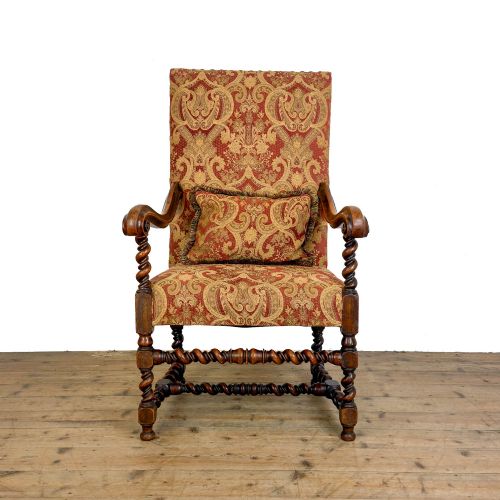
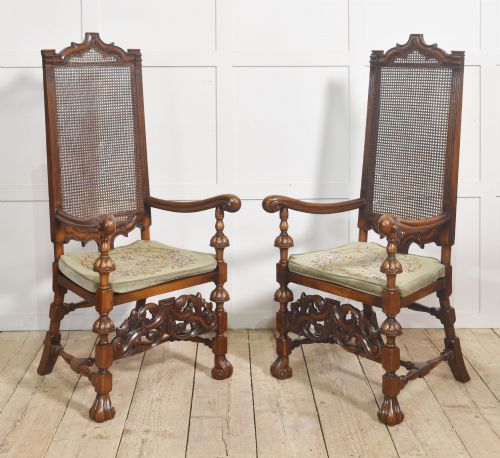
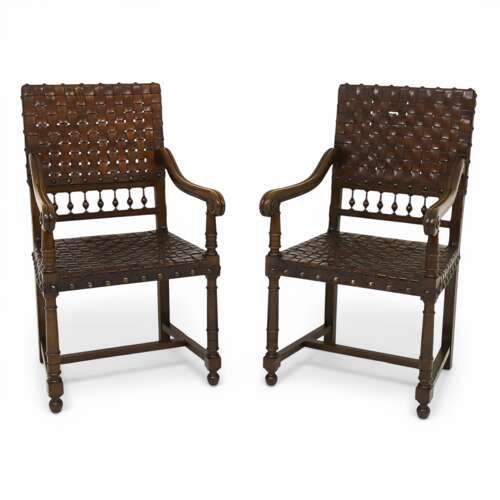
The pieces appearing on this page range from authentic Charles II walnut and oak survivals to Victorian interpretations and revival pieces. Makers of various periods utilised sturdy timber construction, often pairing carved wooden frameworks with cane, leather, fabric, or tapestry seats.
Forms vary from classic elbow chairs to larger throne-like library chairs and wainscot variants. Walnut and oak dominate the material palette, sometimes augmented by painted finishes, laburnum, or brass detailing.
Materials and construction
Makers shaped these chairs primarily from solid walnut and oak, selecting dense hardwoods capable of supporting deep relief carving. Frames frequently incorporate turned uprights and stretchers jointed securely to withstand heavy daily use.
Upholstery and secondary panels utilise materials such as woven leather, cane, velvet, and tapestry inserts. Skilled artisans secured these surfaces using brass tacks or traditional fixings suited to the specific period of manufacture.
Several armchairs are sturdy enough to double as miniature thrones for remarkably demanding household pets.
Judging quality in these chairs
The distinction between ordinary and superior examples rests in the crispness of the hand-carving and the integrity of the timber frame. Higher quality pieces display sharply defined scrollwork, deep piercing on the crest rails, and well-balanced proportions that maintain structural strength.
Original material retention also dictates distinction, where period-appropriate secondary woods, genuine leather or cane work, and minimal later intervention elevate the standing of an armchair within its historical category.
The Carolean Open Armchair Glossary
- Crest rail
- The top horizontal member of a chair back, frequently carved with scrolls, crowns, or floral motifs in Carolean designs.
- Wainscot chair
- An early wooden armchair constructed primarily from panelled oak, possessing solid wooden seats and high backs.
- Elbow chair
- A traditional term for an armchair, often used interchangeably with open armchair to denote a seat with arms.
- Stretchers
- The horizontal wooden braces connecting the legs of a chair to provide structural rigidity.
- Carolean
- Pertaining to the reign of King Charles II, characterised by lavish Baroque ornamentation and rich wood carving.
Carolean Open Armchair: Frequently Asked Questions
How do I spot a true seventeenth-century chair?
Authentic seventeenth-century chairs exhibit hand-cut joinery, timber shrinkage appropriate to age, and wear patterns consistent with centuries of use. Genuine pieces usually feature oak or walnut construction with period-specific tool marks.
Later revivals from the nineteenth century often copy these forms precisely but reveal machine-cut elements, different fastener types, or cleaner timber surfaces under close inspection.
Can I use these chairs daily?
Most sturdy oak and walnut frames remain fully functional for everyday seating when placed on level floors. Checking the stability of the joints and the condition of leather or cane panels ensures safe daily use.
Extremely delicate or highly carved revival pieces benefit from more careful placement in rooms with stable humidity and temperature conditions.
What is a wainscot chair?
A wainscot chair is an early form of wooden armchair constructed with panelled backboards and solid wooden seats. These heavy oak chairs date back to the seventeenth century and earlier.
Unlike upholstered variants, their decoration relies entirely on architectural mouldings, panel carving, and turned structural members.
How do I care for leather and cane?
Leather upholstery requires occasional gentle cleaning and conditioning to prevent drying and cracking over time. Cane panels need protection from sharp impacts and excessive weight.
Keeping these organic materials away from direct heat sources helps preserve their structural flexibility and appearance.