



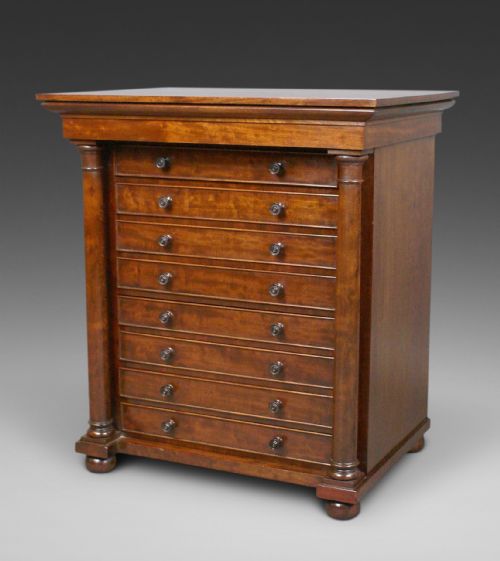


Antique Specimen Cabinet Desk
An antique specimen cabinet desk brings together compact workspace and specialised storage, housing natural history or small curiosities in mahogany, oak, walnut, or pine.
Antique Specimen Cabinet Desk
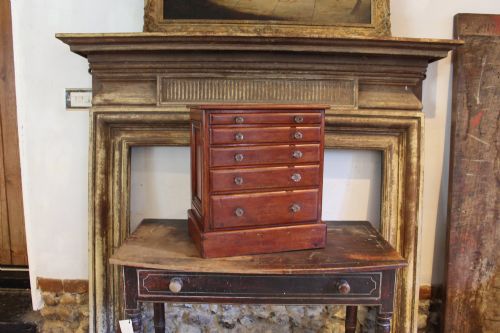
An antique specimen cabinet desk serves as a dual-purpose object, combining a writing surface or desk compartment with multi-drawer storage for small objects. You encounter these most frequently in Victorian and nineteenth-century forms, often executed as tabletop chests or diminutive case furniture.
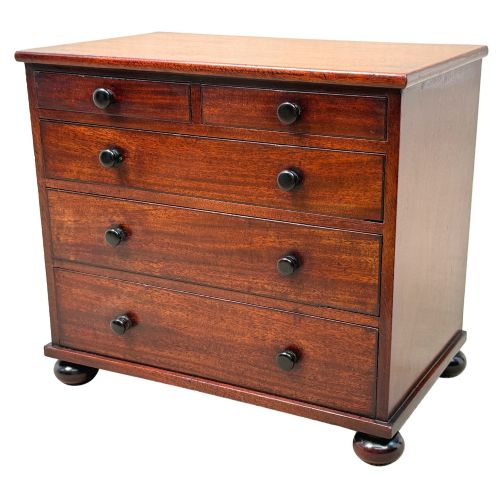
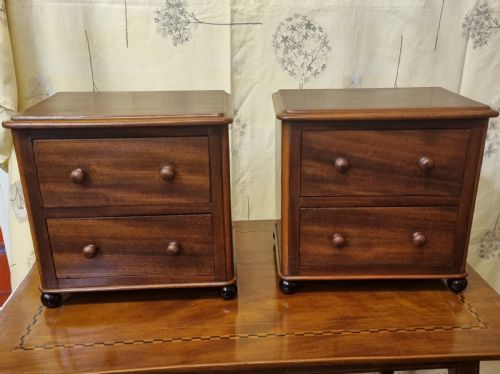
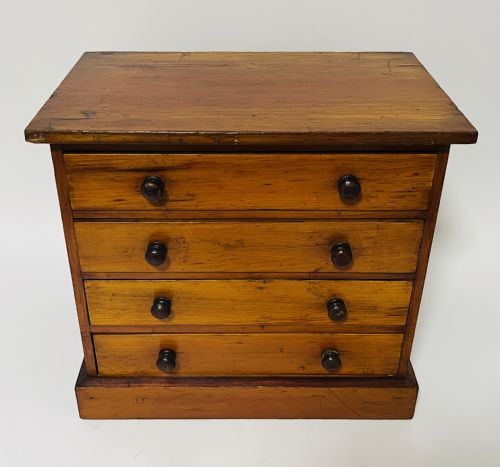
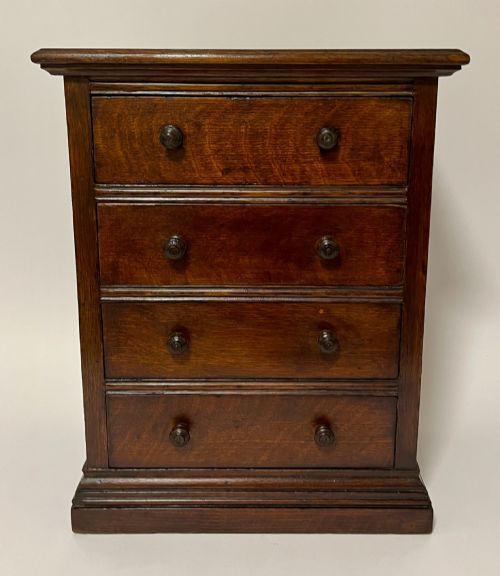
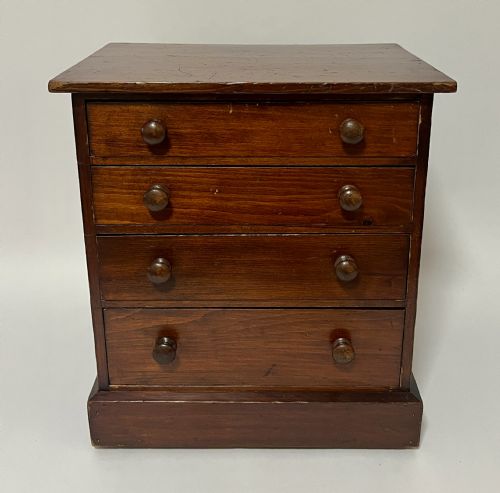
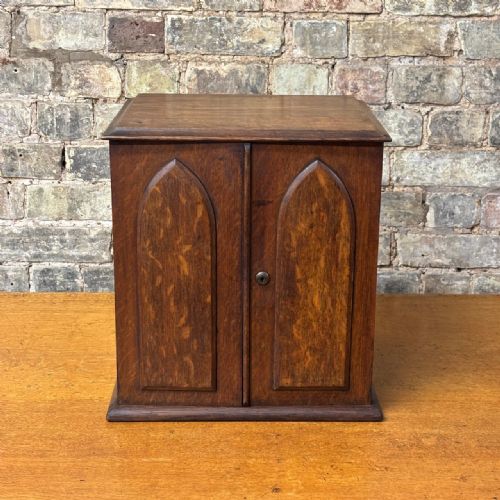
The evidence shows a strong presence of mahogany and oak miniature chests of drawers, alongside specialised pieces like burr walnut dentist cabinets and Gothic revival table cabinets. These items reflect a period obsession with natural history and systematic collecting, housing everything from fossils to coins.
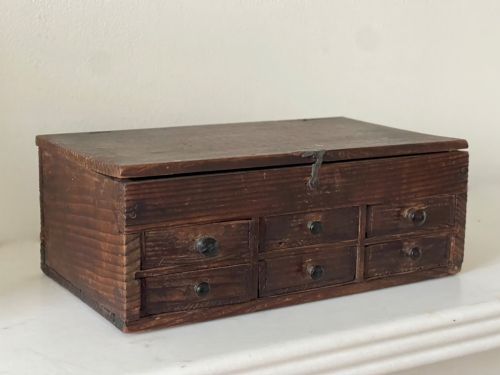
Variations range from plain stained pine utility pieces to sophisticated George II red walnut gentleman's library cabinets of diminutive proportions. The form bridges miniature furniture and practical desktop organisation, built for scholars, collectors, and medical practitioners.
How they were made
Cabinet makers utilised dense hardwoods such as mahogany, oak, and walnut, often pairing them with secondary pine and incorporating bone details or leather writing surfaces. Construction relies on traditional joinery suitable for miniature proportions, ensuring that multiple shallow drawers move smoothly within tight carcass frames.
Hardware plays a functional role in these pieces, with brass drop handles and escutcheons securing drawers and doors that house delicate contents. Surface finishes vary from natural polished wood grains to stained pine, preserving the material integrity of each desktop case.
Antique Specimen Cabinet Desk Retail Price Guide 2026
Typical asking prices for specimen cabinet desk among the pieces listed under this phrase on Sellingantiques today, from the lower quarter to the upper quarter. They describe what is for sale here now, not the wider market.
Listings feature mahogany, oak, pine, walnut, and burr walnut, spanning Georgian to 1920 periods alongside Victorian Gothic revival styles.
What varies in quality
The grade of timber and the precision of the miniature joinery dictate the standing of a piece, distinguishing utilitarian pine containers from high-status red walnut or burr walnut furniture. Finer examples display meticulous attention to drawer divider thickness and proportion.
Hardware selection and internal fitting sophistication separate standard production from bespoke commissions, such as dentist cabinets or Gothic panel door table cabinets. Original brass drop handles and well-fitted locking mechanisms elevate the execution of the entire piece.
The Antique Specimen Cabinet Desk Glossary
- Specimen cabinet
- A piece of furniture designed specifically to store and organise natural history items, coins, or small scientific objects in multiple shallow drawers.
- Miniature furniture
- Scale replicas or small-format pieces produced as apprentice pieces, salesmen's samples, or desktop accessories for compact spaces.
- Burr walnut
- A highly prized wood veneer showing complex swirling grain patterns formed at tree root junctions, seen on high-status nineteenth-century cases.
- Gothic revival
- A nineteenth-century design style incorporating medieval architectural motifs such as pointed arches and pointed panel doors into furniture.
- Bank of drawers
- An arrangement of multiple stacked small drawers housed within a single compact carcass, designed for efficient sorting.
Antique Specimen Cabinet Desk: Frequently Asked Questions
What is an antique specimen cabinet desk?
It is a small-scale piece of furniture that combines a writing surface or desk function with multiple shallow drawers designed for storing natural history specimens or small collections.
These pieces date predominantly from the nineteenth century and Victorian periods, constructed in mahogany, oak, walnut, and pine.
How were specimen cabinet desks used?
Naturalists, scholars, and professionals used them to organise and examine small items like fossils, insects, coins, or dental tools while maintaining a desktop workspace.
The compact proportions allowed them to sit upon library tables or partner desks for immediate access during study.
What woods should I expect to find?
Mahogany and oak are the most common primary timbers, appearing alongside pine, burr walnut, and red walnut in various configurations.
Secondary materials include brass for drop handles and escutcheons, leather for writing surfaces, and occasional bone inlay.
Are these pieces the same as apprentice pieces?
Some miniature chests of drawers relate to apprentice work or salesman samples, while others were built specifically as functional desktop collectors' cabinets.
The inclusion of specialised internal fittings, locking doors, or desk writing surfaces usually points to purpose-built desktop furniture rather than training pieces.
How do I care for a wood specimen cabinet?
Keep the piece away from direct heat sources and fluctuating humidity to protect delicate nineteenth-century timber veneers and solid mahogany or oak carcasses.
Clean surfaces gently with a dry or barely damp cloth, avoiding modern chemical polishes that can degrade historic wood finishes.