






Antique Soumak Weave
An antique soumak weave brings flatwoven tribal structure and intricate supplementary weft-wrapping into a room through historic rugs, panels, and nomadic storage bags.
Antique Soumak Weave
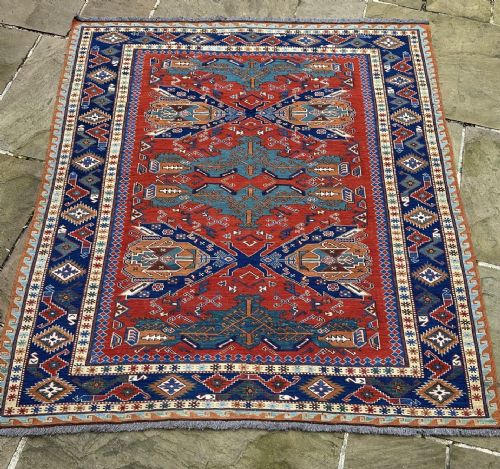
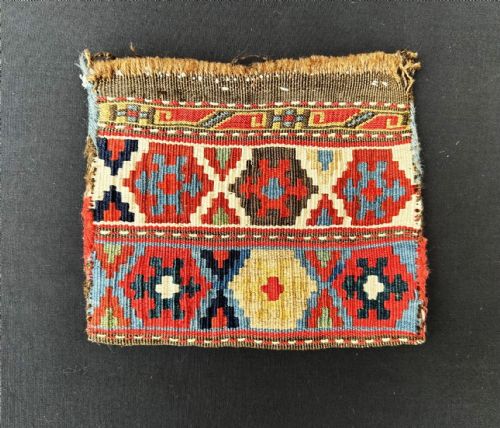
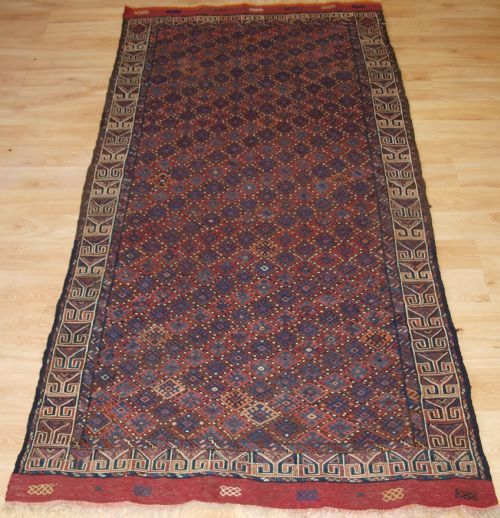
An antique soumak weave is a flatwoven textile produced by nomadic and tribal groups across the Caucasus, Persia, and Anatolia, encompassing formats from large carpets down to smaller utility bags and bag faces. You will most commonly encounter Shahsavan and Yomut Turkmen pieces on this page, alongside examples originating from Kurdish, Qashqa'i, Afshar, and Lori-Bakhtiari makers. These textiles serve both functional and decorative roles, shifting from floor coverings to panels and saddle bags.
The visual vocabulary relies heavily on tribal motifs, including geometric medallions, birds, dragons, and diamond patterns executed across various regional traditions. Pieces date from the nineteenth century through the mid-twentieth century, capturing diverse provincial aesthetics from Daghestan to Moghan and Fars. Each format reflects the specific domestic or transport needs of the weaving communities, whether configured as a complete mafstash storage bag, a salt bag, or a long kilim end.
Materials and construction
These textiles rely on hand-spun wool and cotton foundations combined with supplementary weft-wrapping techniques that create a distinctive ribbed surface texture on the face and loose floating threads on the reverse. The yarn is coloured using natural and vegetable dyes, producing rich, variegated tones that mellow gracefully over decades of age.
Weavers wrap coloured weft threads over and under the warp yarns in precise sequences, allowing for crisp geometric definition without the slit-tapestry limitations found in ordinary kilims. Additional structural support often involves flatwoven kilim ends and sturdy side cords that stabilize the edges of panels and bags.
Antique Soumak Weave Retail Price Guide 2026
Typical asking prices for soumak weave among the pieces listed under this phrase on Sellingantiques today, from the lower quarter to the upper quarter. They describe what is for sale here now, not the wider market.
Judging quality in tribal weaves
Quality rests in the precision of the weft-wrapping, the complexity of the iconographic design, and the handled suppleness of the wool. Tighter, finer wrapping yields sharper pattern outlines and greater structural durability in utility formats like saddle bags and storage panels.
The depth and harmony of the natural dye palette separate standard production from superior examples. Colour variation within individual strands indicates careful dyeing methods that enhance the visual movement across tribal motifs.
Shahsavan Nomads·Yomut Turkmen·Afshar Tribe·Kurdish Weavers
The Antique Soumak Weave Glossary
- Soumak
- A flatweaving technique where coloured weft yarns are wrapped over and under warp threads to produce a durable fabric with a textured face and unclipped floats on the reverse. This method allows for intricate diagonal lines and detailed geometric patterns.
- Khorjin
- A traditional double saddle bag used by nomadic groups for transport and storage during migrations. These pairs are often separated over time, leaving surviving bag faces as standalone wall or furniture pieces.
- Mafrash
- A large rectangular storage chest panel woven in soumak technique to form bedding bags used in nomad tents. Panels are frequently found individually after the original four-sided container structure is disassembled.
- Juval
- A large face-storage bag produced by Turkmen tribes for domestic possessions and tent organisation. They display characteristic gul motifs and precise geometric structures.
- Natural Dyes
- Colourants derived from plants, insects, and minerals used before the introduction of synthetic aniline dyes. They create complex, shifting hues that age with considerable character.
Antique Soumak Weave: Frequently Asked Questions
What is a soumak weave?
A soumak weave is a flatwoven textile made by wrapping coloured weft threads around warp strings rather than interlacing them in a simple grid. This creates a textured, durable surface with raised patterns.
The technique provides structural strength without a heavy pile, making these pieces suitable for both decorative display and lighter floor use.
How were tribal bags used?
Nomadic groups utilised these bags for storing bedding, salt, and personal belongings inside tents or during seasonal migrations across harsh terrain.
Over generations, many complete storage containers were separated into individual panels or bag faces for easier transport and trade.
How do I care for an antique textile?
Keep these textiles away from direct, harsh sunlight to protect the natural dyes from fading over time. Gentle vacuuming without a beater bar removes trapped dust without damaging the wool.
Consider placing a breathable underlay beneath rugs to prevent slipping and reduce friction against hard flooring.
How do I tell regional styles apart?
Regional attribution relies on specific combinations of motifs, colour palettes, and structural proportions unique to each weaving group. Shahsavan pieces often feature crisp dragons and birds, while Yomut examples display characteristic palas ends.
Examining the handling of the wool and the specific twist of the foundation yarns also helps pinpoint origin.