
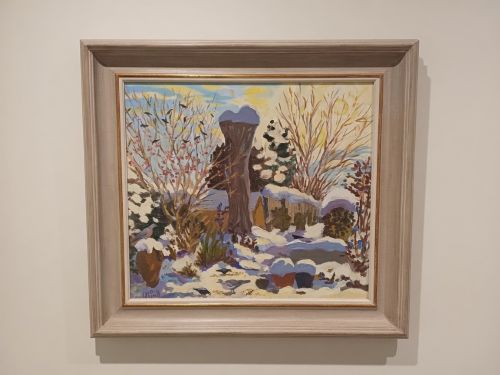
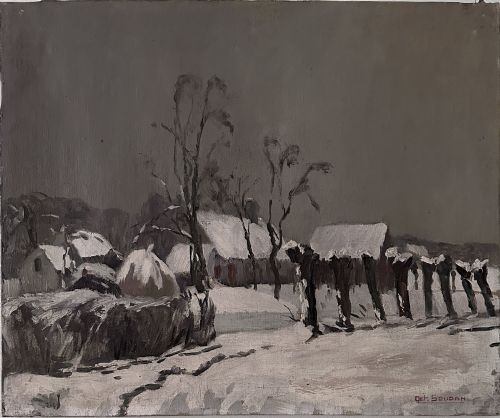


Antique Snow Scene Artwork
Antique snow scene artwork captures the quiet stillness of winter through historical oil and watercolour paintings.
Antique Snow Scene Artwork
When you search for antique snow scene artwork, you encounter historical paintings that capture winter landscapes, rural villages, and coaching scenes. These works portray the quiet atmosphere of cold weather through pastoral views, mountain peaks, and freezing rivers.
The pieces on this page span several decades and centuries, ranging from nineteenth-century coaching oils to early twentieth-century watercolours. You are most likely to meet oil paintings on canvas or board alongside delicate watercolours and gouache studies created during the Victorian and Edwardian eras.
Subjects vary from British rural valleys and Yorkshire dales to Dutch-style winter vistas and alpine mountain ranges. Artists often populated these scenes with figures collecting firewood, horse-drawn mail coaches caught in drifts, and remote snow-covered cottages.
Materials and Techniques
Painters used oil paint on canvas, board, and wooden panels to build rich textures for winter skies and snow-laden ground. Many works also utilise watercolour and gouache on paper, capturing delicate washes of grey and white light.
Gilded frames often accompany these works, sometimes featuring gesso mouldings that complement the historical period of the canvas. Pigments were handled with varying brushwork, from the smooth realism of coaching scenes to the loose strokes of British and French impressionism.
Listings feature works spanning from the nineteenth century to nineteen-sixty, utilising canvas, paper, oil paint, watercolour, and gold leaf.
Factors That Separate the Range
Quality in these winter paintings rests upon the artist's ability to render the specific quality of cold light and shadow on snow. Skilled hands manage tonal variations in white and grey without letting the scene appear flat or lifeless.
The strength of the composition and the condition of the original support, whether canvas or paper, define the upper tier of works. Listed pieces range from modest village studies to massive alpine oil paintings with detailed mountain landscapes.
A. McDonald·Gaston Cornil·Ernest Uden·John Smith Atherton·Herbert Royle·John Charles Maggs·George Graham·John Ritchie·Ernest Higgins Rigg·John Richard Worsdale·George Augustus Williams·Eveline Lance·William Cave Day·Fred Lawson·James Pollard
The Antique Snow Scene Artwork Glossary
- Watercolour
- A painting method where fine pigment is suspended in a water-soluble binder. These works on paper require protection behind glass to prevent moisture damage.
- Gouache
- An opaque water-based paint that provides heavier coverage than standard watercolour. Artists often combined it with watercolour to highlight white snow drifts.
- Gesso
- A plaster-like mixture applied to wooden frames or panels as a base for gilding and paint. It provides a smooth surface for ornate decorative mouldings.
- Impressionism
- A nineteenth-century painting style focusing on transient effects of light and spontaneous brushwork. Examples include British and French interpretations of winter weather.
- Genre painting
- Artwork depicting scenes from ordinary daily life, such as figures collecting firewood or travelling by coach. These subjects frequently appear in winter landscape art.
Antique Snow Scene Artwork: Frequently Asked Questions
What periods do these snow paintings cover?
The available selection includes pieces originating from the nineteenth century through to the mid-twentieth century. Artists worked across Victorian, Edwardian, and later traditional styles.
Dates span from the eighteen-sixties up to nineteen-sixty, showing shifts in artistic technique and subject matter over a century of winter painting.
How were these winter scenes traditionally displayed?
Most oil paintings and watercolours were housed in decorative wooden frames, often featuring gold leaf or gesso ornamentation. These frames were designed to complement the domestic interiors of their period.
Watercolours required glass protection to shield the paper and pigments from atmospheric moisture and dust over decades of display.
What subjects appear most often in these artworks?
Common subjects include rural Yorkshire dales, Dutch-inspired frost scenes, and Alpine mountain ranges under heavy snow. Village cottages and freezing rivers also feature prominently.
Coaching scenes involving stagecoaches and mail coaches caught in winter weather are another frequent theme among nineteenth-century painters.
How do I distinguish between oil paintings and watercolours?
Oil paintings utilise heavy oil-based pigments applied to canvas, wood panels, or board, often possessing a visible texture and rich sheen. They do not require glass for protection.
Watercolours use translucent paints on paper supports and are presented flat behind glass with a protective mount surrounding the image.