
Antique Smokers Bow
When you search for an antique smokers bow, you are looking at a sturdy low-back Windsor armchair built for comfort in parlours and offices.
Antique Smokers Bow
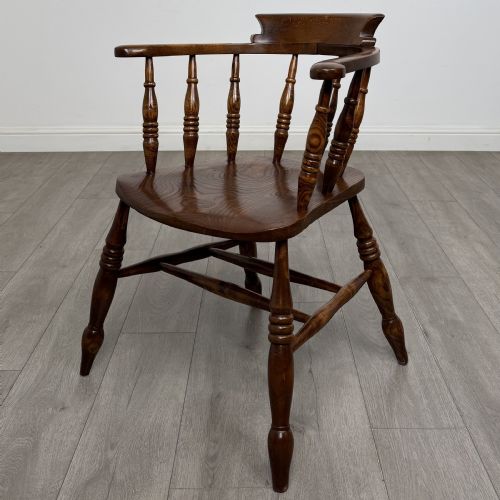
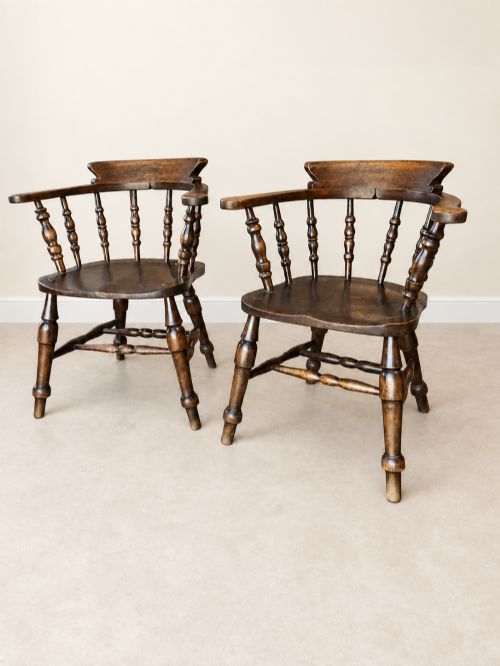
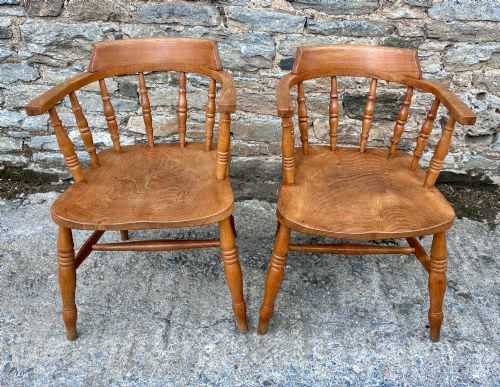
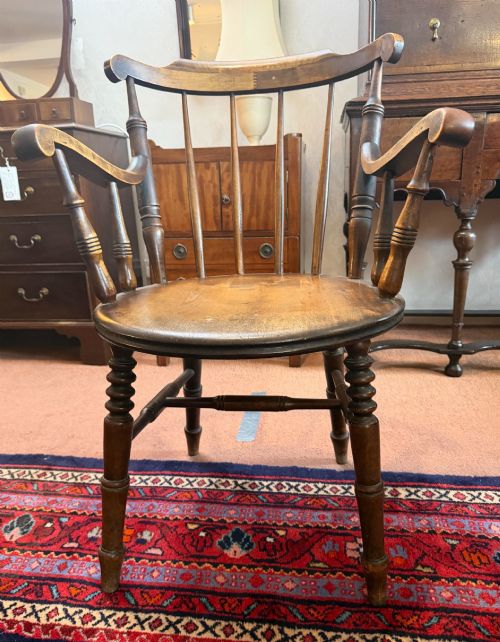
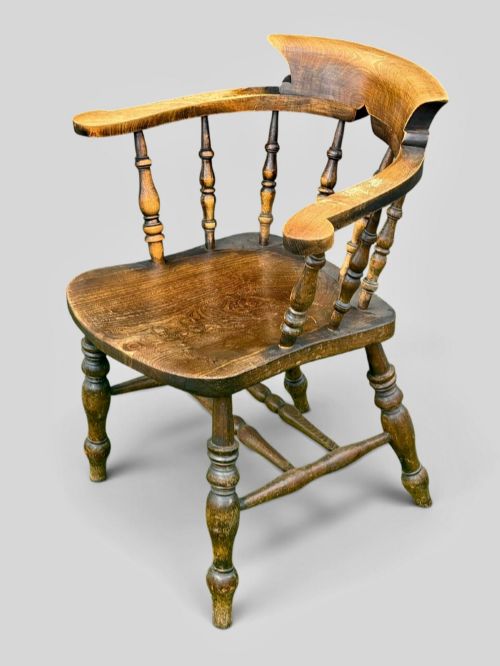
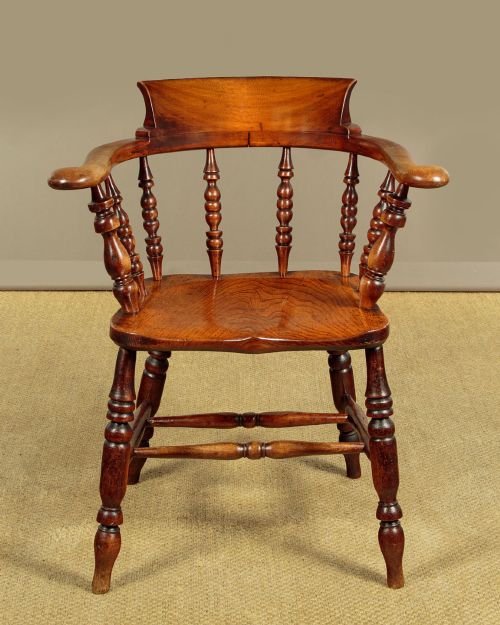
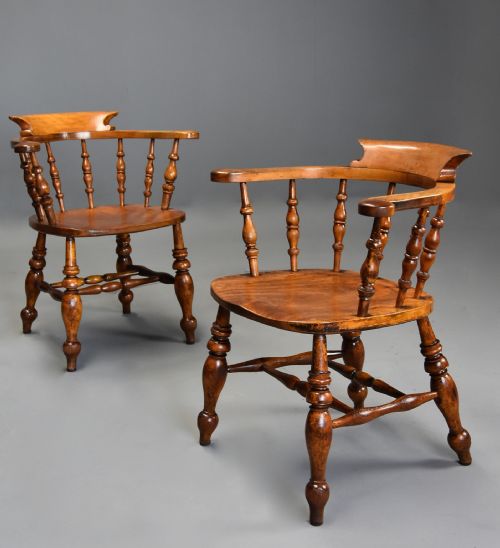
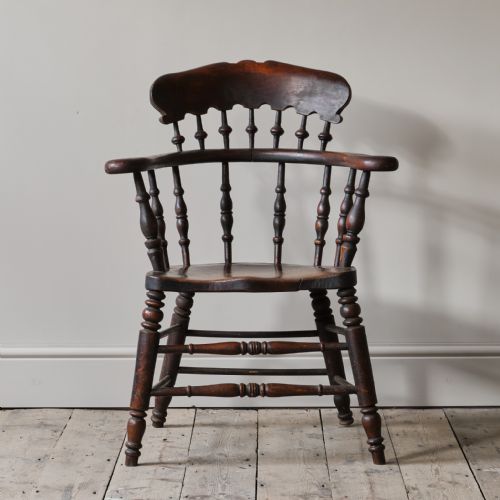
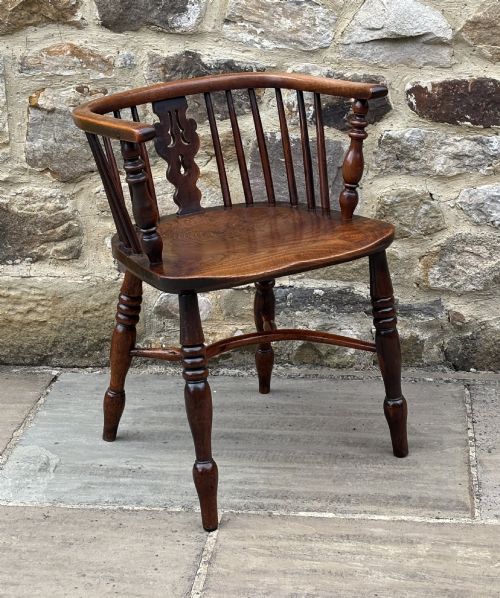
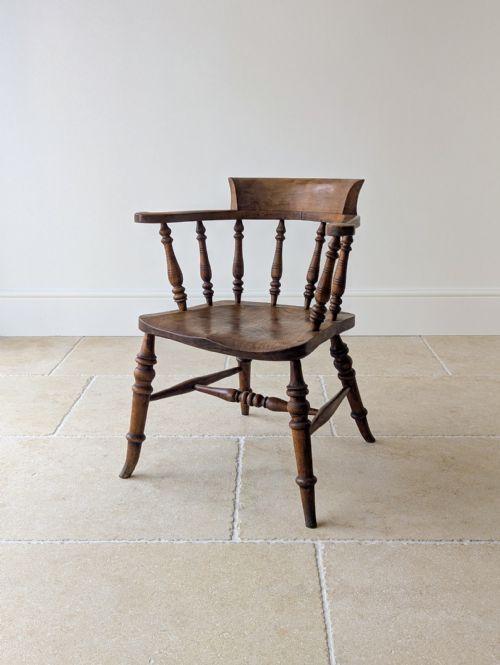
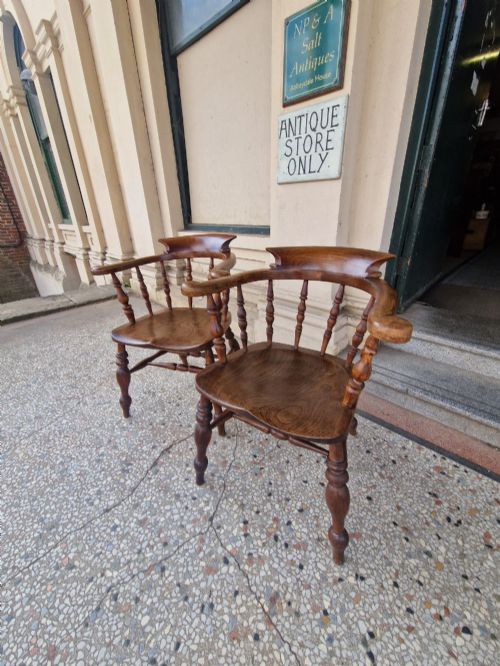
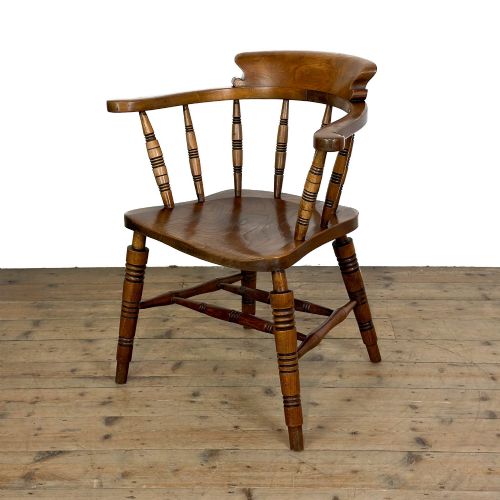
The antique smokers bow is a sturdy low-back Windsor armchair originating in the nineteenth and early twentieth centuries, designed with a rounded, steam-bent continuous rail forming the arms and back. These elbow seats appear frequently from Victorian and Edwardian periods, serving traditionally as library, desk or farmhouse seating.
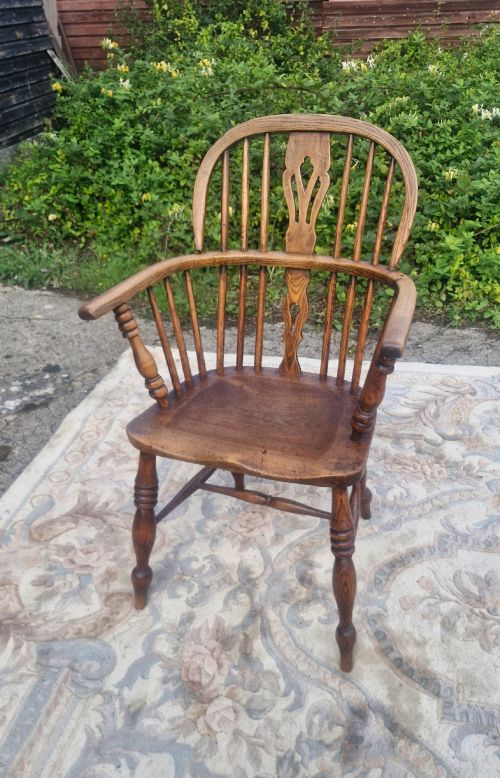
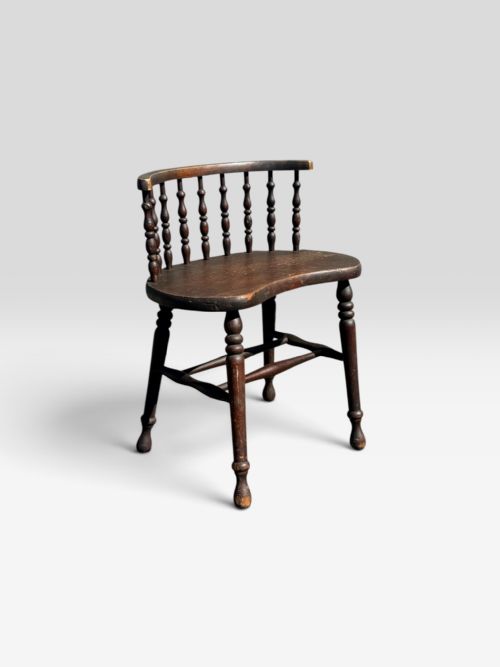
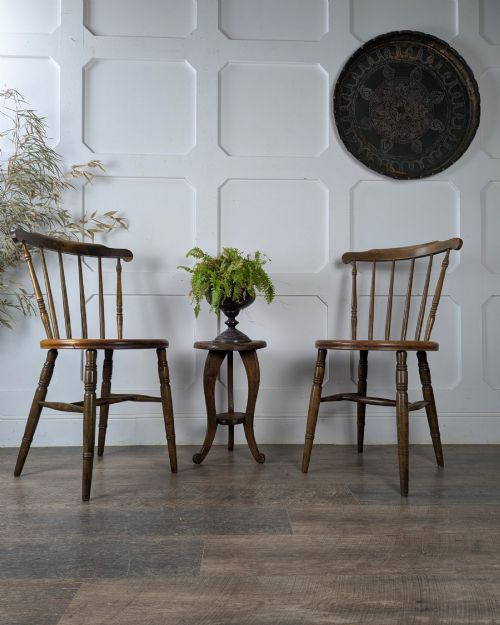
Buyers meet variations ranging from plain kitchen carvers to more formal office desk chairs fitted with leather upholstery or mounted on swivels. The form overlaps closely with captain's chairs and low-back Windsors, sharing similar proportions and turned spindle structures.
Materials and construction
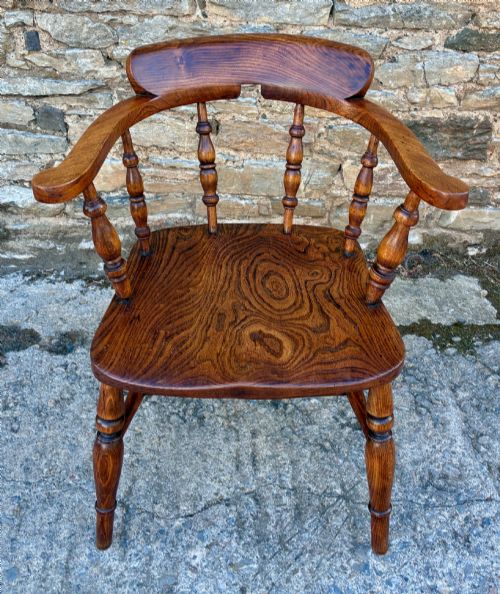
Construction relies heavily on native timbers, predominantly combining elm seats with beech, ash or oak for the spindles, legs and bentwood rails. Elm provides a tough, highly figured seat that resists splitting while taking deep surface patination, whereas ash and beech offer flexible strength for the steam-bent bow and turned undercarriage.
Joinery typically incorporates traditional Windsor methods, featuring through-wedged legs and spindles locked firmly into solid wooden seats. Additional structural support often comes through single or double H-stretchers linking the legs beneath.
Some nineteenth-century examples feature visibly oversized arms built presumably to accommodate the practical needs of nineteenth-century gentlemen.
Quality variations
Quality rests upon the choice of timber figure, particularly the grain depth in the elm seat, and the harmonious balance of the turned components. Examples featuring well-proportioned, substantial arm bows and crisply turned spindles display superior craftsmanship compared to utility office variants.
Surface finish and patination dictate much of the desirability, with original untouched waxed surfaces commanding greater respect than stripped or heavily restored examples. The integrity of the original joints and the presence of matching pairs or sets elevate the standing of individual pieces.
The Antique Smokers Bow Glossary
- Smokers Bow
- A low-back Windsor armchair characterised by a turned spindle back and a continuous curved arm rail. This form became popular in nineteenth-century country houses and rural settings.
- Captain's Chair
- A low-backed wooden armchair closely related to the smokers bow, frequently utilised at desks and tables. These often feature slightly higher back rails and robust elbow supports.
- Windsor
- A chair construction method where legs and back spindles are tenoned directly into a solid wooden seat rather than a traditional frame. This technique creates a resilient and enduring domestic seat.
- Stretcher
- The horizontal wooden rails connecting the legs of a chair to provide structural rigidity. Double stretchers appear on sturdier vernacular examples.
- Patina
- The surface sheen and mellow colour developed by aged timber through decades of handling, polishing and exposure to light. This finish is a hallmark of genuine age.
Antique Smokers Bow: Frequently Asked Questions
What is the difference between a smokers bow and a captain's chair?
Smokers bows and captain's chairs share very similar low-back Windsor profiles and function as sturdy elbow seats. In historical listings, the terms often overlap, though captain's chairs occasionally lean toward formal office or desk applications.
Both types utilise turned spindles and solid timber seats, making them interchangeable in modern country house interiors.
How do I date an antique smokers bow?
Dating relies on examining the turning style of the legs, the assembly methods, and the timber selection. Victorian and Edwardian examples show subtle shifts in the thickness of the bentwood rail and the profile of the spindle turnings.
Earlier nineteenth-century pieces often display deeper elm grain figure and hand-carved saddle seats, while early twentieth-century versions can show simpler, more standardised lathe work.
Where were smokers bow chairs originally used?
These chairs served diverse roles across British domestic and professional life, appearing in farmhouse kitchens, studies, and Victorian offices. Their robust construction made them suitable for daily heavy use.
They also found a natural home in smoking rooms and country house libraries, where their low backs allowed comfortable relaxed seating.
How do I incorporate a smokers bow into a modern room?
A smokers bow works well as an occasional desk chair or a reading seat in a corner. The warm tones of elm and beech complement both contemporary and traditional interior schemes.
Pairing a single carver with a modern dining table or placing an ash example beside a fireplace brings historic texture into daily living spaces.