

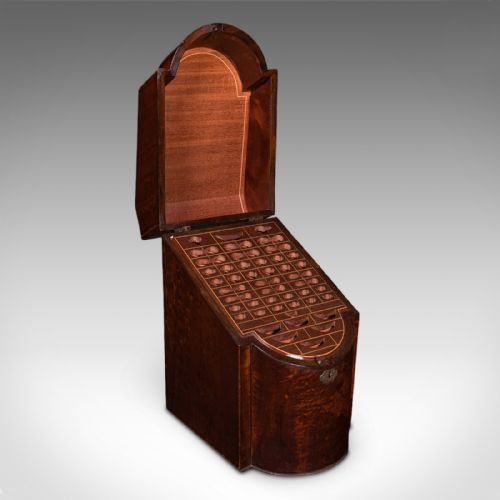


Antique Silverware Boxed
These antique silverware boxed sets bring fitted luxury to the dining table, pairing precious metal with velvet, silk, oak and mahogany.

Antique Silverware Boxed
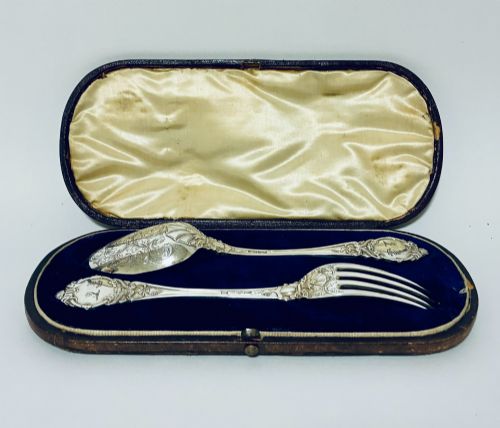
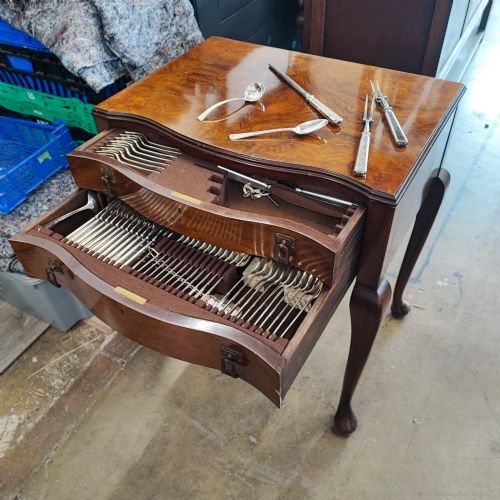
When you search for antique silverware boxed, you find fitted containers holding flatware, tea services, and serving pieces from the Georgian, Victorian, and Edwardian eras. These collections range from modest butter knife sets to extensive oak canteens holding dozens of items.
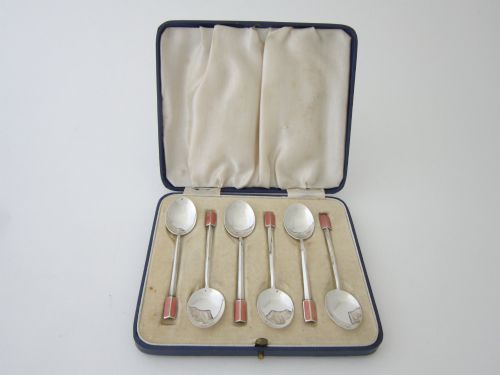
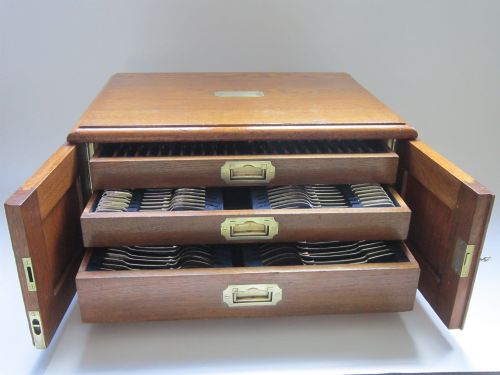
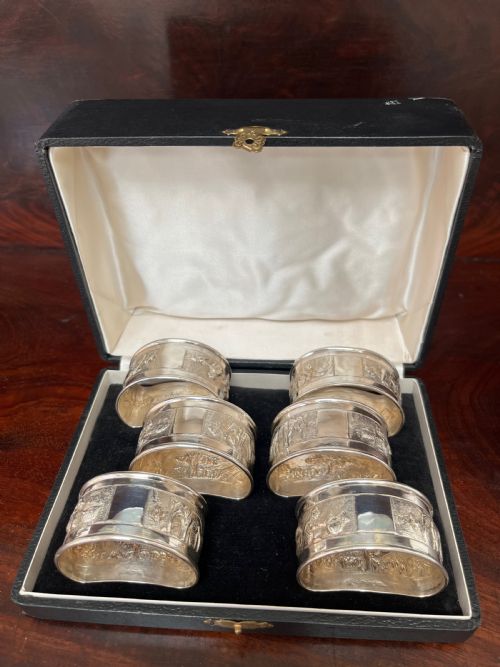
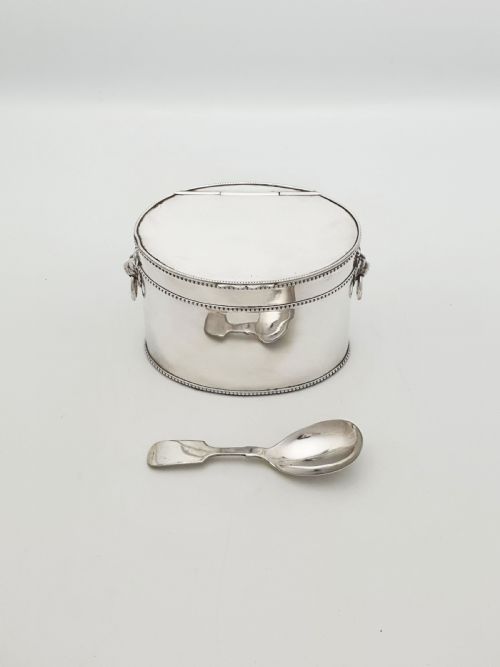
The most common examples on this page are Victorian and Edwardian canteens, tea caddies, and smaller fitted cases housing spoons, grape shears, and napkin rings. Many pieces rely on wooden chests lined in silk and velvet to protect the metal within.
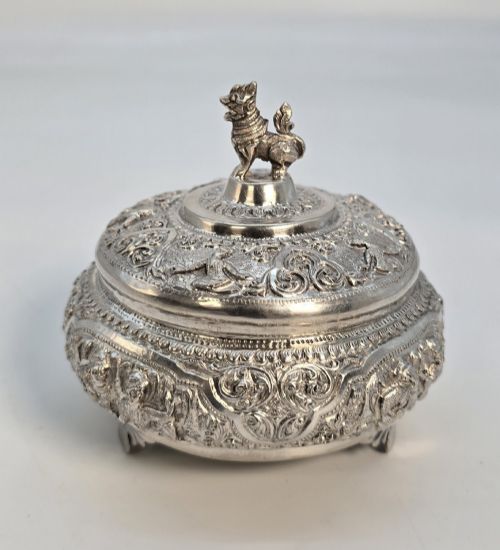
Origins stretch from English workshops to Raj period India and Portugal, utilising materials such as sterling silver, silver plate, oak, mahogany, coromandel, and walnut. The containers themselves function as furniture and storage, designed to keep silver organised and untarnished.
How they were made
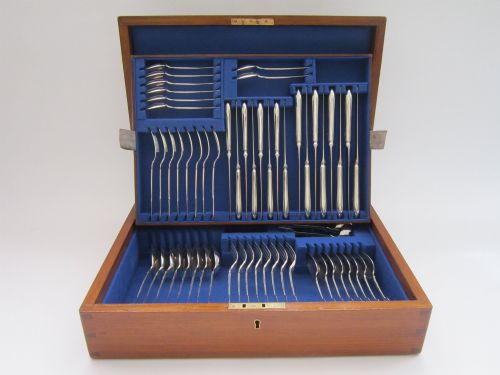
Makers constructed the protective housings using dense hardwoods like oak, mahogany, walnut, and coromandel, often fitted with brass hardware and lockable mechanisms. Interiors received tailored linings of silk and velvet to cradle each individual spoon, knife, or fork securely.
Metal components combine sterling silver, silver-gilt, and silver plate with steel blades and enamel highlights. Silversmiths shaped handles through casting, hammering, and embossing, while cabinetmakers built sturdy chests designed to withstand decades of use.
Listings include oak campaign silverware trunks, coromandel cutlery boxes, and mahogany butler's trays dating from the Georgian period onward.
What varies in quality
Quality rests in the completeness of the set and the integrity of the fitted interior. Original silk and velvet linings that retain their structure elevate a piece above those with modern replacements.
The craftsmanship of the outer box dictates the tier of the object, distinguishing utilitarian pine or oak chests from coromandel cases with intricate brass details. Heavier gauge sterling silver and crisp hallmarks denote superior manufacturing compared to lighter silver plate.
Walker & Hall·Mappin & Webb·LIBERTY & CO·Omar Ramsden·Waring & Gillows·Robert Stebbings
The Antique Silverware Boxed Glossary
- Sterling silver
- A silver alloy containing 92.5 percent pure silver and 7.5 percent other metals, usually copper, ensuring durability for tableware.
- Canteen
- A fitted box, chest, or cabinet designed specifically to store a complete set of cutlery or flatware.
- Tea caddy
- A small container or box originally built to store loose tea leaves, often featuring internal compartments or a matching spoon.
- Silver-gilt
- Sterling silver that has been coated with a thin layer of pure gold on the surface, creating a warm golden finish.
- Fiddle pattern
- A traditional nineteenth-century flatware handle design characterised by a tapered stem and a flattened, shaped end resembling a violin.
Antique Silverware Boxed: Frequently Asked Questions
What is a canteen of cutlery?
A canteen of cutlery is a complete, matched service of forks, spoons, and sometimes knives housed in its own dedicated storage box. These sets were designed for formal dining and everyday household use.
The fitted interior ensures each piece has a specific slot, preventing the metal from scratching during storage or transport.
How do I date a silver tea caddy?
Dating a tea caddy involves examining the hallmarks stamped onto the silver, which indicate the assay office, year of production, and maker. Stylistic clues such as lion mask handles or Edwardian proportions also help narrow the decade.
Wooden or ceramic bodies without silver components rely on construction methods, hinges, and lock types to determine their period of origin.
Were all boxed sets made of solid silver?
Many boxed sets feature silver plate rather than solid sterling silver, particularly larger canteens containing heavy steel-bladed knives. Makers utilised plating to offer durable, practical dining services at a lower cost.
Hallmarks on the metal components clarify whether a set is solid sterling or plated.
How should I store antique silverware?
Antique silverware benefits from being kept in its original fitted wooden box or canteen, where velvet and silk linings help prevent tarnishing and physical damage. Keeping the case in a stable environment away from extreme humidity preserves both the wood and the metal.
Regular, gentle use often helps prevent silver from developing heavy tarnish, as the natural friction of handling keeps the metal bright.