



Antique Silver Taper Stands
Antique silver taper stands bring historic illumination to a room, offering refined forms from the Georgian, Victorian, and Edwardian periods.
Antique Silver Taper Stands
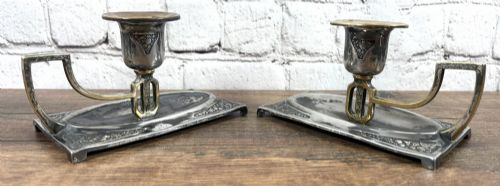
When people search for antique silver taper stands, they look for small candle holders and desk accessories designed to hold narrow wax lights for sealing letters or lighting pipes. The pieces on this page span the 19th century and the early decades of the 20th century, encompassing styles from the Georgian era through to Art Deco.
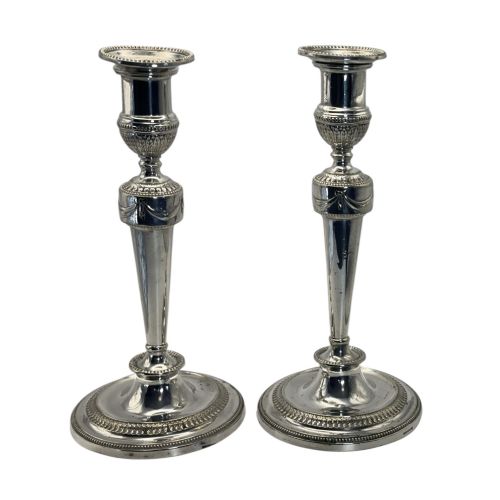
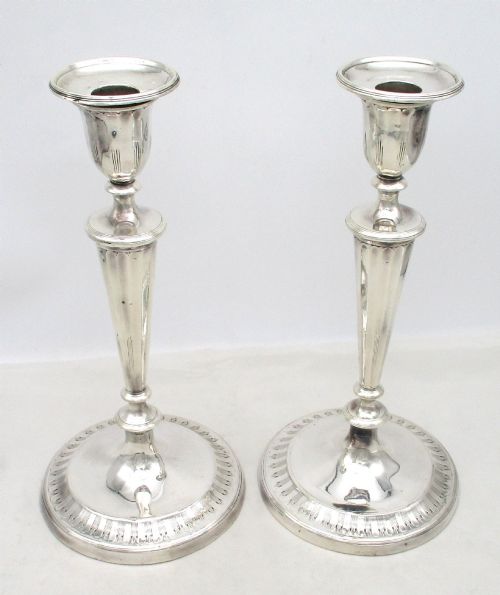
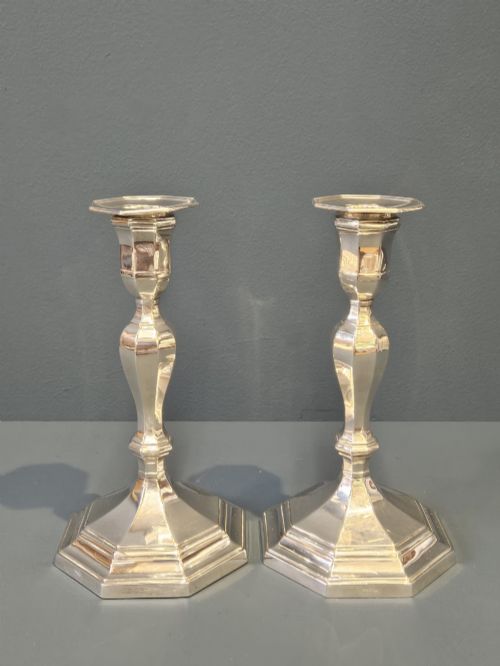
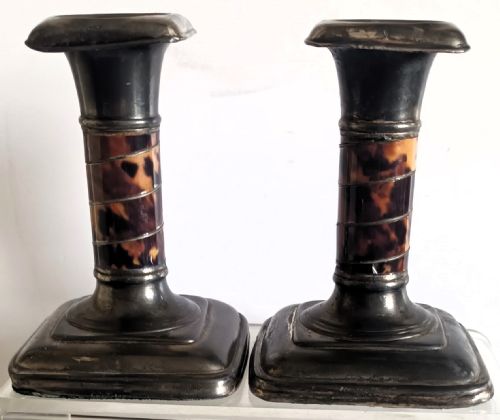
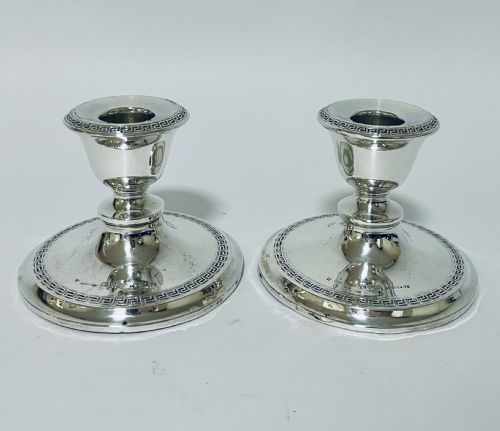
Buyers frequently encounter silver plated candlesticks alongside sterling silver examples and alternative metals such as pewter, copper, and electroplated nickel silver. Forms range from miniature desk candlesticks and column designs to figural pairs and desk stands produced across the Victorian and Edwardian periods.
How they were made
Silversmiths and manufacturers utilised sterling silver, silver plate, and Old Sheffield Plate alongside base metals like pewter and copper, often employing casting and column construction techniques. Makers applied silver plating methods to base metals, while others combined materials such as tortoiseshell or enamel with pewter in Arts and Crafts designs.
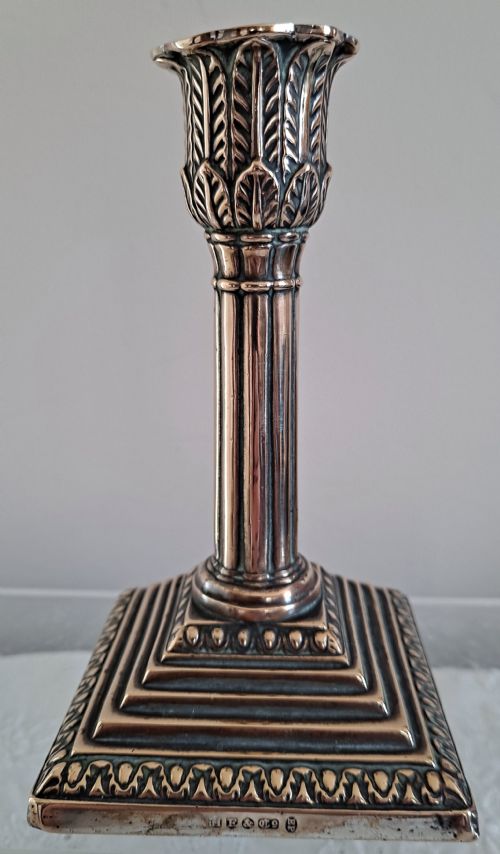
Makers marked many sterling pieces with full hallmarks indicating the year and assay office, while plated items relied on maker stamps from firms like Mappin & Webb, WMF, Elkinton & Co, and Liberty & Co.
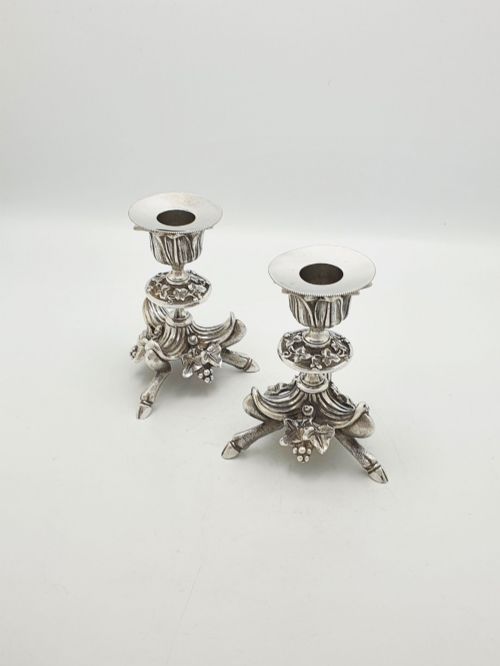
Some Victorian examples feature cavaliers and ladies frozen in metal, keeping watch over the desk while letters wait to be sealed.
What varies in quality
The standard of a piece depends on the crispness of its cast detail, particularly in figural or neoclassical column motifs, and the preservation of the silver plating or sterling surface. Pieces bearing clear hallmarks and maker marks from established firms demonstrate higher workshop standards.
Proportion and decorative restraint set finer examples apart from plainer commercial production, with balanced forms ranging from miniature desk pieces to tall decorative pairs showing distinct stylistic influence from periods like the Georgian revival or Art Deco.
Mappin & Webb·WMF·Liberty & Co·Elkinton & Co·Barker Ellis
The Antique Silver Taper Stands Glossary
- Sterling silver
- A silver alloy containing 92.5 percent pure silver by mass, standard for high-grade British silver items. Hallmarks usually verify this standard.
- Old Sheffield Plate
- An early method of fusing a thin sheet of silver to a thicker copper base. This technique preceded modern electroplating.
- Electroplated nickel silver
- A base metal alloy of copper, nickel, and zinc coated with a layer of silver using electrolysis. It became common during the Victorian era.
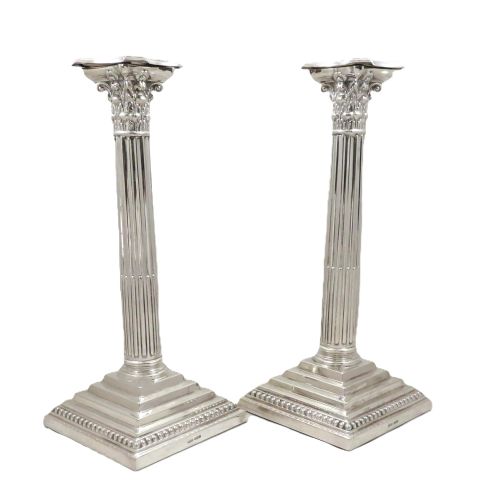
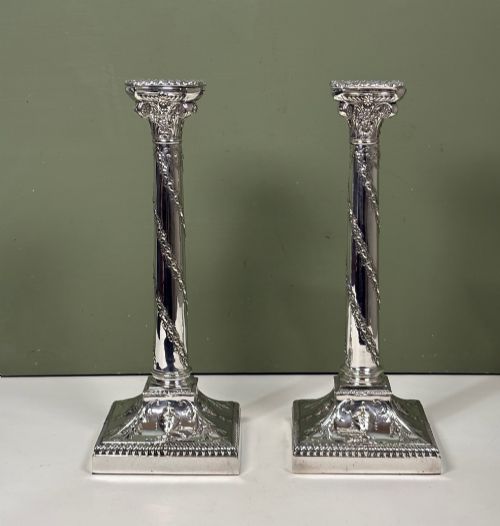
- Corinthian column
- A classical architectural column form featuring ornate acanthus leaves on the capital, frequently adapted for candlesticks in the 19th century.
- Tudric pewter
- A trade name used by Liberty & Co for a high-grade pewter alloy. It often featured in Arts and Crafts metalwork.
Antique Silver Taper Stands: Frequently Asked Questions
How can I date my candlesticks?
Dating relies on stylistic clues like neoclassical columns, Victorian figural details, or Art Deco geometric lines.
Sterling silver items often carry date letters and hallmarks that pinpoint the exact year of assay.
What were taper stands used for?
Taper stands held thin wax candles known as tapers, which provided a localized flame.
People used them primarily for melting sealing wax on correspondence or for lighting tobacco pipes.
Are pewter and copper pieces considered antique?
Pewter and copper items appear across the 19th and early 20th centuries in styles like Arts and Crafts.
These alternative metals received the same decorative attention as silver in many desk accessories and candlesticks.