





Antique Silver Tag
An antique silver tag is a small piece of functional metal hung around the neck of a bottle to name its contents.
Antique Silver Tag
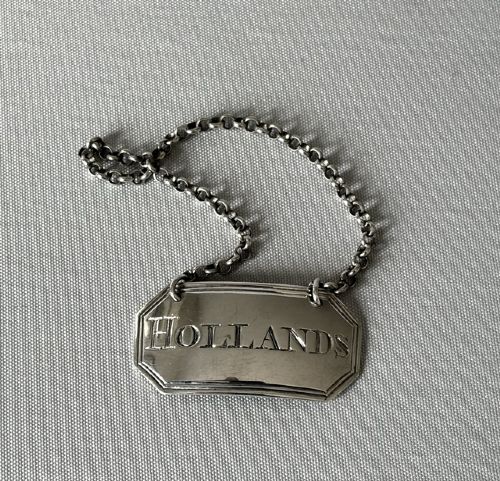
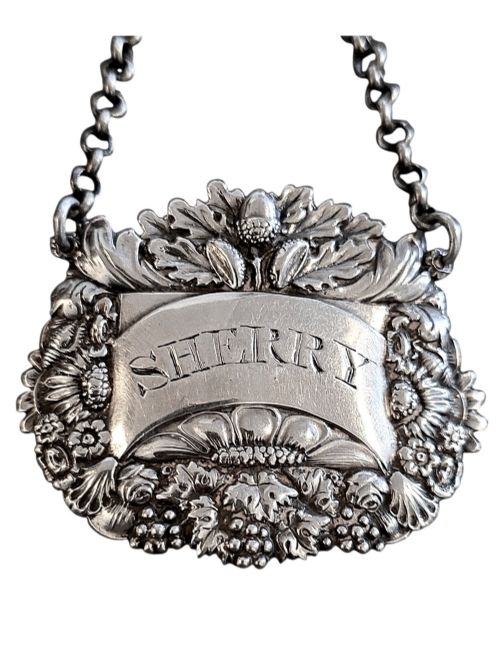
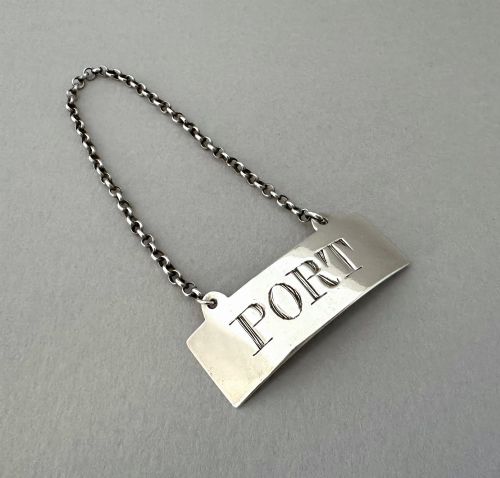
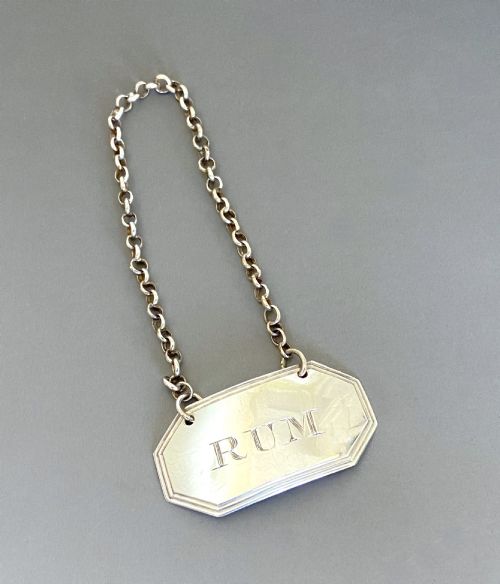
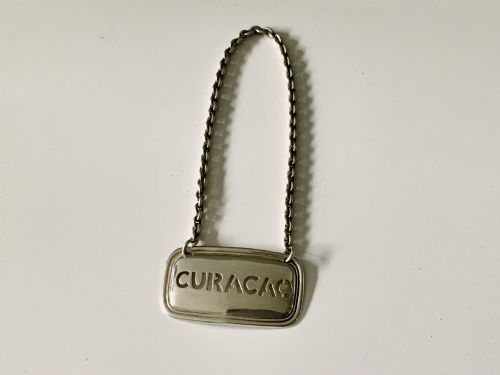
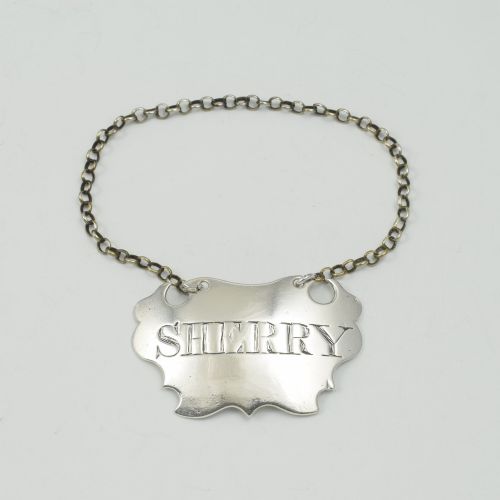
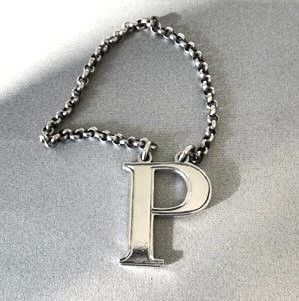
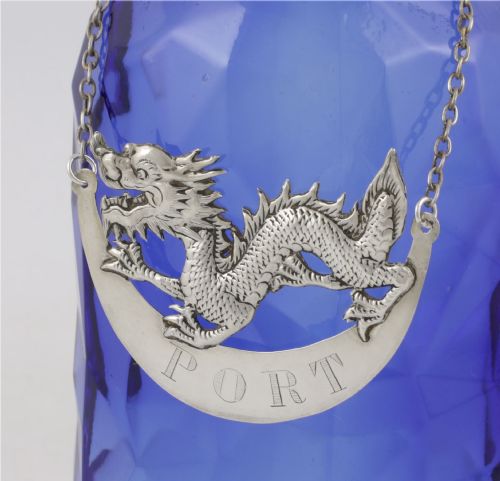
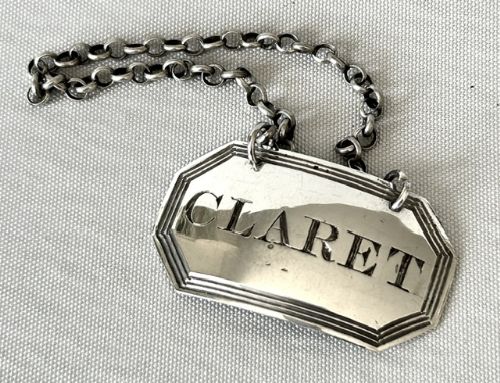
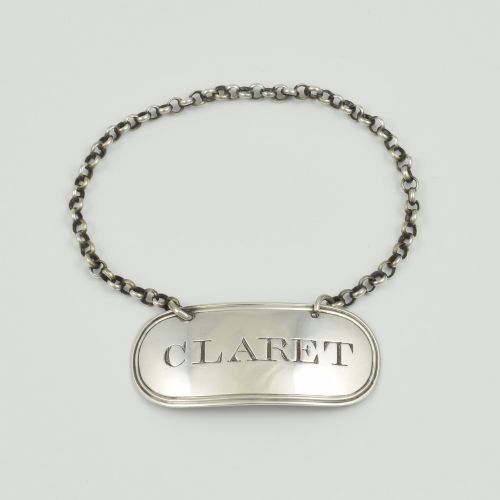
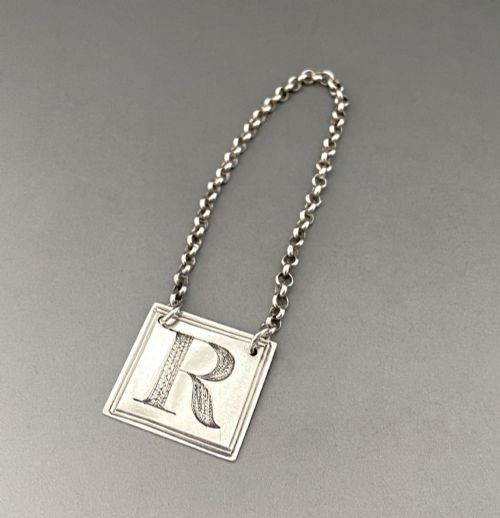
An antique silver tag, also known as a decanter label or bottle ticket, is a small piece of silverware designed to hang from the neck of a decanter to identify the wine or spirit inside. When you search for an antique silver tag, you encounter forms ranging from simple escutcheon shields to intricate vine leaves and dragon motifs. The pieces met most often on this page date from the Georgian and Victorian periods, often made in sterling silver or solid silver and hung on chains.
Makers fashioned these markers to hang neatly on glass decanters containing beverages such as sherry, port, claret, Madeira, rum, gin, brandy, and whisky. Examples span from eighteenth-century provincial pieces to early twentieth-century and mid-century designs, including work from Chinese Export silversmiths. Collectors find single labels alongside matched sets of three, all serving the practical purpose of marking the bottle's contents upon the dining table.
Materials and construction
Silversmiths utilised sterling silver and solid silver as the primary metals for these bottle tags, occasionally applying silver gilt or enamel for decorative contrast. They shaped the metal through piercing, stamping, and engraving, often forming motifs like vine leaves, escutcheons, or Chinese dragons.
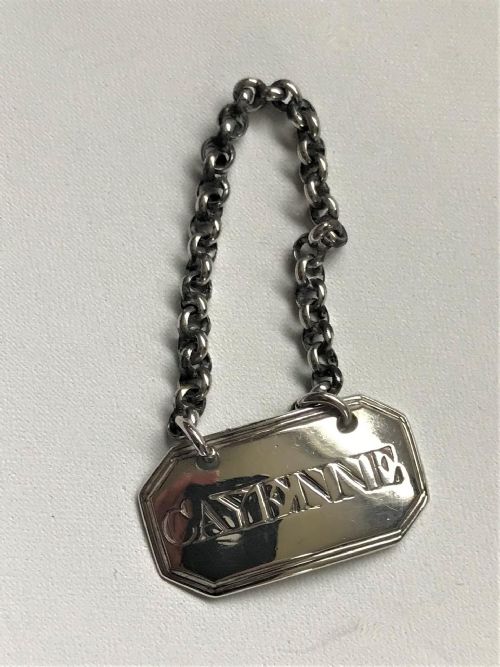
The text naming the beverage was typically pierced or engraved into the metal surface, sometimes accompanied by raised borders or figural decoration. Makers attached silver chains to secure the tag around the neck of glass decanters.
Antique Silver Tag Retail Price Guide 2026
Typical asking prices for silver tag among the pieces listed under this phrase on Sellingantiques today, from the lower quarter to the upper quarter. They describe what is for sale here now, not the wider market.
Some adventurous bottles proudly wore tags marked for cayenne, reminding diners that nineteenth-century palates liked their claret with a fiery kick.
Assessing quality
Quality in an antique silver tag rests upon the crispness of the piercing, the clarity of the engraved lettering, and the weight of the silver used. Pieces bearing clear hallmarks for identifiable silversmiths demonstrate higher craftsmanship than unmarked examples.
The artistic ambition of the design distinguishes standard items from superior works, such as detailed vine leaf castings or provincial Scottish pieces. Preserved suspension chains and matching sets also elevate the standing of the pieces.
William Barrett II·Elizabeth Morley·Tiffany·John Reily·Thomas Wallis II·Peter and Anne Bateman·Mappin and Webb
The Antique Silver Tag Glossary
- Decanter label
- A small metal tag hung around the neck of a decanter to identify the wine or spirit. These objects are also frequently called bottle tickets.
- Escutcheon
- A shield-shaped plate used for heraldry or inscriptions. Many early labels take this distinct form.
- Silver gilt
- Silver covered with a thin layer of gold on the surface. This technique adds a warm tone to the metal.
- Hallmark
- An official mark stamped on precious metals to show standard of purity and origin. These stamps help date the piece and identify the silversmith.
- Chinese Export
- Items made in China specifically for Western markets. These pieces often incorporate regional motifs like dragons.
Antique Silver Tag: Frequently Asked Questions
What is an antique silver tag used for?
An antique silver tag identifies the specific wine or spirit contained within a glass decanter. They hang around the neck of the bottle on a chain.
In dining rooms of the past, these labels prevented confusion among guests and hosts when decanters looked identical on the table.
How do I date an antique silver tag?
Dating relies primarily on the hallmarks stamped into the silver, which indicate the assay office, year, and maker. Stylistic clues like Georgian shield shapes or Victorian vine leaves also help.
Without hallmarks, period characteristics such as the style of engraving provide a reliable guide to the era of manufacture.
How do I clean antique silver tags?
Cleaning requires a soft cloth and gentle silver polish formulated to preserve antique surfaces and hallmarks. Harsh scrubbing removes the patination accumulated over generations.
Careful maintenance keeps the engraved lettering legible without wearing away the thin edges of pierced metal.
Were these tags always sold in sets?
Silversmiths produced these tags individually or in matching sets of two, three, or more to accompany a suite of decanters. Sets often shared a single theme, such as vine leaves or plain escutcheons.
Individual tags were acquired separately as households expanded their collection of wines and spirits.